





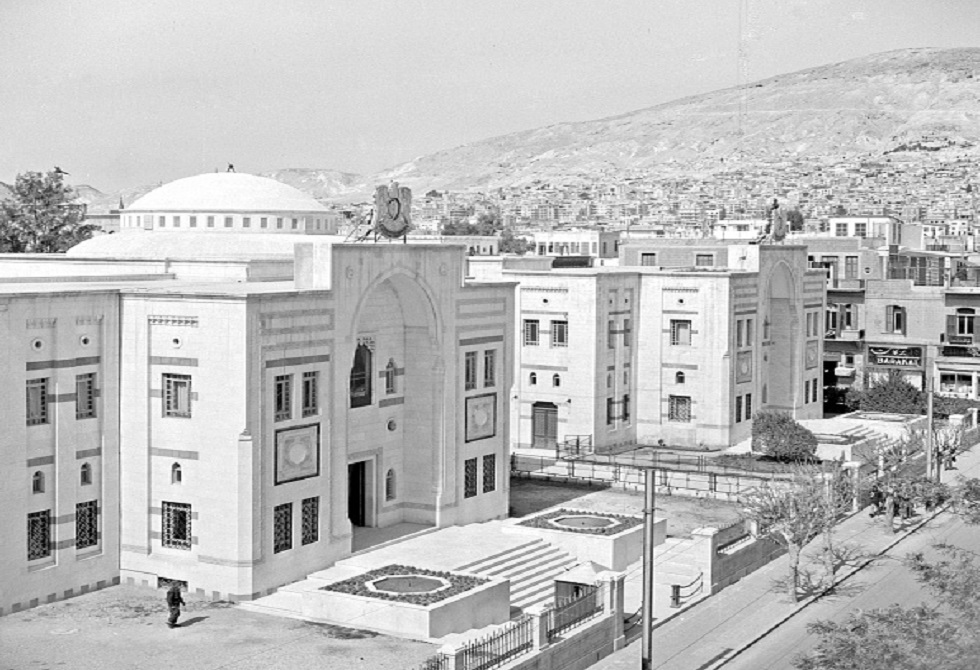
On October 25, Syrians are set to form the first People’s Assembly in Syria in the post-Assad era.
While some view this step as the beginning of a genuine path leading the country towards constitutional and legislative frameworks that open the door for political flow in the dry basin of the homeland, others hold a different opinion.
A Step in the Right Direction
Supporters of the transitional government’s choice to hold People’s Assembly elections under a mechanism allowing the transitional phase president, Ahmad Al-Sharaa, to appoint one-third of the 210 members, while the rest are elected through bodies formed by subcommittees according to population distribution in the provinces, justify this by the current situation in Syria and the difficulty of conducting elections as if in normal conditions, whereas the reality is that they take place in exceptional and difficult conditions requiring exceptional decisions that do not necessarily align with democratic standards adopted in a stable, secure country free from external threats and internal challenges, which Syria lacks today.
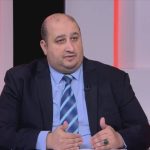
Political analyst Jamal Radwan believes that holding elections under such conditions confirms the Syrians’ ability to overcome difficult obstacles, bear national responsibility, and lay the first stone for a unified national structure regardless of some criticisms of the mechanism. According to Radwan, matters are not resolved all at once, and the timeframe that makes the upcoming People’s Assembly valid for three years, after which a new constitution will be formed, is a carefully studied framework allowing conditions to mature before taking any step in the democratic path shaped by the elections.
In his interview with “RT,” Radwan pointed out that the current proposed mechanism for the People’s Assembly elections may not be perfect but aligns with the difficult circumstances the country is going through, such as the dispersion of Syrians in exile countries in large numbers and many lacking identification papers, in addition to areas outside state control, which prompts the president to fill this void in line with his position as head of state, awaiting the transition phase to pass with minimal risks before reaching institutions with full legitimacy agreed upon by all.
The political analyst emphasized that this experience might not yield the hoped-for results desired by all Syrians but paves the way for much, as it stirs the stagnant waters in Syrian politics, being the first elections after the fall of the previous regime, and through it, any potential mistakes in upcoming electoral processes can be overcome, which subsequent circumstances will grant more credibility, transparency, and legitimacy.
Grasp on Power
On the other hand, the new Syrian People’s Assembly has faced criticism even before its inception. By mid-September, a document issued by a group of human rights and civil organizations harshly criticized the temporary electoral system, describing the electoral system as suffering from a “deep structural defect that makes it far from achieving the minimum international standards for political participation.”
Political analyst Abbas Ali told “RT” that the transitional authority president’s appointment of one-third of the new People’s Assembly members is incompatible with any democratic situation, pointing to the need to reconsider the proposed electoral bodies by forming other committees that consult with civil society and all relevant political parties and forces, even if their activity is suspended by the current ruling order.
The analyst condemned the candidacy conditions for the elections as “tailored to the current authority,” noting that elections have no value without an independent body from the executive authority overseeing the electoral process, in addition to judicial supervision not subject to the current authority.
He added that the upcoming electoral process in Syria does not follow democratic rules as citizens cannot elect their representatives themselves, and those appointed by the president and chosen to run by committees affiliated with him, which he also names, are directly linked to the current ruling system, making it impossible for the so-called people’s representatives to oppose the government in any way.
Absence of Representation for Entire Components
The elections scheduled for October 5 will take place amid difficult and complex conditions in the country. Months of arduous and intermittent negotiations between the Syrian government and the Syrian Democratic Forces (SDF), primarily Kurdish-led, have not resulted in the latter joining the Syrian army ranks. The two sides have yet to agree on the negotiation venue, with options distributed between Damascus and several Arab and foreign capitals. The country has also witnessed two bloody waves of sectarian violence in the coast and Sweida, home to Alawites and Druze, who have paid a heavy price in civilian casualties.
Lawyer Hamdan Abdul Haq from Sweida told our site that the new election decree excluded three cities from the election process for security and political reasons, according to those involved in these elections. These three cities are Sweida, where the Druze majority resides, and Raqqa and Hasakah, controlled by the Kurdish-labeled Syrian Democratic Forces. It remains unclear whether the seats of these three provinces will remain vacant or if the interim president will appoint names he chooses himself. Abdul Haq sees this as a violation of citizens’ rights and exclusion of the Druze and Kurdish components.
He confirmed that holding or not holding these elections in these three provinces is indifferent to citizens and to Druze and Kurdish leaders, along with a vast majority of Alawites on the coast, where there appears to be a psychological break with the elections before procedural or logistical issues related to the lack of cooperation from armed forces controlling areas east of the Euphrates and Jazira and their failure to provide government facilitation, as stated by the spokesperson for the Supreme Election Committee, Nawar Najma.
No Real Change
Pharmacist Azzam Ibrahim told our site that essentially nothing has changed regarding the Syrian People’s Assembly, which during the Baath era was accessible only through loyalty and party affiliation to obedient forces under its “strange invention” called the “Progressive National Front,” which Baathists used to claim political pluralism in the country while monopolizing everything.
Meanwhile, Lubna, a high school student, believes slogans change but the behavior to reach power remains the same for most parties because the rule is “sterile,” as Arabs say.
Lubna recalled in her interview the famous phrase Syrians used to cite about the shallowness of elections in their country during the Baath era, which was that Syrians could recite by heart all the names of Lebanese parliament members while barely remembering one or two deputies from the “clapping and cheering council” during the Assad era.
Recommended for you
Talib Al-Rifai Chronicles Kuwaiti Art Heritage in "Doukhi.. Tasaseem Al-Saba"
Exhibition City Completes About 80% of Preparations for the Damascus International Fair Launch
Al-Jaghbeer: The Industrial Sector Leads Economic Growth
Unified Admission Applications Start Tuesday with 640 Students to be Accepted in Medicine
Egypt Post: We Have Over 10 Million Customers in Savings Accounts and Offer Daily, Monthly, and Annual Returns
His Highness Sheikh Isa bin Salman bin Hamad Al Khalifa Receives the United States Ambassador to the Kingdom of Bahrain