






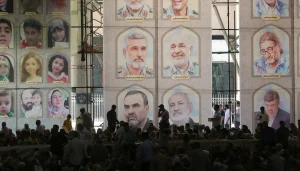


In multiple articles, I have written about the unraveling of the international situation and the resulting attempts by some countries to dismantle the unipolar world order, seeking to seize opportunities and dominate their regional surroundings, which in turn provokes counter-responses aimed at restoring threatened countries’ strategic national deterrence, whether in traditional or non-traditional forms.
It did not take long before Israeli arrogance revealed its desire to break all the foundations of peace in the region and to entrench its absolute dominance over its territories.
After Israel’s strike on Qatar, I wrote in my last article in this newspaper an analysis of the significance of this attack and the strategic shifts it would cause. I said: “Once again, in response to this policy, every capable country in the region will inevitably move to restore its national deterrence through all possible forms of deterrence, traditional and non-traditional. We will see the outlines of this soon.” I also wrote: “Therefore, extremist Israeli circles view Saudi Arabia as their main regional adversary.”
Regardless of all diplomatic polishing attempts to save Trump’s face, the lesson we draw from the Israeli strike is that Trump agreed to slam the door on all the agreements born from his visits to the Gulf, unleashing Netanyahu. The fact is that the Gulf countries—represented this time by Qatar—were subjected twice (once by Iran and once by Israel) to direct strikes coordinated with the United States. In both cases, it was unimaginable that these strikes could have been carried out in the ways they were without the knowledge of the United States and President Trump himself.
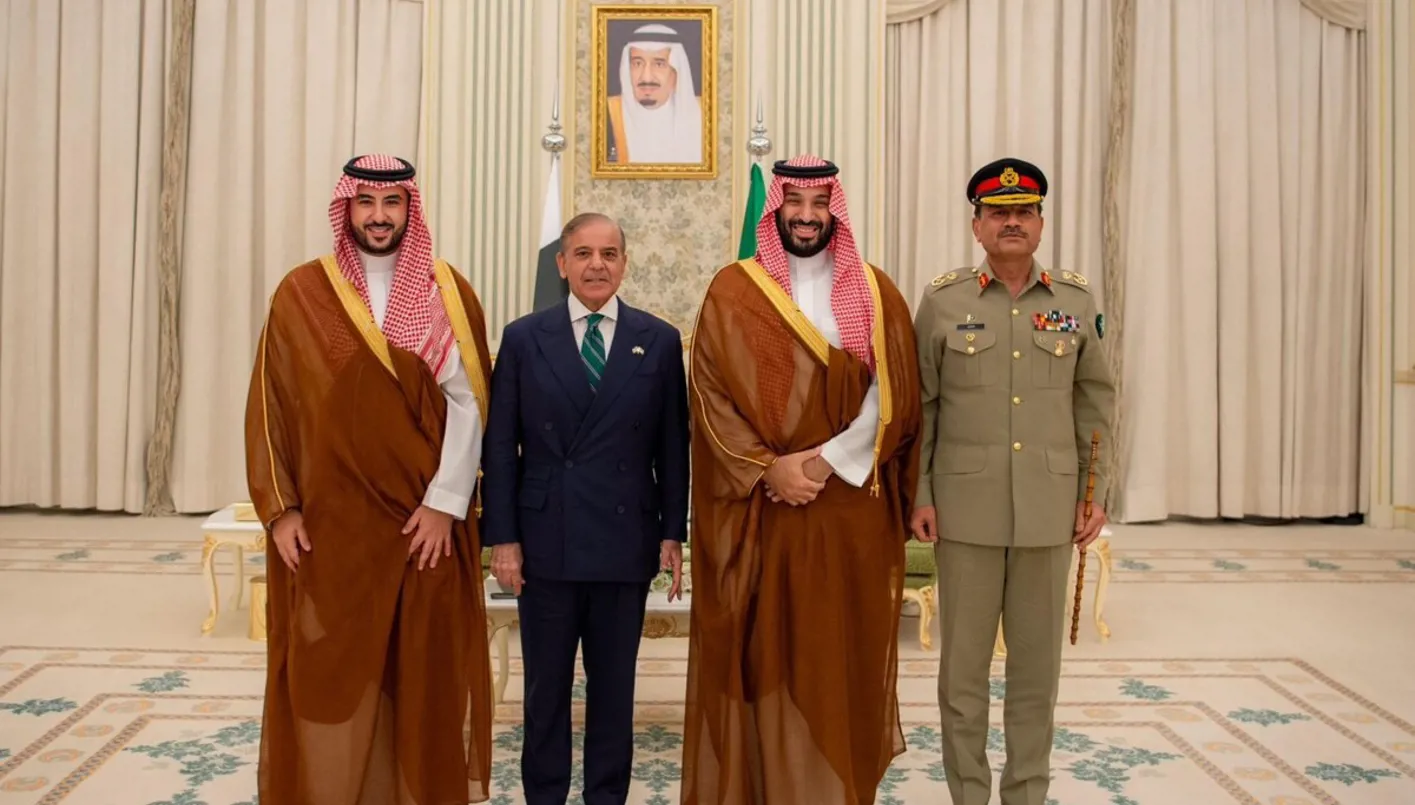
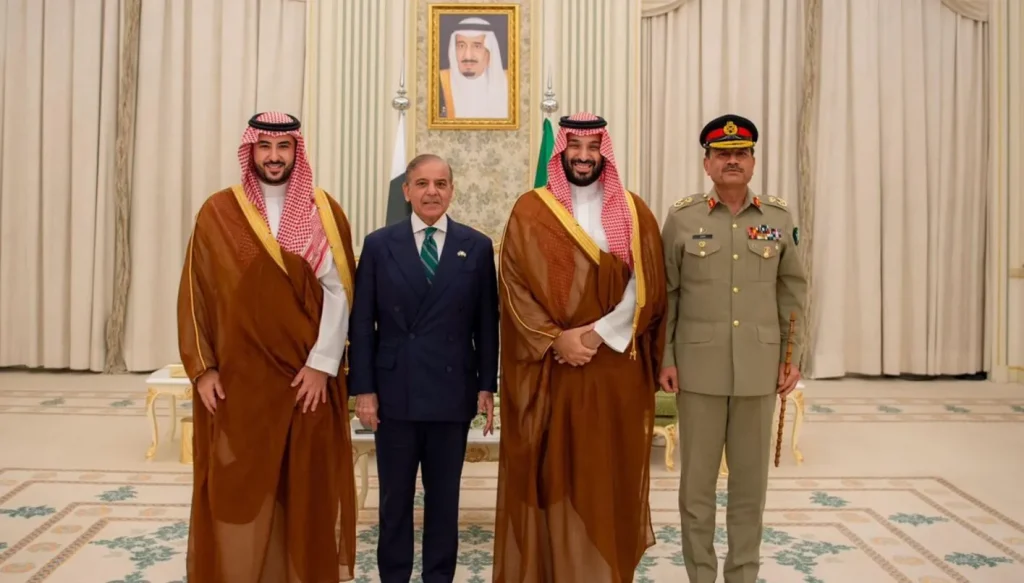
Thus, hours after writing the article, in Riyadh, Saudi Crown Prince Mohammed bin Salman and Pakistani Prime Minister Shehbaz Sharif, accompanied by the distinguished military commander of the Pakistani army, Marshal Asim Munir, embraced in celebration of signing the well-known defense agreement between the two countries.
Yes, the Israeli attack on Qatar was a failed military strike by all measures. But it was enough to collapse the credibility of American deterrence, indeed the credibility of the entire alliance.
After Gulf countries sought to achieve balanced stability in their relations with both Iran and Israel, and after publicly declaring their pursuit of building regional peace including Israel as a natural peaceful member leading to full diplomatic normalization, the Israeli government rushed into its collective extermination of Palestinians in Gaza and worked hard to thwart any Arab and Saudi regional role in the recovery of Gaza, Lebanon, and Syria. Netanyahu indeed dashed all bets on the credibility of Israeli peaceful intentions that Arabs had long relied upon.
Equally, Israel’s nuclear ambiguity policy has become legally and politically weak. It is known that Israel possesses a large nuclear arsenal, reinforced by a conventional arsenal and advanced air force uniquely supported by the United States. More importantly, it has previously armed its nuclear weapons multiple times in the past simply due to feeling threatened in more than one war with the Arabs.
The new contractual alliance between Saudi Arabia and Pakistan is based on a deep-rooted past of shared worldviews, strategic interests, and mutual economic dependence. The agreement states that “an attack on either country will be interpreted as an attack on both,” calling for increased military-industrial partnership between Riyadh and Islamabad.
Pakistan has long had between 1,500 and 2,000 active soldiers in Saudi Arabia providing operational, technical, and training assistance to the Saudi military, including help to the Saudi air and land forces. In return, Saudi Arabia adds much to this relationship in terms of geopolitical influence, strategic location in the Gulf, not to mention support for Pakistan’s economy and foreign reserves.
A Saudi official said about the agreement: “This is not a response to specific countries or events, but an institutionalization of the long-standing and deep cooperation between our two countries.” This agreement significantly strengthens a longstanding unwritten alliance and security partnership spanning decades.
This agreement also offers both parties an opportunity to reduce dependence on international powers in their national defense, allowing integration of their defense capabilities and industries, as well as increasing their strategic independence. It also opens the door to attracting new alliances and joint security arrangements with other actors uneasy about the reliability of the United States or regional threats.
In response to a question about whether Pakistan is now obliged to provide Saudi Arabia with a nuclear umbrella, a senior Saudi official told Reuters: “This is a comprehensive defense agreement that includes all military means.” According to a statement from the Pakistani Prime Minister’s office, “the agreement states that any aggression against either country is considered aggression against both.”
On the other hand, the two countries skillfully manage their geopolitical relations with both Washington and Beijing. But the importance of the agreement stems primarily from being a regional attempt to mend the broken balance of power in the Middle East in its broadest sense.
While the Beijing agreements between Saudi Arabia and Iran formed an initial opportunity to build upon later, the objective retreat of Iranian proxy aggression in the region and the Saudi-Pakistani strategic relations have created a more positive climate for Iran, should it decide to shift towards a peaceful role with its immediate neighbors.
Saudi officials also spoke about the necessity of balancing the Kingdom’s relations with India and Pakistan. They said, “Our relationship with India is stronger than ever. We will continue to develop this relationship and seek to contribute to regional peace in every possible way.”
In a multipolar world, countries give much more consideration to regional blocs than to international blocs. In this context, these agreements appear only as a beginning in reshaping the regional strategic structure, and we have no doubt that these agreements will stimulate upcoming strategic transformations.
Netanyahu was deluded by his transient dominance and the arrogance with which he rampages right and left, what a misguided and failed arrogance.



Recommended for you
Talib Al-Rifai Chronicles Kuwaiti Art Heritage in "Doukhi.. Tasaseem Al-Saba"
Al-Jaghbeer: The Industrial Sector Leads Economic Growth
Exhibition City Completes About 80% of Preparations for the Damascus International Fair Launch
Unified Admission Applications Start Tuesday with 640 Students to be Accepted in Medicine
Egypt Post: We Have Over 10 Million Customers in Savings Accounts and Offer Daily, Monthly, and Annual Returns
His Highness Sheikh Isa bin Salman bin Hamad Al Khalifa Receives the United States Ambassador to the Kingdom of Bahrain