









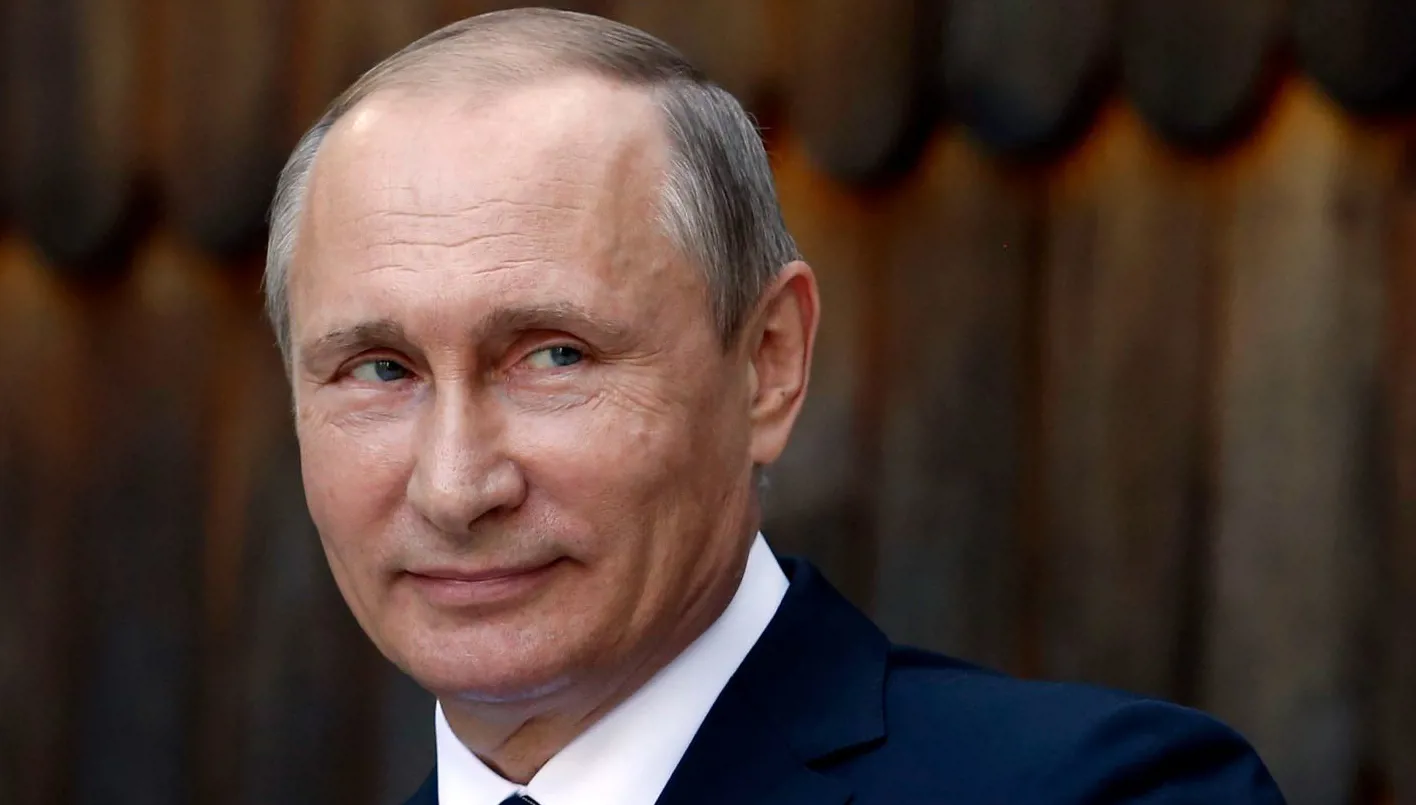

Russian President Vladimir Putin (AP Archive)
In less than a year, Russia’s fortunes in Syria have been completely reversed. This is at least compared to expectations that assumed the end of its political and military role there after the fall of its ally Assad. Those assumptions proved premature. After initial reports about the withdrawal of its units from its bases in Tartus and Latakia towards North Africa, Russia managed to maintain its military footprint in both regions.
On the other hand, in March, Russia began redeploying its forces to its base in Qamishli in the far east of the country, where the Kurdish stronghold is located; the Kurds fought ISIS through the “Syrian Democratic Forces.” The airbase, established by Russia in 2016, underwent infrastructure upgrades and air capability enhancements in recent months.
Flexibility has been the hallmark of Russian foreign policy. When it intervened in Syria in 2015, Moscow cooperated with Turkey and Iran in the “Astana process” despite differing agendas between Tehran and Ankara. Although Russia and Iran coordinated militarily on the ground against the Syrian opposition, this coordination did not evolve into a permanent alliance. Also, Turkey’s downing of a Russian fighter jet in November 2015 did not lead to a lasting enmity. This pattern of interaction quickly extended to the new Syrian government, with Russia praising Damascus’ “efficiency” about a month after Assad’s ousting.
This is somewhat similar to Russia’s openness to the Taliban movement. Although it took longer compared to its openness to the new government in Damascus, Russia was the first country to diplomatically recognize the Taliban last August, breaking the international consensus against the group.
From the Rules of International Relations
Russia acted largely as expected in international relations, where former diplomat Henry Kissinger noted that the vacuum caused by the collapse of a regional order calls for foreign powers to intervene to shape a new balance according to their interests. However, there is a question mark.
Practically, Assad’s regime fell because Russia, along with Iran, could not defend it; in other words, the Russian and Iranian systems collapsed together in the region, causing the collapse of the previous rule. So how did Russia manage to revive its influence in Syria after it was severely damaged in December?
According to Hanaa Nouthe from the Center for Strategic and International Studies, the renewed Russian presence is attributed to internal and external factors. Turkey and Israel see that Russia can limit the other’s influence in the north and south. The Kurds believe Russia may protect them from Ankara if the Americans withdraw from the area. Damascus sees that Russia gives it room to maneuver against the West and may succeed in restraining the Israelis. This is helped by the fact that Russia, unlike Iran, does not want to change the country’s demographic composition.
As the tenth anniversary of the Russian military intervention in Syria approaches, Syrian President Ahmed Al-Sharrah is preparing to visit Moscow on October 15 to participate in the Arab-Russian summit. The strengthening of relations between Damascus and Moscow is progressing rapidly, although it has not yet reached the level of an alliance and may never do so. In an international environment increasingly reliant on hedging, neither side has much to lose by exploring mutual intentions and cooperating where possible.
Recommended for you
Talib Al-Rifai Chronicles Kuwaiti Art Heritage in "Doukhi.. Tasaseem Al-Saba"
Exhibition City Completes About 80% of Preparations for the Damascus International Fair Launch
Al-Jaghbeer: The Industrial Sector Leads Economic Growth
Unified Admission Applications Start Tuesday with 640 Students to be Accepted in Medicine
Egypt Post: We Have Over 10 Million Customers in Savings Accounts and Offer Daily, Monthly, and Annual Returns
His Highness Sheikh Isa bin Salman bin Hamad Al Khalifa Receives the United States Ambassador to the Kingdom of Bahrain