






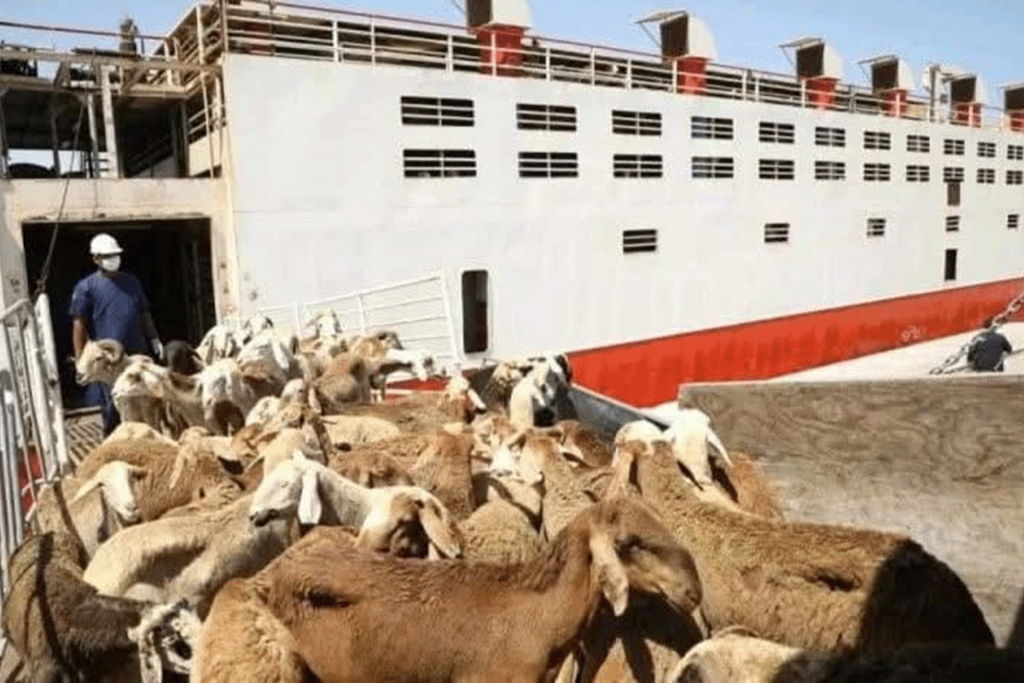
Khartoum – The livestock sector in Sudan has not been spared from the repercussions of the war that erupted on April 15, affecting all pillars of the national economy. The fighting has impacted the population’s conditions and both domestic and international trade activities, extending its effects to Sudanese export structures.
As the war expanded from the capital Khartoum to the states of Sennar, White Nile, Darfur, large parts of Kordofan, as well as northern and eastern states like Nile River, Gedaref, Kassala, and the Red Sea, workers and investors in the livestock sector faced unprecedented challenges, notably road closures and trade disruptions.
The Livestock Market Between Devastation and Recovery
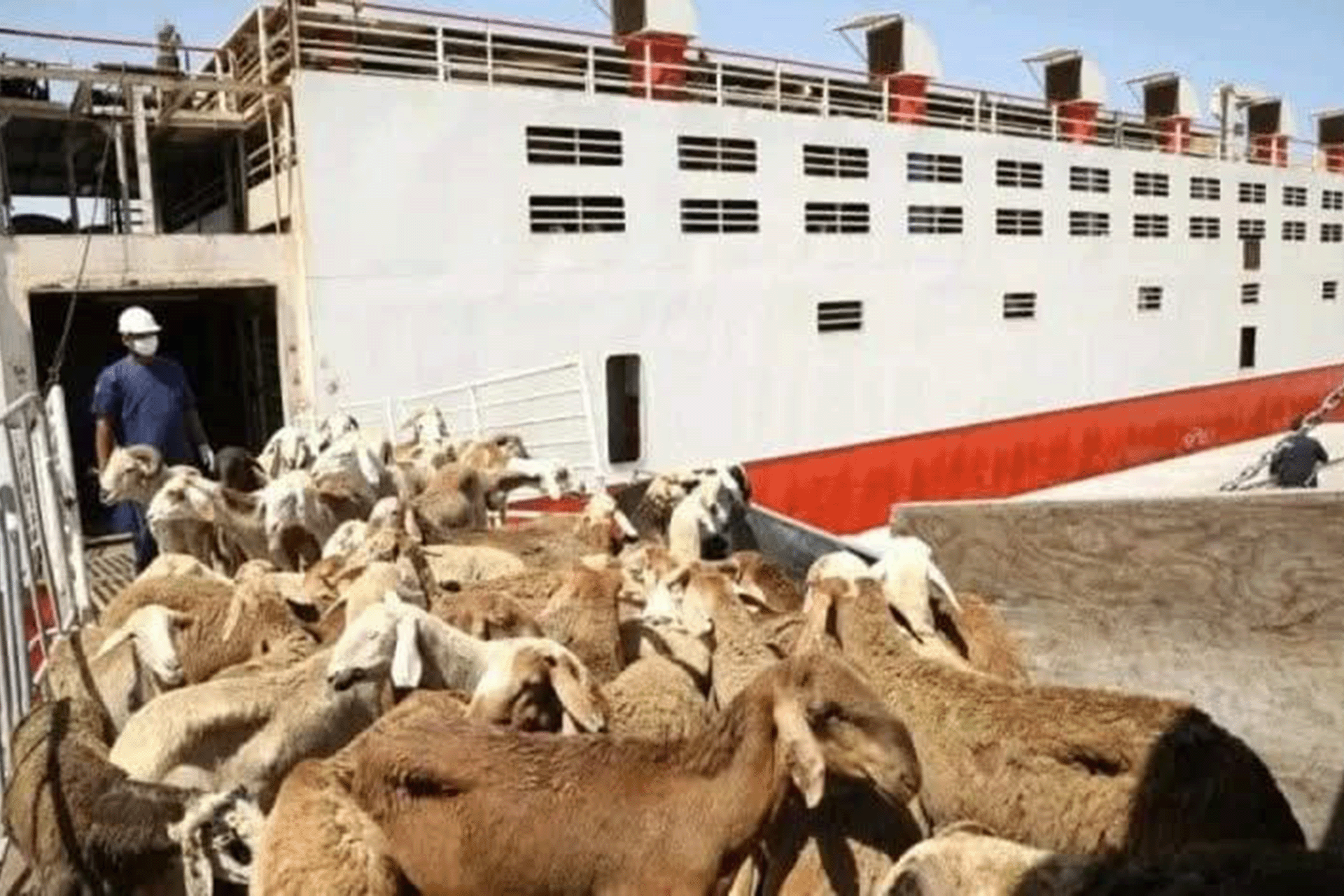
In the “Gandahar” area west of Omdurman, one of the main livestock market centers in Khartoum state, activity seems to be slowly recovering amid scenes of battle remnants still dominating the roads leading to the export market through Bara in North Kordofan.
Local trader Mohamed Ahmed Abu Namos told Al Jazeera Net that the war conditions—especially during the Rapid Support Forces’ control of Khartoum—caused catastrophic effects that completely pushed some traders out of the market and inflicted damage difficult to estimate. However, he noted that conditions have started to improve, albeit slightly.
He added that Sudan’s livestock is characterized by good geographic distribution, explaining that Omdurman markets saw large inflows of livestock during the recent Eid al-Adha, reflecting relative flexibility despite the war atmosphere.
Abu Namos admitted he lacks precise details about the resumption of export operations but confirmed that the local market is expanding to meet internal demand, suggesting the Sudanese herd has not been severely affected by the war conditions.
Gradual Recovery Despite Destruction
Dr. Hassan Ali Abbas, Director of the Epidemiological Survey Project at the Ministry of Livestock and an expert with the Intergovernmental Authority on Development (IGAD), explained that the sector faced significant difficulties with the outbreak of war and the absence of accurate statistical systems but managed to reorganize export operations after only two months of fighting.
He told Al Jazeera Net: “Export activities were shifted to veterinary quarantine centers in Kassala and Gedaref, and Sudan exported more than 4 million head of live animals in 2023, generating revenues close to 1 billion euros, approximately 1.17 billion dollars.”
He added that before the war, Sudan had more than 138 million head of various livestock types distributed across all states, contributing over 2.5 billion euros annually (around 2.92 billion dollars) to the national economy. However, according to him, the war caused severe damage to infrastructure, with veterinary quarantine centers, slaughterhouses, and animal feed factories suffering destruction, looting, and theft by the Rapid Support Forces.
Rapid Return and Signs of Revival
Despite the heavy losses, the Director General of Quarantine at the Ministry of Livestock expressed optimism about the sector’s ability to regain its health, telling Al Jazeera Net that “a rapid return has already occurred,” highlighting the ministry’s efforts to maintain animal health, continue the epidemiological survey project to monitor diseases, conduct laboratory tests, and support export programs.
He added that restoring security in Khartoum, Al Jazirah, and Sennar states after their liberation helped reopen many slaughterhouses. He confirmed that the government now plans to benefit from the added value of livestock through partnerships and investments, alongside continuing export operations and fulfilling importing countries’ requests according to technical protocols.
Promising Opportunities but with Tough Conditions
Agricultural and economic expert Sadiq Abdullah Ayash sees great opportunities for Sudan to overcome the war setback through the livestock sector, especially since Sudanese livestock and meat exports enjoy wide acceptance in Gulf countries and Egypt, providing foreign currency and boosting the national economy.
Ayash stresses that this requires a set of conditions, mainly investment in pastures and modern agriculture, as Sudan possesses vast areas of land and natural pastures that can be converted into advanced farms relying on modern breeding techniques to increase productivity.
He emphasizes the need to improve veterinary services and expand community vaccination campaigns, citing a campaign implemented by the “Sustainable Food and Agricultural Systems Approach in Sudan” program in cooperation with the International Relief Agency in Gedaref state, which he considered a successful model in reaching breeders even in conflict areas.
He adds that the number of workers in the sector equals about 40% of Sudan’s population and contributes approximately 34% of agricultural output, but government investment in infrastructure—especially animal health—is not commensurate with the sector’s strategic importance.
Between Challenges and Hopes
Despite scenes of devastation and destruction, signs of cohesion are evident in Sudan’s livestock sector. Traders are finding their way back to the market, the government confirms a gradual recovery of production capacity, and experts believe future opportunities remain promising provided that investments and necessary infrastructure are available.
In a country where millions depend on livestock breeding and export, this sector remains more than just a source of income; it is a pillar of economic and social stability and a beacon of hope in an economy exhausted by a prolonged conflict whose outcomes are yet to be determined.

Recommended for you
Talib Al-Rifai Chronicles Kuwaiti Art Heritage in "Doukhi.. Tasaseem Al-Saba"
Exhibition City Completes About 80% of Preparations for the Damascus International Fair Launch
Unified Admission Applications Start Tuesday with 640 Students to be Accepted in Medicine
Al-Jaghbeer: The Industrial Sector Leads Economic Growth
Egypt Post: We Have Over 10 Million Customers in Savings Accounts and Offer Daily, Monthly, and Annual Returns
His Highness Sheikh Isa bin Salman bin Hamad Al Khalifa Receives the United States Ambassador to the Kingdom of Bahrain