







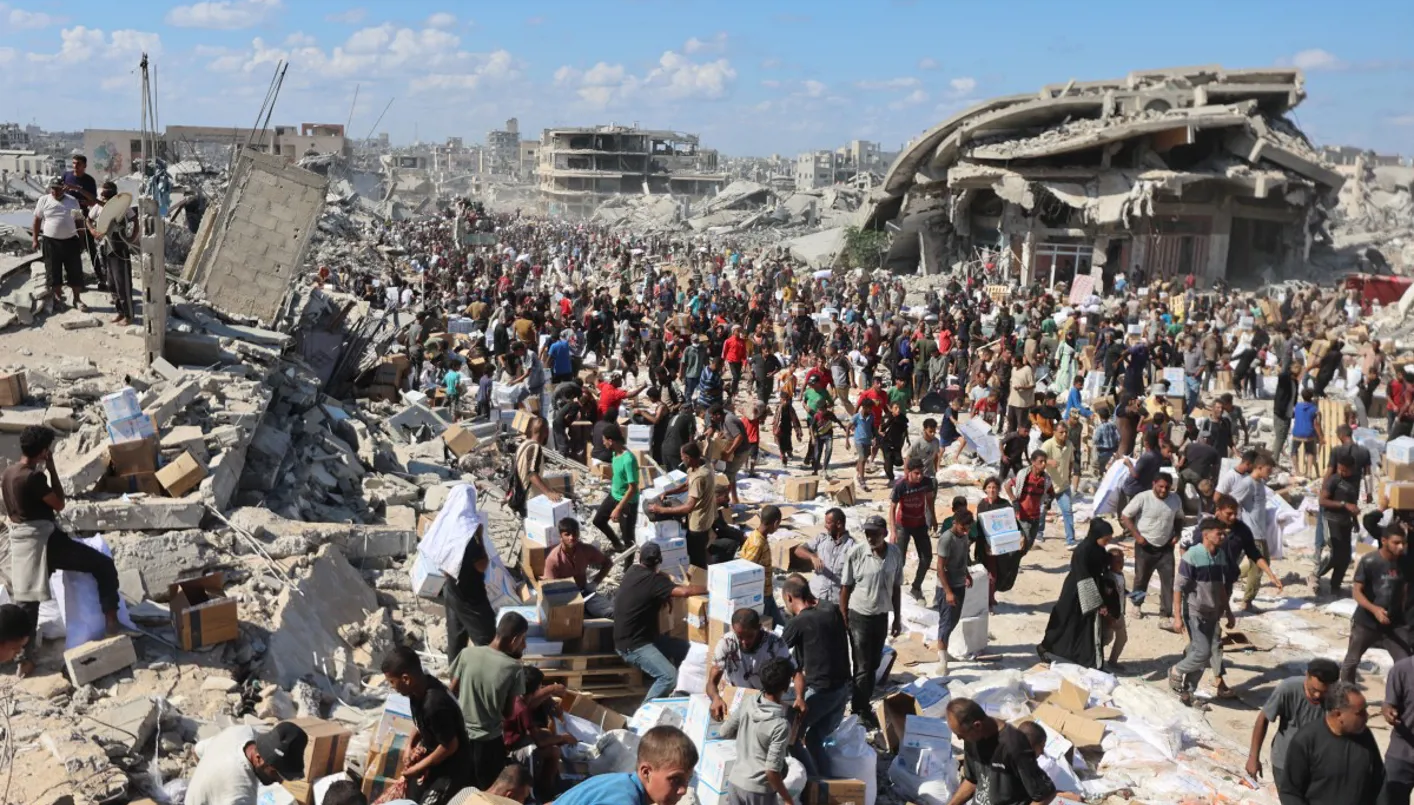
The recent agreement was driven by several factors, including what happened to the people of Gaza in the genocide. (AFP)
After the recent agreement between Hamas and Israel on the first part of Trump’s latest plan, some believe this plan is the first of its kind. To recall, during Trump’s first term from 2017 to 2021, with the involvement of his son-in-law Jared Kushner, he developed a plan called “Peace to Prosperity,” focusing on economic and developmental aspects, intended to form a basis for a later political agreement covering Jerusalem, borders, refugees, and security.
The main features of that plan included a $50 billion investment in projects within Palestinian territories, Gaza and the West Bank, and neighboring countries Egypt, Jordan, and Lebanon, establishing an economic corridor linking Gaza to the West Bank, encouraging private sector and Arab and international investors to engage in infrastructure projects in the region, in addition to creating an international peace and investment fund managed by American, Gulf, and European parties. Finally, economic support was tied to Palestinian and Israeli commitments to security and political cooperation.
These were the main outlines of Trump’s first plan, but things did not go as the Trump administration expected at the time; he lost the presidential election, and Democratic President Joe Biden took office for four years, and the rest of the story is known until October 7 and its catastrophic repercussions in the region.
Trump’s new 20-point plan differs from the first in its details, consisting of 20 specific points aimed firstly at a ceasefire, the return of Israeli hostages, dismantling Hamas’s military capabilities, and establishing a transitional government structure in Gaza, making it an area free of extremism and terrorism and not posing a threat to its neighbors.
The plan also includes the possibility of pardoning some Hamas leaders except those involved in the October 7 events if found, and those remaining who wish to leave Gaza will be sent to countries willing to receive them; then, aid will be sent to Gaza in agreed quantities to help alleviate hunger.
The transitional government in Gaza will be supervised by an international committee directly involving former British Prime Minister Tony Blair, under full supervision of the U.S. President, who named a peace council with other heads of state to be announced later, and requested the Palestinian Authority to carry out wide internal reforms. However, these reforms remain undefined in detail and implementation.
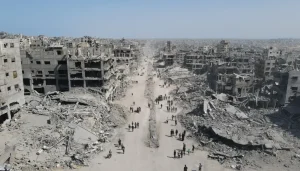
The recent agreement was driven by several motivating factors, including the genocide against the people of Gaza that awakened global conscience from east to west, and also the intense Saudi-French diplomatic effort, which led to continuous recognition from influential Western capitals of the Palestinian state. The most important effect of the two-year war on the Palestinian side was internationalizing the issue and politically isolating Israel, all morally as well.
It is likely that following the initial agreement, an economic development plan for Gaza’s reconstruction will be formulated, involving experts who contributed to the birth of some modern prosperous cities in the Middle East. A set of studied proposals and exciting developmental ideas have been presented and will be considered, foremost among them governance to attract and facilitate these investments, which will create job opportunities in Gaza and the West Bank.
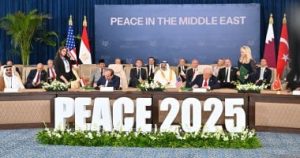
This agreement, held last Thursday, is just a beginning with a potentially long timeline, but it will necessarily trigger dynamics within Israeli society and the Palestinian sphere that will change previously known policies.
Within the Palestinian sphere, Arabs and supporters of the Palestinian cause are weary of numerous attempts to bridge the rift between different Palestinian factions; they have met 22 times in this century alone (the 21st century). The last two meetings were in Algeria and Beijing, thousands of kilometers apart. It was said they agreed, but in reality, they did not.
The cornerstone for establishing a Palestinian state is Palestinian unity, and factional rivalries are deadly to the Palestinian cause, having perpetuated the bleeding of Palestinian blood. Other interactions will occur in Israel, where the war has united Israeli society despite political differences. After the war ends, many internal questions may arise among different Israeli factions, possibly producing a new current inclined towards some form of peace, after Israel fought its longest war since its establishment, the two-year war that began on October 7, 1923, and ended on October 8, 2025.
This war has psychological effects on Israelis, and voices are rising that solving the Middle East problem and the Palestinian issue will not be achieved through wars but must be through negotiations leading to a Palestinian state.
On the other side, Iran and its various proxies no longer have justifications to intervene in the Arab-Israeli conflict, as it has been put on the path to resolution, and thus Hezbollah’s and Yemen’s Houthis’ arguments will not be marketable to global and regional public opinion.
We are facing an unprecedented historical phase, and different parties must seriously and methodically think about steering this region towards development and peace. Also, the Palestinian narrative must create through real stories of the people of Gaza the story of “genocide” as religious Zionism created the story of the “Holocaust”!

Recommended for you
Al-Jaghbeer: The Industrial Sector Leads Economic Growth
Egypt Post: We Have Over 10 Million Customers in Savings Accounts and Offer Daily, Monthly, and Annual Returns
Alternative to UNIFIL Forces
Talib Al-Rifai Chronicles Kuwaiti Art Heritage in "Doukhi.. Tasaseem Al-Saba"
Exhibition City Completes About 80% of Preparations for the Damascus International Fair Launch
Trump Advisor: Disarming Hamas is Central.. Palestinian Authority to Take Over Gaza After Required Reforms