









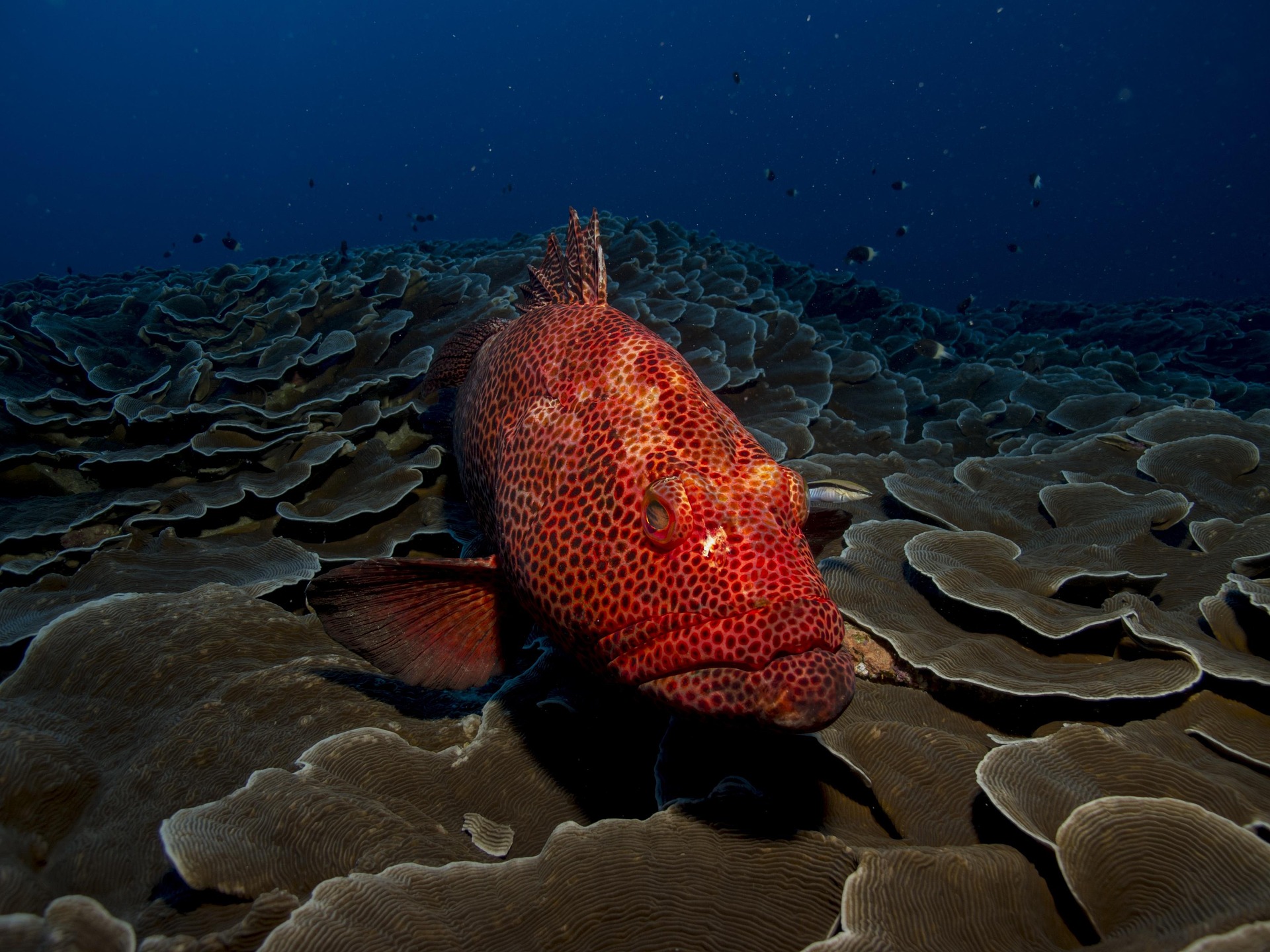
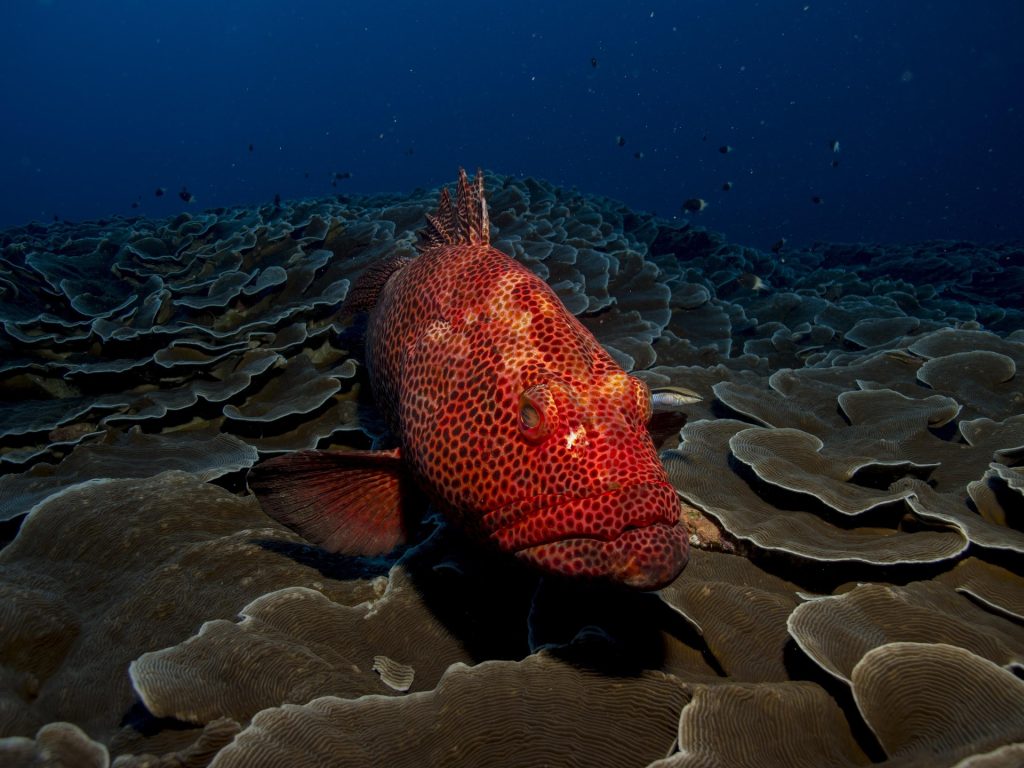
While catching the spotted golden grouper fish “Epinephelus costae” is a valuable catch for fishermen, discovering a new parasite or disease affecting this fish is a priceless scientific find for researchers.
This fish species is well-known in the Mediterranean Sea, reaching lengths up to 140 cm, and typically lives near the bottom in rocky and seagrass environments at depths ranging from 10 to 80 meters.
Tunisian researchers made a valuable catch with this fish, announcing in a study published in the journal “Parasitology International” that they identified a new microscopic parasite species living inside it, raising many questions about the impact of this parasite on the health and future of this economically important fish.
Dr. Soham Bahri, head of the Laboratory of Biodiversity, Parasites, and Ecology of Aquatic Ecosystems at the Faculty of Sciences, University of Tunis El Manar, and supervisor of the study, explained to Al Jazeera Net that the discovery came as part of a PhD thesis by “Khawla Boudarbala,” one of the researchers in her lab. She noted that among 12 groupers caught from the Gulf of Tunis and examined, infection was found in only two fish, representing a prevalence rate of 16.6%.
The new parasite belongs to a group called “Myxosporea,” which are very tiny parasites belonging to the phylum Cnidaria, meaning they are evolutionarily close to jellyfish and corals, despite their parasitic form. This group is known for its great global diversity, with over 2600 species described, some causing serious diseases in fish farms.
The new parasite belongs to the genus “Ceratomyxa,” one of the most widespread genera among these parasites, typically residing in the gallbladder of marine fish.
Like other parasites of its genus, the new parasite was found in the grouper’s gallbladder. Its mature spores took a distinctive crescent shape, measuring just a few micrometers (a micrometer is one-thousandth of a millimeter), with fine coiled filaments that extend outward like a small spring when needed.
Dr. Bahri said, “By studying these morphological features along with genetic DNA data, we confirmed it is a previously undescribed species, which we named ‘Ceratomyxa costa-ecola,’ a Latin name meaning ‘inhabitant of Epinephelus costae fish.'”
Although this parasite attacks only the gallbladder, heavy infections can lead to physiological stress, digestive problems, loss of appetite, and emaciation, as Dr. Bahri explained.
She added, “In some cases, infections by parasites of this genus can cause symptoms such as loss of appetite, emaciation, and abdominal swelling, making the fish less active and more susceptible to other diseases.”
Currently, there are no grouper farms in the Mediterranean Sea, which makes the parasite’s effects not serious. However, the study highlights that if grouper aquaculture is considered in the future, which is possible due to the fish’s high economic value, such parasites could pose a real threat. In fish farms, parasites can spread rapidly due to high fish density, leading to poor growth, loss of appetite, general health problems, and potentially significant economic losses, necessitating further studies on this parasite.
Dr. Bahri said the next step is to study the parasite’s full life cycle by searching for the intermediate host, which is usually a marine invertebrate.
Dr. Bahri expressed her happiness with this discovery, which adds a new species to the known marine parasites list and reflects the diversity of the genus “Ceratomyxa,” which includes hundreds of species worldwide. It also highlights the importance of parasitological studies in the Mediterranean Sea, not only to understand biodiversity but also to protect the fishery resources relied upon by fishermen and the local economy.
She concluded, “This new parasite opens the door for more studies to understand parasite diversity in Mediterranean fish and how they may affect fish health and marine ecosystems.”




Recommended for you
Al-Jaghbeer: The Industrial Sector Leads Economic Growth
Alternative to UNIFIL Forces
Egypt Post: We Have Over 10 Million Customers in Savings Accounts and Offer Daily, Monthly, and Annual Returns
Talib Al-Rifai Chronicles Kuwaiti Art Heritage in "Doukhi.. Tasaseem Al-Saba"
Exhibition City Completes About 80% of Preparations for the Damascus International Fair Launch
Trump Advisor: Disarming Hamas is Central.. Palestinian Authority to Take Over Gaza After Required Reforms