







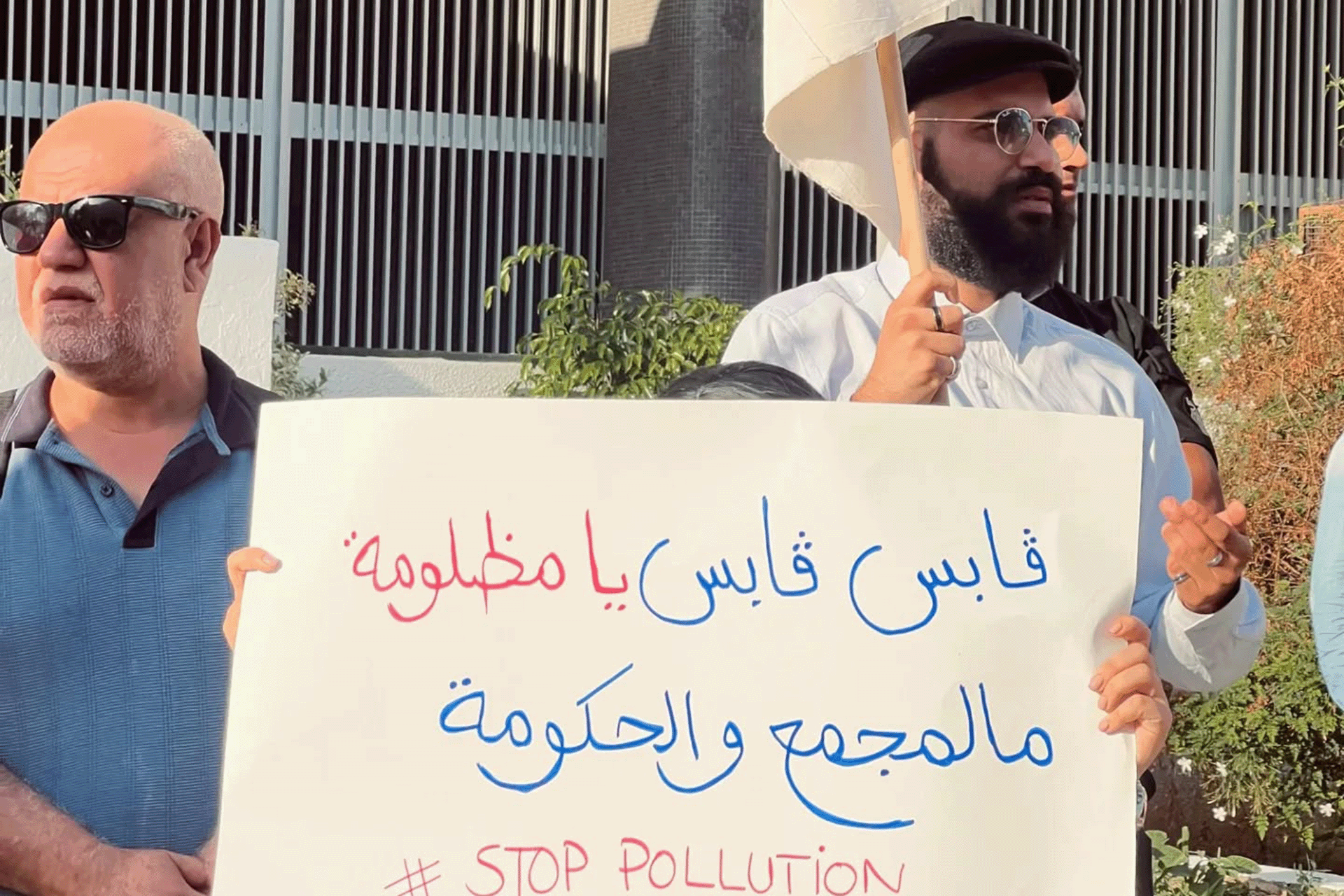
The governorate of Gabes has witnessed widespread protests over the past two days following increased cases of suffocation among students and residents due to toxic gas emissions from the Ghannouch chemical complex, bringing to light one of Tunisia’s most serious environmental issues.
Residents express their frustration over ongoing suffocation incidents caused by pollution despite repeated government promises to shut down the polluting production units at the complex. The situation remains tense with cautious calm amid a security alert and continued gatherings of locals in public squares awaiting official decisions in the coming hours.
According to eyewitnesses, national army units are deployed around sensitive facilities and public institutions in preparation for any potential escalation, especially after clashes between protesters and security forces using tear gas at the end of last week.
Protesters chanted slogans condemning state policies toward the governorate, such as “Free Gabes… and the complex out,” “Shame on the government… cancer in every home,” and “A minister without decisions… goes home.”
The chemical complex in Gabes has been operational since the 1970s and is a major pillar of Tunisia’s chemical industry, producing fertilizers and phosphate derivatives. However, its activity has been linked to severe pollution that has turned the city from a paradise into a real hell.
Potential Escalation
Despite the blackout, signs of chaos remain visible in Gabes streets, with burnt tire remnants and barricades set up by protesters covering the last two nights, while ash and gas residues mark the confrontations between security forces and locals.
Activists do not rule out escalating protests in the coming days, affirming that residents’ movements will continue to grow and that any attempt to ignore or suppress demands will only strengthen their determination to reclaim their right to a pollution-free environment.
Environmental activist Khaireddine Debia told Al Jazeera that the city is under cautious calm after the recent wave of protests, noting that anger remains among residents despite the absence of confrontations.
Protesters demand the shutdown of all production units belonging to the chemical complex following dangerous leaks that caused suffocation cases among residents in recent days.
Residents have lost trust in repeated government promises since 2017 regarding dismantling the polluting units, considering all proposed solutions as patchwork that does not address the root of the environmental disaster.
Citizen Abdelkarim Al-Jamaei, a 45-year-old taxi driver, said the situation has become unbearable. He suffers from breathing difficulties and his asthmatic son has been hospitalized multiple times. He added that no family in Gabes is free from cancer cases caused by toxic gases.
Hanane Al-Abidi, a 38-year-old teacher living near the chemical plant in Ghannouch, described students’ suffering from coughing and suffocation during classes, emphasizing that these incidents pose a direct health risk and require urgent government action.
Since September 9, Gabes has experienced repeated toxic suffocation incidents, with the “Stop Pollution” movement reporting dozens of students and citizens affected in Ghannouch and Plage Salam.
The local elected council in Gabes acknowledged the damage caused by the complex and called for dismantling the polluting units, urging residents to maintain peaceful demonstrations in response to some protesters setting tires on fire and blocking roads.
Recently, the Gabes regional labor union issued a statement expressing concern over the deteriorating health situation due to lack of equipment maintenance and the aging of some factories.
Toxic Gases
Chest diseases specialist Dr. Saleh Al-Nouri confirmed that gas emissions from the chemical complex pose a direct threat to residents’ health, containing toxic chemical compounds such as sulfur dioxide, ammonia, and phosphorus atoms that cause chronic respiratory inflammation.
These gases increase asthma, allergies, and breathing difficulties, especially among children, the elderly, and patients with chronic lung or heart diseases. Continuous exposure weakens immunity and raises the risk of early-onset cancers.
Environmental activists stress that breathing in Gabes means inhaling a toxic mixture of gases and chemicals, including sulfuric acid, carbon dioxide, ammonia, and heavy metals, which negatively affect residents’ health, agriculture, and the sea, which has become a graveyard for phosphogypsum.
Environmental organizations report that the complex discharges about 15,000 tons of phosphogypsum daily into the sea, turning Gabes Bay into one of the most polluted areas in the Mediterranean.
Despite field testimonies and reports documenting cancer, respiratory diseases, and osteoporosis in Gabes, Tunisian authorities continue to withhold updated data clarifying the scale of the health disaster.
Repeated Promises
During a meeting with the Minister of Industry and Mines Fatma Thabet Chaaboub and the Minister of Environment Habib Obeid, President Kais Saied called for “fixing what must be fixed as soon as possible,” stressing that the situation in Gabes can no longer tolerate delay.
However, the absence of tangible executive decisions increases frustration among the public amid calls for a comprehensive national movement to save the city, which some describe as “slowly suffocating.”
Hisham Al-Ajboni, a leader of the opposition Democratic Current party, said the environmental situation in Gabes is worsening despite repeated presidential meetings since 2020, asserting that the rhetoric has not translated into concrete achievements, entrenching neglect and procrastination policies.



Recommended for you
Talib Al-Rifai Chronicles Kuwaiti Art Heritage in "Doukhi.. Tasaseem Al-Saba"
Exhibition City Completes About 80% of Preparations for the Damascus International Fair Launch
Al-Jaghbeer: The Industrial Sector Leads Economic Growth
Unified Admission Applications Start Tuesday with 640 Students to be Accepted in Medicine
Egypt Post: We Have Over 10 Million Customers in Savings Accounts and Offer Daily, Monthly, and Annual Returns
His Highness Sheikh Isa bin Salman bin Hamad Al Khalifa Receives the United States Ambassador to the Kingdom of Bahrain