








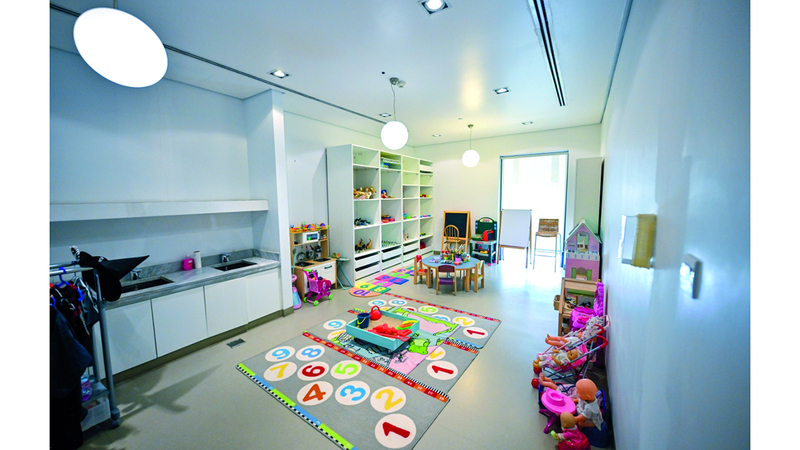
Sheikha Saeed Al Mansoori, Acting Director General of the Dubai Foundation for Women and Children, confirmed that “play therapy” is a means capable of translating hidden emotions and answering silent questions. “Through it, victims of violence and exploitation can narrate painful experiences in an expressive way that respects their psychological state.”
Al Mansoori told Emirates Today that investing in developing innovative therapeutic tools such as “play therapy” is a direct investment in the future and cohesion of society, noting that this approach has been incorporated into the foundation’s therapeutic programs since 2010.
She said, “With increasing awareness of the importance of children’s mental health, and rapid developments in technology and artificial intelligence, we expect this field to expand further in the coming years, evolving to include broader areas such as interactive digital methods and innovative tools that facilitate therapy and broaden its impact, serving children’s needs more comprehensively and effectively. We aim for the foundation to be a leading reference in the region.”
The foundation systematically monitors therapeutic program results through scientific evaluation tools, periodic surveys, and individual follow-ups of children who underwent play therapy rehabilitation.
She added, “We noticed a tangible improvement in the ability of children who underwent therapeutic programs to express their feelings, overcome the traumas they experienced, and enhance their social skills. We also have many success stories of children who regained self-confidence and reintegrated into their family and school lives.”
The foundation receives cases of violence victims from various entities such as the police, public prosecution, or social agencies. Sometimes cases are discovered within schools and officially referred through the police or competent authorities.
Dr. Ghanima Al Bahri, Director of Care and Rehabilitation at the foundation, said that play therapy was initially applied to three children aged 8 to 10 years in the foundation’s shelter system. They came from different backgrounds and cultures, each subjected to different types of violence, including physical abuse, sexual assault, and neglect.
She added that the problems observed in these children varied from concentration difficulties with declining academic performance, difficulty forming healthy relationships with peers, difficulty adhering to behavioral rules within the institution, and inability to distinguish good from bad touches.
She continued, “At the beginning of treatment, behavioral therapy based on reward and punishment and behavior modification techniques was applied, but we did not observe any response from them, so we resorted to play therapy.”
Regarding treatment duration, she explained that some took six months, some a full year, two years, or more. Caregivers were given ongoing parental instructions during the treatment period to guide them on how to deal with the cases, in addition to providing the social and legal support they needed.
She explained that “play therapy sessions were held weekly, and positive results were noticed after the sixth or seventh session, but actual results varied from case to case. Some cases showed clear improvement after 12 sessions, while others needed more sessions,” clarifying that “this depends on the type of violence and the harsh experience the victim lived through.”
She added, “In some cases, the child does not respond to traditional behavioral therapy, which prompts the team to adopt the play therapy approach. It has been observed that this approach helps reduce the child’s tension, as they participate in activities they enjoy and learn through them. The games are designed to suit the child’s inclinations and abilities, and this approach has proven effective in several cases.”
She mentioned that when this type of therapy was first applied, each case was individually introduced to the therapy room and given the opportunity to explore. During this phase, their drawings, doll play, role-playing, expressive play, and messages written during the session were observed.
She continued, “We noticed clear improvement after following up on the cases, as they became relatively calmer with fewer mood swings than before, in addition to improved academic concentration, which led to higher academic levels and success in school stages.”
She confirmed that the cases were able to return to life; some graduated from high school, others obtained jobs or were able to start families. She expressed pride in their achievements after suffering severe setbacks, problems in relationships and social communication, aggressive behavior, and academic difficulties before reaching stability and becoming able to achieve their ambitions, discover themselves, and boost their self-confidence.
She also recounted a successful experience of a girl about eight years old who suffered academic delay and daily complaints from school due to violent behaviors towards peers, including bullying and violence, alongside non-compliance with school instructions. She also broke rules and regulations in the foundation’s residential facility.
She continued, “After applying the free-form play therapy, we noticed clear improvement in all aspects, academically and in relationships within the shelter system and compliance with behavioral rules.”
She pointed out that the foundation mainly focuses on violence-related disorders such as post-traumatic stress disorder (PTSD), anxiety, depression, and conduct disorder, which involves children exhibiting behaviors outside the normal range that are inappropriate for the situation, time, or place. Based on these disorders, cases are introduced into therapy sessions with close symptom monitoring, where symptom reduction is a positive indicator of therapy effectiveness. She noted that the Dubai Foundation for Women and Children includes a group of specialists in the psychological field, including counselors, psychotherapists, and testing and measurement specialists.
An integrated team works to provide individual psychological support and sometimes family support, giving the child a comprehensive support network from various aspects.
Dr. Ghanima Al Bahri:
* An integrated team works to provide individual and sometimes family psychological support to the child, giving them a comprehensive support network.



Recommended for you
Al-Jaghbeer: The Industrial Sector Leads Economic Growth
Alternative to UNIFIL Forces
Egypt Post: We Have Over 10 Million Customers in Savings Accounts and Offer Daily, Monthly, and Annual Returns
Talib Al-Rifai Chronicles Kuwaiti Art Heritage in "Doukhi.. Tasaseem Al-Saba"
Exhibition City Completes About 80% of Preparations for the Damascus International Fair Launch
Trump Advisor: Disarming Hamas is Central.. Palestinian Authority to Take Over Gaza After Required Reforms