









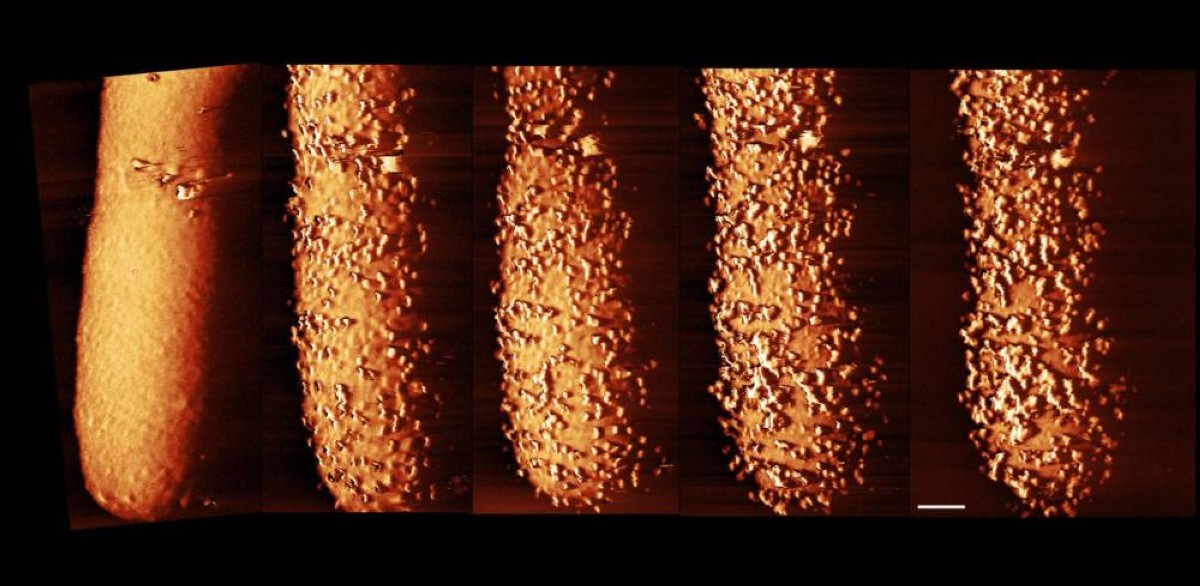
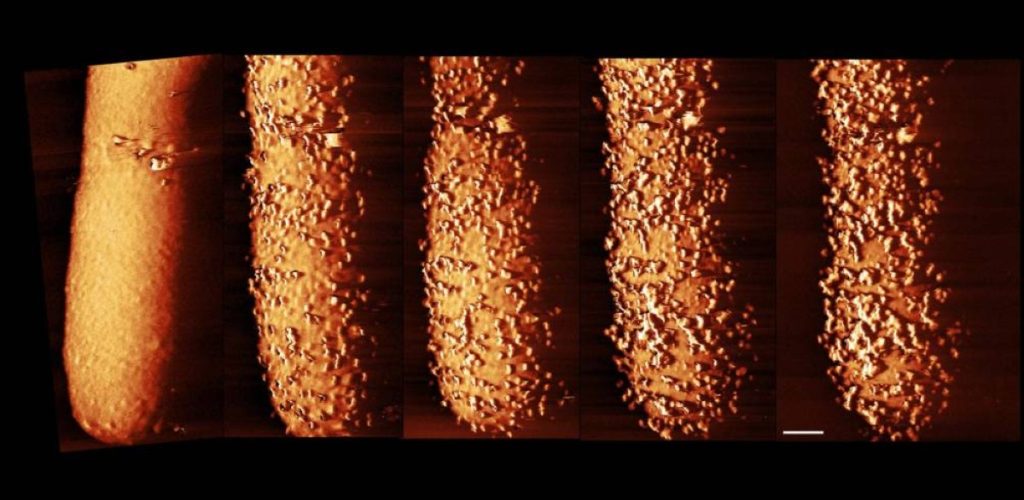
For the first time, scientists have witnessed the moment when the shield of deadly bacteria collapses under the attack of antibiotics, in a stunning scene resembling a miniature battle at the atomic level.
A research team from University College London (UCL) and Imperial College London succeeded in uncovering the secrets of a powerful group of antibiotics known as polymyxins — used as a last resort against drug-resistant infections — and how they force bacteria to dismantle their protective shield themselves until they collapse and die.
The study published in the journal Nature Microbiology represents a remarkable scientific achievement in understanding how these rare antibiotics work, potentially paving the way for new strategies to restore drug effectiveness against stubborn bacteria that pose a global threat, causing over one million deaths annually worldwide.
How Do Polymyxins Destroy Bacterial Defenses?
Gram-negative bacteria are among the most dangerous microbes on the planet, possessing a tough outer membrane that acts as a shield protecting them from most types of antibiotics.
Using unique imaging techniques, scientists observed how polymyxins — primarily polymyxin B — cause bulges and tears on the surface of E. coli cells within minutes.
As the attack intensifies, bacteria are forced into overproducing components of their protective shield, eventually collapsing under their own pressure, creating small gaps that allow the antibiotic to infiltrate the cell and kill it.
Researchers describe the scene as “the cell rapidly building its wall to the point it collapses on itself.”
Dormant Cells… The Deadly Survival Trick
The surprising finding that overturned scientific assumptions was that polymyxins do not kill dormant bacteria.
Scientists discovered that these drugs only work when cells are active and producing their protective shield, while “sleeping” cells remain safe from attack — explaining why infections sometimes return after treatment, according to livescience.
Dr. Andrew Edwards from Imperial College London said, “We always assumed antibiotics targeting the bacterial wall could kill them in any state, but we found they need the bacteria’s own help to work. If cells enter dormancy, the drugs lose their effect completely — which is truly astonishing.”
This ability to enter long-term dormancy allows bacteria to survive in harsh, nutrient-poor environments, then reactivate later to cause recurrent infections — a nightmare for doctors and patients alike.
Towards a New Generation of Antibiotics
With this new understanding, scientists believe the solution may lie in provoking dormant bacteria to activate before treatment, making them vulnerable to attack.
Professor Bart Hoogenboom from the London Centre for Nanotechnology at University College London said, “The next step is to leverage these findings to enhance antibiotic effectiveness. The solution might be combining polymyxin with another treatment that stimulates bacterial activity, allowing complete eradication.”
He emphasized that these results remind scientists of the importance of studying bacterial states during drug trials, not just focusing on the chemical composition of antibiotics.
Atomic-Level Imaging
To achieve these results, researchers used atomic force microscopy — a highly precise tool that passes a needle just a few nanometers wide over the cell surface to create a 3D image with details beyond what light microscopy can reveal.
PhD student and study participant Carolina Borelli said, “It was amazing to see the antibiotic’s effect in real time. It looked like the cell was forced to build its shield so quickly that it tore apart on its own, allowing the antibiotic to infiltrate and destroy it.”
Sugar
In another experiment, the team noticed that adding sugar as a nutrient source to dormant cells reactivated them within just 15 minutes, suddenly making them susceptible to death by polymyxin B.
Bacteria that were not fed remained dormant and resistant to treatment.
Dr. Ed Douglas, a study co-author from Imperial College, said, “As soon as the bacteria started consuming sugar, we saw the outer layer crack and collapse at an astonishing speed. Only then did we understand the full mechanism of the battle.”
A Step Toward a Future Without Resistant Infections
Professor Bojan Bonif from the University of Nottingham said that collaboration among British universities enabled scientists to understand “the real vulnerabilities of bacteria” for the first time.
These insights may pave the way for developing smarter new antibiotics that not only attack active bacteria but also target their dormancy and survival mechanisms.




Recommended for you
Al-Jaghbeer: The Industrial Sector Leads Economic Growth
Egypt Post: We Have Over 10 Million Customers in Savings Accounts and Offer Daily, Monthly, and Annual Returns
Alternative to UNIFIL Forces
Talib Al-Rifai Chronicles Kuwaiti Art Heritage in "Doukhi.. Tasaseem Al-Saba"
Exhibition City Completes About 80% of Preparations for the Damascus International Fair Launch
Trump Advisor: Disarming Hamas is Central.. Palestinian Authority to Take Over Gaza After Required Reforms