









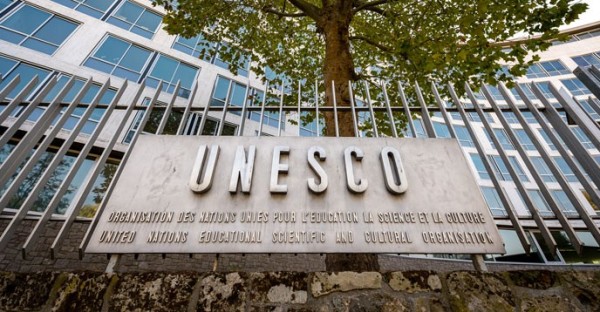
Politicians stated that the decision of the Executive Board of the United Nations Educational, Scientific and Cultural Organization (UNESCO) to cancel and nullify the Israeli measures seeking to change the character of the Old City of Jerusalem and its walls is an acknowledgment of the city’s religious legitimacy, its historical dimensions, and a victory for the power of truth and logic.
They explained that the global organization’s decision confirms the greatness of the Old City of Jerusalem, its walls, symbolism, and importance from religious, cultural, and political perspectives, emphasizing that Israel must immediately stop its unilateral actions related to excavations, tampering, destruction, and erasing the city’s historical and religious landmarks.
Dr. Salah Al-Abbadi, Director of Al-Rai Center for Studies and Research, affirmed the importance of the UNESCO Executive Board’s unanimous adoption of the decision concerning the Old City of Jerusalem and its walls, under the agenda item titled “Occupied Palestine,” during its 222nd session in Paris.
He pointed out that this decision comes within the framework of the Jordanian diplomacy efforts led by His Majesty King Abdullah II globally to rally support and solidarity with the international cause and to urge international institutions and organizations to issue decisions that preserve the rights of the Palestinian people.
Dr. Al-Abbadi confirmed that adopting this decision aligns with the Hashemite custodianship over Jerusalem and the Islamic and Christian holy sites, and it demands Israel, the occupying power, to stop all its illegal and unlawful unilateral measures in the Old City of Jerusalem and its walls that target the exceptional cultural and historical value of Jerusalem and endanger the city’s cultural heritage, considering these measures null and void.
He highlighted the importance of the Jordanian stance regarding the Old City of Jerusalem and its walls, including the Islamic and Christian holy sites, and preserving the existing historical and legal status, noting that this decision is a victory for the power of logic and truth over the logic of force on which Israel bases its illegal decisions.
Dr. Al-Abbadi also noted that this decision stems from the importance of Jerusalem, especially since the city has a special legal status based on international law and international legitimacy resolutions, most notably UN General Assembly Resolution 181.
He stated that the issue of Jerusalem falls within the final status issues agreed upon by the Palestinian and Israeli sides, and its fate is to be decided through negotiations and mutual agreement, based on international law and international legitimacy resolutions. Dr. Al-Abbadi emphasized the significant role of Jordanian political, diplomatic, and legal efforts to confirm that East Jerusalem is an occupied city subject to international law and must be the capital of the independent Palestinian state according to the two-state solution principle.
Efforts continue to emphasize the necessity for Israel to fulfill its obligations as the occupying power according to international law and international humanitarian law, especially the 1949 Fourth Geneva Convention and the 1954 Hague Convention.
Dr. Rasha Mubaidin, Professor of Political Science, said that the UNESCO decision was based on several factors, most notably Israel’s non-compliance as the occupying power to stop excavation works, tunnel construction, and all illegal activities in East Jerusalem, and the reflection of the holy city of diverse cultures and religions it has embraced throughout ages.
She added that the Jordanian position has been and remains firm concerning East Jerusalem, which is land under Israeli occupation and whose sovereignty must belong to the Palestinians, with Hashemite custodianship over its Islamic and Christian holy sites, led by His Majesty King Abdullah II of the Hashemite Kingdom of Jordan. The responsibility for protecting the city is an international responsibility according to states’ commitments under international law and international resolutions.
She confirmed that this decision is the result of significant Jordanian efforts in cooperation with their brothers in Palestine, the continuous demand to protect religious, historical, and cultural sanctities, and proving these facts with conclusive evidence for the organization to make its historic decision on the matter.
Mubaidin pointed out that the next step should focus on activating this decision from the Israeli side and respecting the content of previous decisions issued by the Executive Board and the World Heritage Committee concerning Jerusalem.



Recommended for you
Talib Al-Rifai Chronicles Kuwaiti Art Heritage in "Doukhi.. Tasaseem Al-Saba"
Exhibition City Completes About 80% of Preparations for the Damascus International Fair Launch
Al-Jaghbeer: The Industrial Sector Leads Economic Growth
Unified Admission Applications Start Tuesday with 640 Students to be Accepted in Medicine
Egypt Post: We Have Over 10 Million Customers in Savings Accounts and Offer Daily, Monthly, and Annual Returns
His Highness Sheikh Isa bin Salman bin Hamad Al Khalifa Receives the United States Ambassador to the Kingdom of Bahrain