








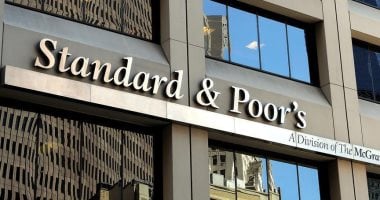
The global rating agency Standard & Poor’s announced the upgrade of Egypt’s credit rating to B with a stable outlook, marking a qualitative shift in international institutions’ perception of the Egyptian economy after a series of deep reforms implemented by the state to achieve financial and monetary stability.
This decision serves as a new vote of confidence reflecting the government’s success in managing public debt, budget, and exchange rates, and its ability to flexibly respond to global economic changes.
Several MPs and experts confirmed that this step signals a strong return of confidence in Egypt’s economy, opening the door for increased investments and improving the country’s financial rating in global markets.
Statements from MPs and Experts
Dr. Ayman Mohsen, Member of Parliament, said that the upgrade to B with a stable outlook is an international endorsement of Egypt’s success in implementing its comprehensive financial and economic reform program. He pointed out that this decision crowns government efforts to achieve monetary and financial stability and boost confidence in the national economy.
Mohsen explained that the agency’s praise for achieving a primary budget surplus of about 3.5% of GDP during the fiscal year 2024/2025 is clear evidence of the government’s strong financial management and strict commitment to fiscal discipline despite global geopolitical and economic challenges.
The MP noted that bold measures taken by the Central Bank of Egypt, including the shift to a flexible exchange rate system, have clearly started to bear fruit by enhancing competitiveness, attracting more foreign direct investment, and stimulating vital sectors such as tourism and remittances from Egyptians abroad, positively impacting the balance of payments and improving Egypt’s external economic position.
Mohsen added that the stable outlook granted by Standard & Poor’s reflects the conviction of major international institutions in the robustness of Egypt’s economy and its ability to balance economic growth targets with reducing budget deficits and public debt levels, which in turn boosts investor and global financial institution confidence in Egypt’s investment environment.
He continued by saying the main challenge ahead is to reduce the cost of servicing public debt and extend its maturities to ease pressure on the general budget. He confirmed that the government is following a clear vision in this regard by expanding long-term financing tools, improving public spending efficiency, and continuing efforts to stimulate productive and export sectors to create real and sustainable economic growth.
Mohsen emphasized that the positive results achieved in Egypt’s credit rating should strongly motivate the continuation of structural and economic reforms and expand the private sector’s role as a key partner in development, contributing to higher growth rates and improved living standards for Egyptians in the medium and long term.
Similarly, Eng. Hazem El-Gendy, Member of the Senate, said that Standard & Poor’s upgrade of Egypt’s credit rating to B with a stable outlook represents a qualitative development in the national economy’s path and reflects the country’s success in restoring the confidence of international financial institutions after a period of severe economic challenges worldwide. He noted the decision carries deep political and economic implications as it is an international recognition of Egypt’s seriousness in implementing comprehensive and continuous reforms balancing growth requirements and support for the needy, alongside fiscal discipline and deficit reduction.
El-Gendy pointed out that the agency’s praise for reforms over the past 18 months reflects the fruits of policies adopted by President Abdel Fattah El-Sisi, including monetary policy through the shift to a flexible exchange rate system and fiscal policy by achieving a primary surplus of 3.5% of GDP in the fiscal year 2024/2025. He stressed these results would not have been possible without full coordination between the government and the Central Bank.
The senator added that the improved credit rating will positively affect several areas, foremost reducing external borrowing costs and improving international financing terms, granting Egypt wider room to implement development and infrastructure projects. It also boosts foreign investor confidence and stimulates direct investment inflows into the local market. He noted the upgrade indicates macroeconomic indicators are moving toward stability, especially with improvements in the balance of payments, increased tourism revenues, remittances from Egyptians abroad, and higher goods and services exports, proving Egypt’s economy is regaining its true balance after external pressures.
Eng. El-Gendy stressed the need to capitalize on this positive rating by continuing structural reforms, enhancing the business environment, simplifying procedures for investors, and expanding partnerships with the private sector as a fundamental partner in sustainable economic development. He confirmed that the upcoming phase requires focusing efforts on addressing challenges highlighted in the report, primarily reducing public debt servicing burdens, improving government spending efficiency, and expanding long-term financing tools.
He noted that Egypt’s success in managing these files will increase the chances of further rating upgrades in the future. He emphasized that Egypt is now reaping the fruits of a genuine reform path started years ago, which requires continuing with the same seriousness to maintain achievements, translate progress into tangible improvements in citizens’ living standards, create new jobs, and strengthen the economy’s ability to face global crises.
Meanwhile, Eng. Mohamed Abdel Hamid, Chairman of the Investment Committee at the Cairo Conference Party Secretariat, confirmed that Standard & Poor’s upgrade of Egypt’s rating from “B-” to “B” reflects the success of economic reforms led by President Abdel Fattah El-Sisi and confirms the restoration of international confidence in Egypt’s economy.
He explained that the shift to a flexible exchange rate contributed to increased investment flows, tourism, and remittances from Egyptians abroad, positively impacting the balance of payments and market stability. He pointed out that achieving a primary surplus of 3.5% reflects the government’s commitment to fiscal discipline.
Abdel Hamid added that the stable outlook confirms the Egyptian economy is on the right path despite challenges, and the rating upgrade opens new horizons for attracting foreign investments and enhances Egypt’s position as one of the promising markets in the region.

Recommended for you
Talib Al-Rifai Chronicles Kuwaiti Art Heritage in "Doukhi.. Tasaseem Al-Saba"
Exhibition City Completes About 80% of Preparations for the Damascus International Fair Launch
Al-Jaghbeer: The Industrial Sector Leads Economic Growth
Unified Admission Applications Start Tuesday with 640 Students to be Accepted in Medicine
Egypt Post: We Have Over 10 Million Customers in Savings Accounts and Offer Daily, Monthly, and Annual Returns
His Highness Sheikh Isa bin Salman bin Hamad Al Khalifa Receives the United States Ambassador to the Kingdom of Bahrain