









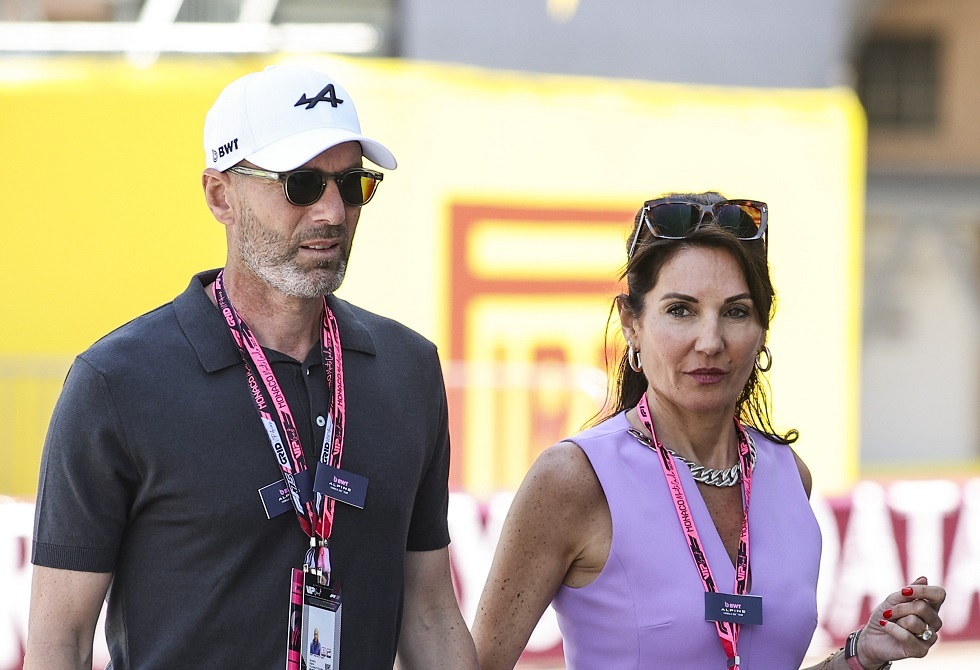
French football legend Zinedine Zidane revealed aspects of his personal life, childhood, passion for football, the team he supported, and his professional career.
Zinedine Yazid Zidane was born on June 23, 1972, in La Castellane, Marseille, southern France. He is the youngest of five siblings. He is of Algerian descent; his parents Ismail and Malika emigrated to Paris in 1953.
Zidane played his first professional match with AS Cannes on May 18, 1989, in a French league game against Nantes, and scored his first goal for the club on February 10, 1991, also against Nantes.
In statements conveyed by Gianluca Di Marzio, a journalist at Sky Sports, Zidane said: “Like all kids, I learned to love football in the streets 45 years ago in Marseille. I always played with the ball and was passionate about it. I was a Marseille supporter. My parents are from Algeria and moved to France for work, but life was tough back then. I am happy with my children because they are good people, and that is the most important thing for me.”
Zizou moved from Cannes to Bordeaux in the 1992-1993 season, and after his talent blossomed more at Bordeaux, he transferred to Juventus, Italy’s record champion, in spring 1996 and stayed until 2001.
About his time at Juventus, he said: “The years there were wonderful. I came from France where football was great but not like at Juventus. In Turin, you felt that all you had to do was always win, whether at home or away.”
He continued: “What stuck most in my mind about Andrea Agnelli (former Juventus president) is that when I played well, he called me at six in the morning to congratulate me. He was a noble man and clearly a Juventus fan.”
Regarding Juventus legend Alessandro Del Piero, he said: “He was great and one of the best players in Italy. I was lucky to play with him and many other players for four or five years. We had a really good team, but Del Piero was special.”
On Juventus’ absence from Champions League titles: “It is hard for Juventus to win the Champions League. We reached the final twice and lost, and I don’t know why. It also depends on the club and what it wants. To win the Champions League, you need a lot.”
About his retirement in 2006, he said: “Retirement was what I wanted. What I no longer liked was traveling, hotels, and everything related. When you are in your twenties, it’s fine, but when you get older, it becomes difficult. I could have played for two or three more years.”
The legend Zidane joined Real Madrid in the most expensive football transfer at the time, a record fee of 77.5 million euros, with a contract lasting four seasons until 2005. Later, he coached the royal team in two spells.
Zidane led Real Madrid as coach in two periods, achieving huge successes including winning the Champions League three times and La Liga twice at Santiago Bernabeu stadium.
Zidane played 108 matches for the French national team, leading them to win the 1998 World Cup by scoring two goals in the final against Brazil. He also led them to win the 2000 European Championship and was awarded the best player of the tournament.
Zizou won the Ballon d’Or as the best player in the world in 1998.
He also won the Ballon d’Or for best player in the 2006 World Cup, despite his infamous red card in the final against Italy for headbutting Italian Marco Materazzi.
On the differences between football past and present, Zidane explained: “I think I miss something today compared to the past. When I watch matches, I want to see a more attacking game. It’s true that I miss football of the past a little bit.”



Recommended for you
Talib Al-Rifai Chronicles Kuwaiti Art Heritage in "Doukhi.. Tasaseem Al-Saba"
Exhibition City Completes About 80% of Preparations for the Damascus International Fair Launch
Al-Jaghbeer: The Industrial Sector Leads Economic Growth
Unified Admission Applications Start Tuesday with 640 Students to be Accepted in Medicine
Egypt Post: We Have Over 10 Million Customers in Savings Accounts and Offer Daily, Monthly, and Annual Returns
His Highness Sheikh Isa bin Salman bin Hamad Al Khalifa Receives the United States Ambassador to the Kingdom of Bahrain