









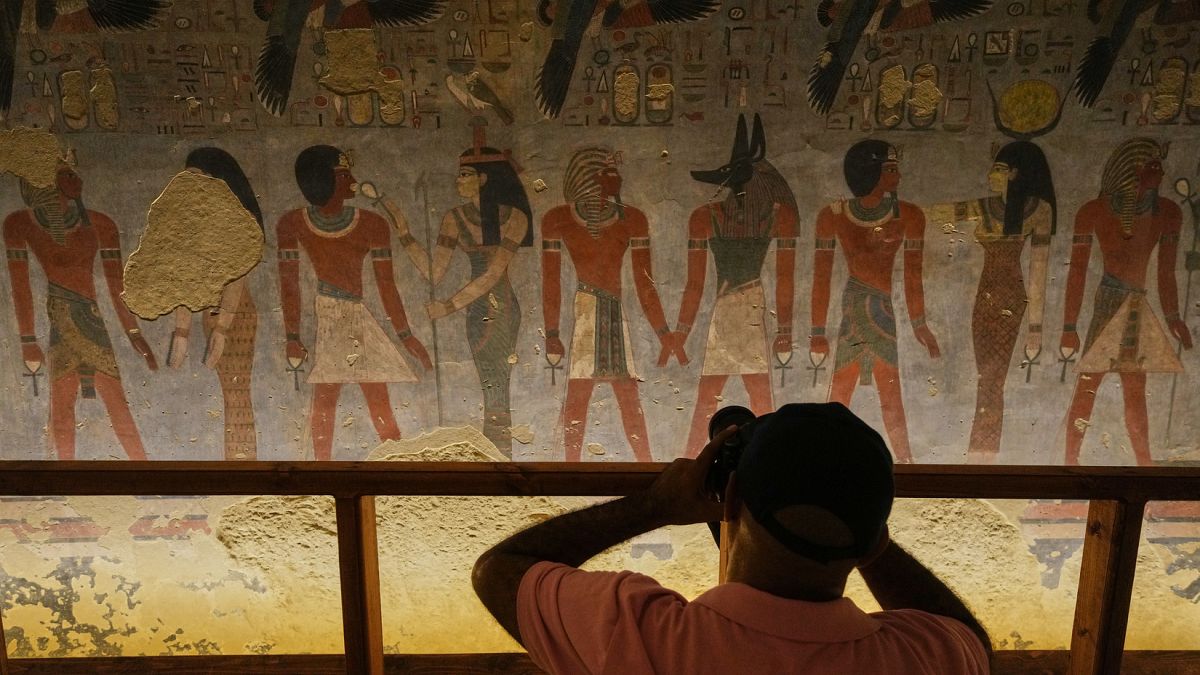
A recent study confirms that the Karnak Temple in Luxor was built on an island formed by changes in the Nile River’s course, with researchers suggesting the first settlement at the site dates back to between 2305 and 1980 BCE.
An international team of archaeologists revealed that the location of Karnak Temple, one of the greatest Egyptian temples and the largest religious complex in the ancient world, is directly linked to Nile River changes and Egyptian creation myths.
The findings indicate that the site’s selection was not random but intended to embody ancient Egyptian beliefs and establish the temple as a spiritual and cultural center.
According to the study published in the journal Antiquity, the Karnak site was submerged by the Nile before 2520 BCE, making it unsuitable for habitation or construction. Over time, the river split into several channels, forming a natural island that became the foundation for safe building and later temple expansion.
Ben Pennington, the study’s lead author and a geoarchaeology fellow at the University of Southampton, said, “This study provides a detailed picture of Karnak Temple’s development, from a small island to one of the most prominent religious monuments in ancient Egypt.”
The researchers analyzed 61 sediment samples from the site and surroundings, along with tens of thousands of pottery shards, to track landscape changes over centuries. Results showed the earliest human settlements date between 2305 and 1980 BCE.
Dominic Parker, a study participant, explained, “The surrounding river channels shaped the site’s construction development. The ancient Egyptians also modified the river course by dumping desert sands to create new land for building.”
One key discovery links the temple’s location to the Egyptian creation myth describing the emergence of the primordial mound from the chaotic waters. Researchers believe the elite in Thebes chose the Karnak site for the Temple of Amun-Ra because it symbolized a cosmic scene integrating elevated land and surrounding waters, just as the myth describes.
Pennington noted, “Middle Kingdom Egyptian texts describe the primordial mound rising from the ‘waters of chaos.’ As the annual flood receded, the mound appeared to emerge from the waters, a scene the ancient Egyptians chose to embody at Karnak.”
Karnak Temple stands as a testament to the ancient Egyptians’ skill in combining geological knowledge, engineering, and religion. The study shows the site was a conscious choice reflecting their religious beliefs, becoming one of the largest religious and cultural complexes in ancient Egypt.
Co-author Christian Strat said, “The age of Karnak has long been debated, but our new evidence provides a clear timeline for the beginning of settlement and construction, helping to understand the history of this great monument.”




Recommended for you
Talib Al-Rifai Chronicles Kuwaiti Art Heritage in "Doukhi.. Tasaseem Al-Saba"
Al-Jaghbeer: The Industrial Sector Leads Economic Growth
Exhibition City Completes About 80% of Preparations for the Damascus International Fair Launch
Unified Admission Applications Start Tuesday with 640 Students to be Accepted in Medicine
Egypt Post: We Have Over 10 Million Customers in Savings Accounts and Offer Daily, Monthly, and Annual Returns
His Highness Sheikh Isa bin Salman bin Hamad Al Khalifa Receives the United States Ambassador to the Kingdom of Bahrain