








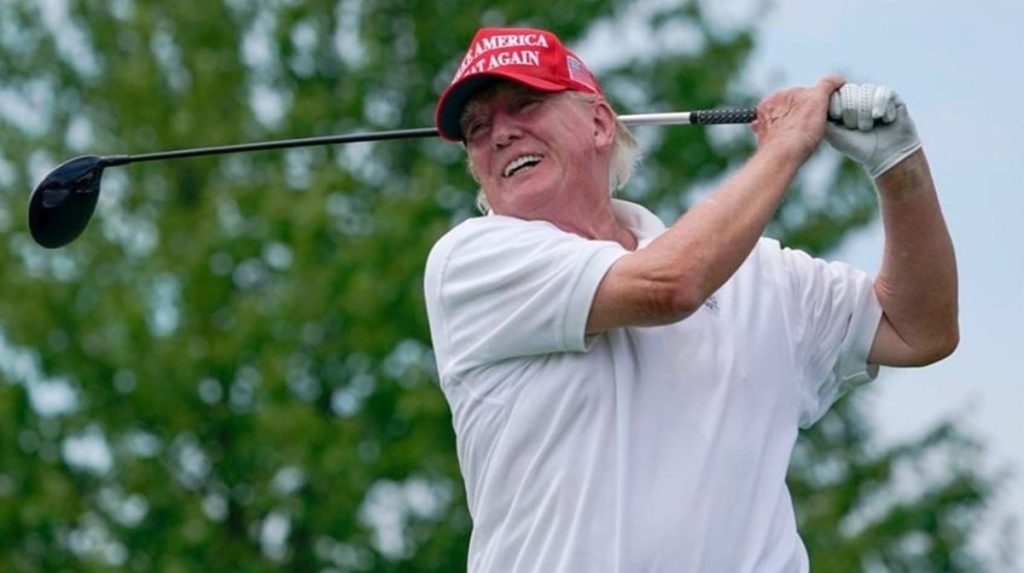
Forget the old myth that every heartbeat is a step toward the end of the body’s “battery”! In the heart of Australia, bold scientific research has turned this equation upside down, providing conclusive evidence that physical fitness is not just an external appearance but the secret to heart economy and longevity. These findings directly refute the old notion promoted by former U.S. President Donald Trump, which assumed the body is a “battery with limited energy” and that exercise drains it.
The Heart’s Battery
A new study published in the journal JACC: Advances revealed that people with good physical fitness not only have stronger hearts but their hearts actually beat significantly less throughout the day compared to non-athletes, giving the heart valuable rest that translates into additional years of life.
Amazing Saving of 11,500 Beats Daily
It was previously believed that intense exercise “consumes” the limited heartbeats. However, the results from a team of Australian researchers shattered this idea with numbers: the average resting heart rate of athletes was 68 beats per minute, while non-athletes averaged 76 beats per minute. Calculating the difference over a full 24-hour day shows that total beats in 24 hours are approximately 97,920 for athletes and 109,440 for non-athletes, meaning athletes’ hearts beat about 11,500 fewer times daily than their inactive counterparts.
Professor La Gerche, head of the Heart Lab at the St Vincent’s Institute of Medical Research, commented on this saving: “This is an amazing saving estimated at about 10% less. Although athletes’ hearts work harder during exercise, the lower resting heart rates more than compensate for that.”
Professor La Gerche explains the scientific mechanism behind this efficiency: “The fitter you are, the more efficient your metabolism… Even if you train hard for one hour a day, your heart rate is slower during the remaining 23 hours. The net result is a lower overall number of beats used.”
A trained heart is an efficient heart; it can pump a larger volume of blood with less effort, meaning it doesn’t need to beat as frequently to perform its duty.
Experts confirm that this decrease in resting heart rate is not only evidence of physical fitness but also a vital indicator of improved overall health and reduced risk of cardiovascular diseases.
Contrary to what some might expect, the greatest benefit does not require extreme endurance events like the Tour de France but lies in moving from inactivity to moderate activity.
The Myth of the “Limited Body Battery”
Former U.S. President Donald Trump’s stance on exercise was controversial and contrary to general medical advice. But this stance was not just laziness; it was based on an old, eccentric personal philosophy about human body functions, the “limited energy battery” theory.
After graduating from college, Trump largely abandoned his sports interests, considering time spent exercising a “waste of time.”
Trump believed that “the human body is like a battery, with a limited amount of energy, and exercise drains it.” As a result of this belief, Trump adopted a lifestyle largely devoid of regular physical activity.
This idea, which is the core of his stance, became notably evident when Trump scolded one of his top casino managers, John O’Donnell, for training for the Ironman triathlon, telling him clearly: “You’ll die young because of this.”
“This Is the Exercise”
In 2015, during his presidential campaign, The New York Times highlighted Trump’s philosophy on health and fitness. Trump noted that he did not follow any special diet or exercise program for the campaign. When asked, Trump summed up his position by saying: “All my friends who exercise regularly have knee and hip replacements, they are a disaster.” He considered that standing in front of an audience for a full hour was “this is the exercise” enough for him.




Recommended for you
Talib Al-Rifai Chronicles Kuwaiti Art Heritage in "Doukhi.. Tasaseem Al-Saba"
Al-Jaghbeer: The Industrial Sector Leads Economic Growth
Exhibition City Completes About 80% of Preparations for the Damascus International Fair Launch
Unified Admission Applications Start Tuesday with 640 Students to be Accepted in Medicine
Egypt Post: We Have Over 10 Million Customers in Savings Accounts and Offer Daily, Monthly, and Annual Returns
His Highness Sheikh Isa bin Salman bin Hamad Al Khalifa Receives the United States Ambassador to the Kingdom of Bahrain