










In the two years following the surprise attack launched by Hamas on Israel on October 7, 2023, two fundamental changes occurred in the strategic balance of power in the Middle East.
First, in terms of hard power (military), Israel emerged as the victorious party, having significantly weakened its enemies in the “Resistance Axis,” especially Hamas, Hezbollah, Syria, and Iran.
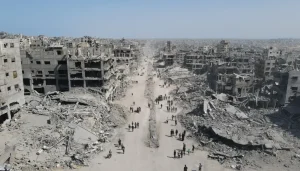
Second, Israel’s international isolation increased due to its brutal assault on the Gaza Strip and the large number of innocent Palestinian casualties killed in the war.
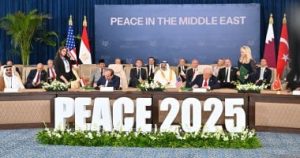
The administration of President Donald Trump made several attempts to mediate to end the conflict. However, the initial American proposals, which suggested evacuating Palestinians from Gaza and rebuilding the area to become a “Riviera” or “new Singapore” on the Mediterranean, were not taken seriously. Nevertheless, Washington’s recent efforts, supported by a broad spectrum of voices in the Arab world, Israel, and Europe, appear more serious. The peace plan includes 20 proposals with multiple phases and conditions. Some new elements in the plan indicate a significant shift in U.S. policy, a shift worthy of careful analysis.
The plan includes familiar language about releasing hostages, prisoner exchanges, and excluding Hamas from governing Gaza after the war. The new aspect is specific references to the roles of Palestinians, including the Palestinian Authority, in rebuilding Gaza and governing it. It also includes a reference to the path leading to Palestinian self-determination or the eventual establishment of a Palestinian state.
After intense pressure from Trump and major Arab countries, both Israel and Hamas agreed to the general framework of the plan, but as is often the case in complex negotiations, “the devil is in the details.”
Both Benjamin Netanyahu and Hamas leaders face intense pressure from their hardline supporters not to make concessions that would weaken or possibly destroy the support they need to survive.
Hamas understands that its negotiating power depends on continuing to hold hostages; once they are released and Hamas is excluded from any role in governing Gaza, its future will be at the mercy of a few regional allies who themselves are in a weak position.
Netanyahu must balance the political support he receives from the far-right, which still seeks to rebuild settlements in Gaza and will never accept the idea of a Palestinian state, against the urgent wishes of the U.S. president.
Trump has openly declared his desire to win the Nobel Peace Prize and will be furious if Netanyahu refuses to comply.
Among the many issues to be resolved, one of the most difficult may be forming the proposed leadership to oversee Gaza’s reconstruction.
Trump’s plan calls for the formation of a “Peace Council” chaired by Trump himself, former British Prime Minister Tony Blair, and several other international leaders yet to be identified, in addition to non-political Palestinian technocrats.
Other obstacles that will hinder reaching an agreement include mechanisms to disarm Hamas, the timetable and implementation of Israeli troop withdrawals, the formation of an international stabilization force, and its rules of engagement. The hardest will be the processes facilitating discussions about the future Palestinian state.
Plans to end the war may take a long time and could ultimately fail. However, the essential elements of the current proposal are necessary components of any final settlement. Ignoring them would make further violence in the region highly likely.
Ultimately, Iran may regain some of its offensive capabilities, and the possibility of major arms deals between Iran and Russia could disrupt the current military balance that favors the United States and Israel. Thus, the risks of Trump’s plan cannot be greater than its security benefits.


Recommended for you
Talib Al-Rifai Chronicles Kuwaiti Art Heritage in "Doukhi.. Tasaseem Al-Saba"
Exhibition City Completes About 80% of Preparations for the Damascus International Fair Launch
Al-Jaghbeer: The Industrial Sector Leads Economic Growth
Unified Admission Applications Start Tuesday with 640 Students to be Accepted in Medicine
Egypt Post: We Have Over 10 Million Customers in Savings Accounts and Offer Daily, Monthly, and Annual Returns
His Highness Sheikh Isa bin Salman bin Hamad Al Khalifa Receives the United States Ambassador to the Kingdom of Bahrain