










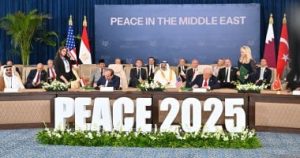
The Middle East urgently needs peace that leads to stability, especially amid regional and international contexts seeking this opportunity after more than seven decades of threats, conflicts, and crises.
There is currently international optimism not only to end the world’s longest wars but also to establish an independent Palestinian state with East Jerusalem as its capital, with 158 out of 193 UN member states recognizing this state.
This is an important indicator that will significantly impact the ongoing efforts to end the Gaza war, which recently marked two years since it began on October 7, 2023.
The peace sought by the countries of the region, especially the Gulf states, is that no party should wield military or nuclear threats against others, nor should anyone politically exploit the Palestinian cause, which unfortunately many do in our region.
France — the European country independent in its foreign policy since the era of its immortal president Charles de Gaulle — recognized the Palestinian state, giving a moral boost to other European countries to follow this path.
China’s strong and unprecedented condemnation of Israeli arrogance at the United Nations, following the attack on Qatar, suggests that regional countries, especially the Gulf states, are working to correct the international course in the region to serve their security and stability. They affirm they will not allow their future to be held hostage by any biased ally supporting a party that threatens regional stability. This task may be difficult but achievable in the long term with diplomatic efforts that Gulf countries have mastered, including influential tools in international decisions such as economy and investments.
The global popularity of the American peace plan can also be viewed from the perspective of Gulf support, as the active diplomatic player in the Arab region currently is the Gulf states, given their new pressure tools.
Also, former President Trump is preparing to win the Nobel Peace Prize, which is expected to be announced today, October 10. Therefore, his seriousness in supporting this peace plan may be temporary, but what matters to the region is that the matter is no longer solely in the “American basket.” Thus, the White House administration must establish alternative relations in dealing with Israel and its right-wing government, especially as all political conditions are ripe to involve regional countries. Then, Trump’s success will not be limited to winning the Nobel Prize but also achieving peace in the region and the world through this complex crisis, which in itself will be a historic achievement credited to him.

Recommended for you
Talib Al-Rifai Chronicles Kuwaiti Art Heritage in "Doukhi.. Tasaseem Al-Saba"
Exhibition City Completes About 80% of Preparations for the Damascus International Fair Launch
Al-Jaghbeer: The Industrial Sector Leads Economic Growth
Unified Admission Applications Start Tuesday with 640 Students to be Accepted in Medicine
Egypt Post: We Have Over 10 Million Customers in Savings Accounts and Offer Daily, Monthly, and Annual Returns
His Highness Sheikh Isa bin Salman bin Hamad Al Khalifa Receives the United States Ambassador to the Kingdom of Bahrain