







Amid protests in several Moroccan cities over the deteriorating services in public hospitals and health centers, the Democratic Forces Front party has called for a “comprehensive national dialogue on health.” The party considers that there is a “strange paradox” in the sector’s reality, where protest expressions are rising while the state is engaged in major projects such as universal health coverage and system restructuring.
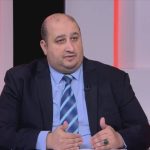
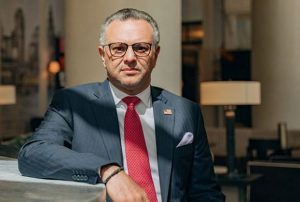
Mustafa Bennali, the party’s Secretary-General, explained that there are strategic directions by the state, especially in establishing social protection and universal health coverage under the leadership of King Mohammed VI, yet citizens suffer from weak and fragile health services and a shortage of health personnel.
Bennali noted that Morocco has only held two national health dialogues: the first in 1959 after independence, which laid the foundations for a national health system, and the second in Marrakech from July 1 to 3, 2013, under the slogan “For a New Governance of the Health Sector.” He stressed that more than twelve years since the 2013 dialogue require an independent evaluative review of the national health charter’s outcomes and updating its priorities.
The party also emphasized the need to reduce regional disparities in access and quality of services, requiring a territorial commitments charter with measurable performance indicators and accountability. Bennali referred to the King’s Throne Day speech highlighting a Morocco moving at two speeds across sectors, including health, with three regions monopolizing almost all available sector resources.
The Secretary-General added that various issues in the health sector necessitate this national dialogue, including the need to align the new governance framework with actors and newly established institutions, with clear definitions of jurisdiction and inter-coordination at national and regional levels.
Furthermore, the party includes among the reasons supporting a third national health dialogue: a stronger national health security after lessons from the pandemic, including early warning, preparedness, strategic stockpiling, and supply chains; pharmaceutical and biotechnological sovereignty through promoting local manufacturing, technology transfer, and linking procurement policies with manufacturing and R&D; and valuing human resources through proactive planning to fill shortages, redistribute competencies, incentives, and fair career paths.
The political body also aims for a balanced partnership between public and private sectors based on contracts focused on value and quality of outcomes rather than activity volume, accelerating digital health transformation via a unified health record, interoperability, data governance, artificial intelligence, and cybersecurity.
The party hopes the dialogue will produce conclusions and recommendations crystallized into a shared vision for the next ten years, with multi-year financial programming and an executive roadmap with impact indicators and defined responsibilities.
Bennali added that Morocco must have a clear strategic vision (a national charter) capable of elevating health services to the level citizens aspire to, especially as the sector faces major transformations, including restructuring; the territorial health group for the Tangier-Tetouan-Al Hoceima region is expected to launch soon, along with efforts to guarantee a public hospital for all social classes and define contractual functions among all actors and intervening sectors.
The party official stated that since 2002, they have been working on a national social health charter that defines the health map, coordinates actors, ensures basic treatments and services, and guarantees the success of the health coverage project with sustainable financing and equitable distribution based on solidarity among regions and areas.
He stressed that investments in infrastructure and other sectors in Morocco cannot succeed without productive investments in human capital, especially in education and health, and that this focus is part of the party’s realistic program for upcoming electoral commitments.
Recommended for you
Talib Al-Rifai Chronicles Kuwaiti Art Heritage in "Doukhi.. Tasaseem Al-Saba"
Exhibition City Completes About 80% of Preparations for the Damascus International Fair Launch
Al-Jaghbeer: The Industrial Sector Leads Economic Growth
Unified Admission Applications Start Tuesday with 640 Students to be Accepted in Medicine
Egypt Post: We Have Over 10 Million Customers in Savings Accounts and Offer Daily, Monthly, and Annual Returns
His Highness Sheikh Isa bin Salman bin Hamad Al Khalifa Receives the United States Ambassador to the Kingdom of Bahrain