






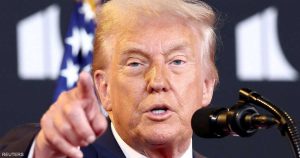

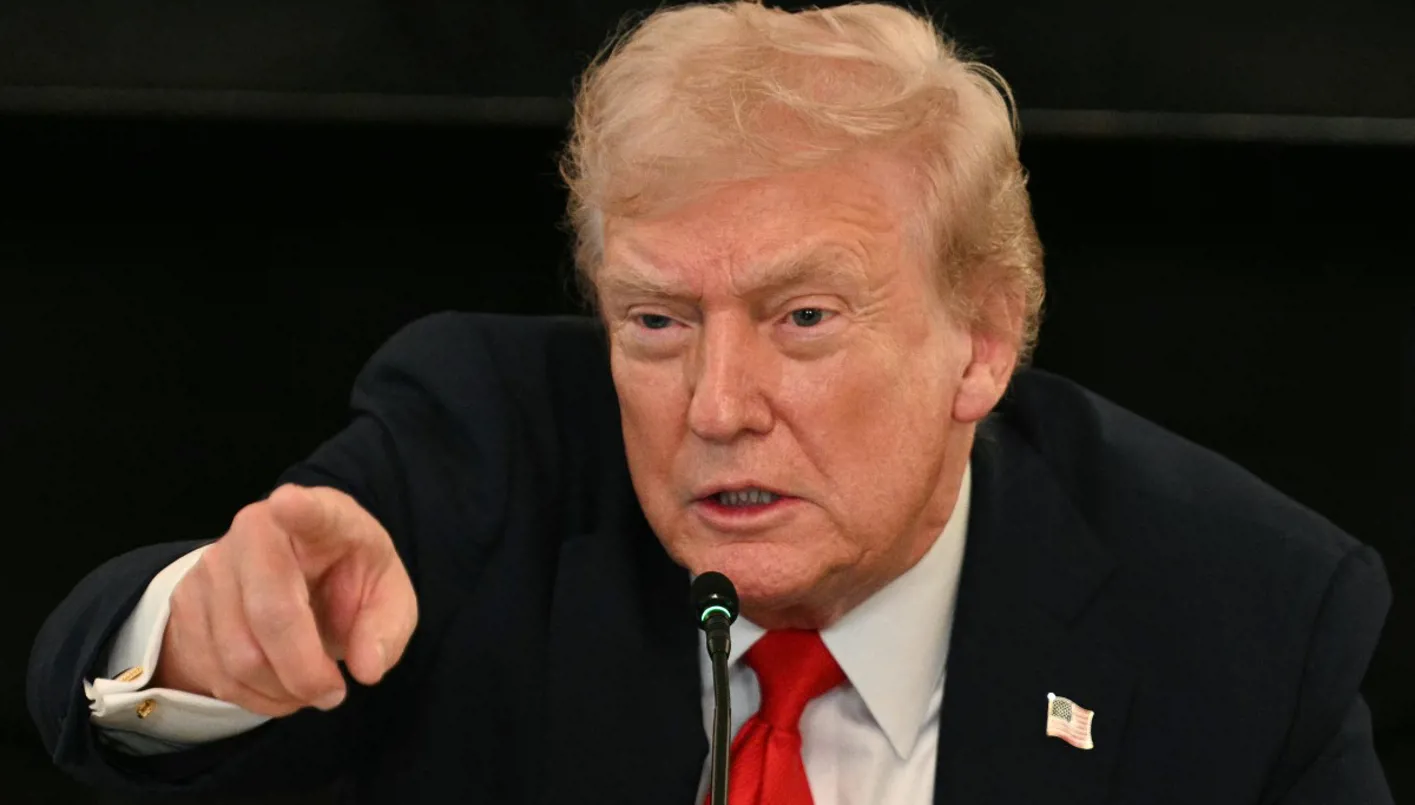

President Donald Trump’s statements on October 6, 2025, about the possibility of approving the delivery of “Hawk” missiles to Europe, and possibly giving them to Ukraine after payment as a new deal, are provocative. Trump said he “has some outstanding questions” before making a final decision, a phrase loaded with political messages; it does not mean outright rejection, nor full approval, but indicates that Trump is reshaping the U.S. stance based on America’s national interest rather than transatlantic support.
Supporting this idea is Trump’s and Putin’s agreement to extend the Intermediate-Range Nuclear Forces Treaty, which is set to expire in early 2026.
Notably, Trump’s remarks came after a series of European meetings and pressures during the United Nations General Assembly in New York, where European leaders sought to convince Washington to continue military support for Kyiv. It is likely Trump chose to address the “Hawk” missile issue at this time to send a dual message: on one hand, he does not want to appear as abandoning Europe; on the other, he wants to remind European leaders that U.S. support is not free and that they must bear more financial and military responsibilities.
These statements can be understood as a political pressure tool on both Russia and Ukraine simultaneously. It signals that Washington still holds effective cards that can change the balance of power on the ground, but it will only use them if it serves American interests. In other words, Trump uses the language of “possibility” and “hesitation” as a negotiation tool to encourage the conflicting parties to sit at the negotiating table from a position of strength.
What Trump proposes is a redefinition of the American role in the Ukrainian war. Instead of getting involved in a prolonged conflict that exhausts Washington, he wants to turn military support into a pressure tool to achieve a political settlement that guarantees his country’s strategic interests.
Trump’s recent statements reflect the features of a new approach based on pragmatism and selectivity in dealing with international issues. This approach views alliances not as permanent commitments but as means to achieve interests. This makes the threat of “Hawk” missiles part of a policy of “deterrence and diplomacy” toward Putin.


Recommended for you
Talib Al-Rifai Chronicles Kuwaiti Art Heritage in "Doukhi.. Tasaseem Al-Saba"
Exhibition City Completes About 80% of Preparations for the Damascus International Fair Launch
Al-Jaghbeer: The Industrial Sector Leads Economic Growth
Unified Admission Applications Start Tuesday with 640 Students to be Accepted in Medicine
Egypt Post: We Have Over 10 Million Customers in Savings Accounts and Offer Daily, Monthly, and Annual Returns
His Highness Sheikh Isa bin Salman bin Hamad Al Khalifa Receives the United States Ambassador to the Kingdom of Bahrain