







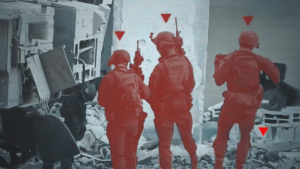


Last week, two historic occasions passed over the region and the world on two consecutive days of the same month, separated by half a century, perfectly.
On October 6, 1973, the fourth conventional war broke out between the Arabs and Israel. On October 7, 2023, an unconventional war erupted between the Palestinians (factions in Gaza) and Israel. In both confrontations, the initiative was Arab, and both challenged who would dominate the region’s resources. Both battles tested the deterrence capabilities of the parties involved, and both had global echoes reverberating across the world, east and west, north and south.
There are commonalities between the two events, all indicating that the Middle East is the most unstable spot in the world. Historically, culturally, and religiously, it is one of the most tense regions globally, with geopolitical value at the heart of the old and new world. Whoever controls it holds significant sway not only over regional and global dominance but also the decisive say in the future peace of the region and the world. The two confrontations, occurring within one human generation, are governed by a zero-sum equation, too significant to be resolved in a single historical period, even if separated by half a century. It is an eternal confrontation, deriving its “dialectical” historicity from elements seemingly impossible to reconcile, far from compromise and non-negotiable.
However, just as the will to fight has its own agenda, once its fire is extinguished, it flares up again, even if after a while. Yet, the will for balance and stability also proves its merit, even if temporarily. In all cases, peace remains elusive and its will cannot be decided all at once.
It seems the conflict parties in the region are not governed by values of peace but rather succumb to the temptation to continue fighting without foresight of the benefits of peace and the severity of the dominance of the spirit of conflict, which recurs at the expense of short periods of calm and stability, according to the laws of nature and its balances.
This is unlike the long and bitter recent war that lasted two years, with no apparent near end in sight. A war that drained many resources and used many humans as fuel to keep its flame burning, with severe damage to the region’s stability and even the world’s security and peace. A war characterized by the length, comprehensiveness, and extent of its violence, not limited to its narrow battlefield. A war that the international system’s institutions and laws failed to bring close to an end. Unlike its predecessor (the 1973 war), where international institutions succeeded in less than three weeks to end it, as an indicator of both sides exhausting their arsenals and emptying their objectives and solutions.
The two wars differed in the identity of their parties and in their management methods and goals. The 1973 war was between two armies with similar international identities as members of the community of nations, each seeking to enhance the security of its sovereign territory in a region poor in resources but rich in geopolitical, security, and historical potential.
The recent war is between two parties; one belongs to the community of nations and claims the right of self-defense, while the other, though not part of the community of nations, uses its institutions, laws, customs, and movements to become a recognized international member.
The October 1973 war was between two armies whose conflict was governed by a sensitive balance of power, although one may have possessed an undeclared unconventional deterrent. The current war is between two non-regular armies. One possesses lethal deterrent tools but is not deterred from committing war crimes, descending into genocide against its opponent. The other possesses remarkable resilience, will, and determination to wage an unequal war with unparalleled patience and endurance. One enjoys regional and international system support, while the other lacks both but has global public sympathy and support for its cause.
Whatever the outcome of the current war, which will not resemble previous wars’ endings, it will likely be closer to a truce than a decisive solution. Even if it ends, its regional and international repercussions may be seen by some as a victory for humanity and love of peace. Palestinians will gain global support and sympathy, while Israel and its leaders will face real difficulties reintegrating into the community of nations and will face legal challenges preventing them from acting politically with calm and confidence.
Two wars in half a century may determine the course of the international system, carrying real question marks about the fate of global security, stability, and peace.

Recommended for you
Talib Al-Rifai Chronicles Kuwaiti Art Heritage in "Doukhi.. Tasaseem Al-Saba"
Exhibition City Completes About 80% of Preparations for the Damascus International Fair Launch
Al-Jaghbeer: The Industrial Sector Leads Economic Growth
Unified Admission Applications Start Tuesday with 640 Students to be Accepted in Medicine
Egypt Post: We Have Over 10 Million Customers in Savings Accounts and Offer Daily, Monthly, and Annual Returns
His Highness Sheikh Isa bin Salman bin Hamad Al Khalifa Receives the United States Ambassador to the Kingdom of Bahrain