









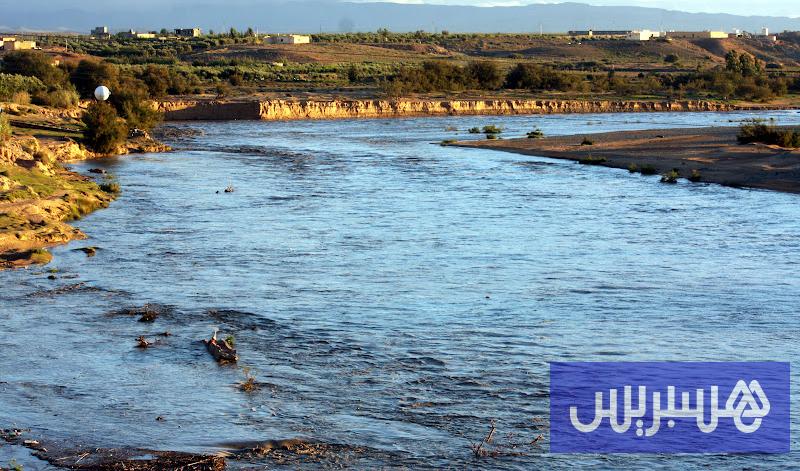
Mohamed Benaata, coordinator of the Environmental Assembly of Northern Morocco, stated that the Moulouya River, one of the largest and most important rivers in the kingdom, is experiencing an unprecedented environmental crisis threatening its existence as a vital and integrated ecosystem due to excessive and unregulated exploitation of its water resources.
Benaata explained in a statement to Hespress electronic newspaper that this crisis is a worrying indicator of the fragility of the water management system in the eastern region, amid increasing agricultural demand and weak field monitoring by the concerned authorities.
The coordinator noted that the crisis began to worsen since 2020, following the establishment of a pumping station in the Oulad Stout area, recalling that numerous official letters were sent to officials including the Minister of Equipment and Water, the Minister of Agriculture, the Wali of the Eastern Region, the provincial governors of Berkane and Nador, the regional director of water and forests, and the director of the Moulouya Water Basin Agency, warning them of the serious environmental deterioration threatening the river due to excessive depletion of its resources.
The environmental activist mentioned that the situation worsened due to legal violations and chaos in water exploitation, where the ecological flow was almost completely depleted and water was diverted towards agricultural uses at the expense of environmental balance. He confirmed that the Oulad Stout station is considered an illegal and poorly studied facility in terms of environmental impact, which exacerbates the crisis.
The speaker emphasized that the lack of law enforcement worsened the situation, pointing out that the Water Law explicitly calls for protecting the ecological flow and preserving biodiversity; however, the weak intervention of monitoring bodies such as the Water Police, the Water Basin Agency, and local authorities allowed violations to escalate unchecked.
The environmental activist called for urgent intervention by the competent authorities to restore discipline in water resource management and ensure compliance with legal provisions that preserve the river’s ecosystem, warning that “the spread of solar-powered pumps has contributed to accelerating water depletion by facilitating uncontrolled pumping, leading to a decline in the natural flows necessary for the continuity of aquatic life in the Moulouya River course.”
Mohamed Benaata concluded his statement by renewing the call for reviewing water management policies at both regional and national levels to ensure a balance between human needs and environmental requirements.



Recommended for you
Talib Al-Rifai Chronicles Kuwaiti Art Heritage in "Doukhi.. Tasaseem Al-Saba"
Exhibition City Completes About 80% of Preparations for the Damascus International Fair Launch
Al-Jaghbeer: The Industrial Sector Leads Economic Growth
Unified Admission Applications Start Tuesday with 640 Students to be Accepted in Medicine
Egypt Post: We Have Over 10 Million Customers in Savings Accounts and Offer Daily, Monthly, and Annual Returns
His Highness Sheikh Isa bin Salman bin Hamad Al Khalifa Receives the United States Ambassador to the Kingdom of Bahrain