









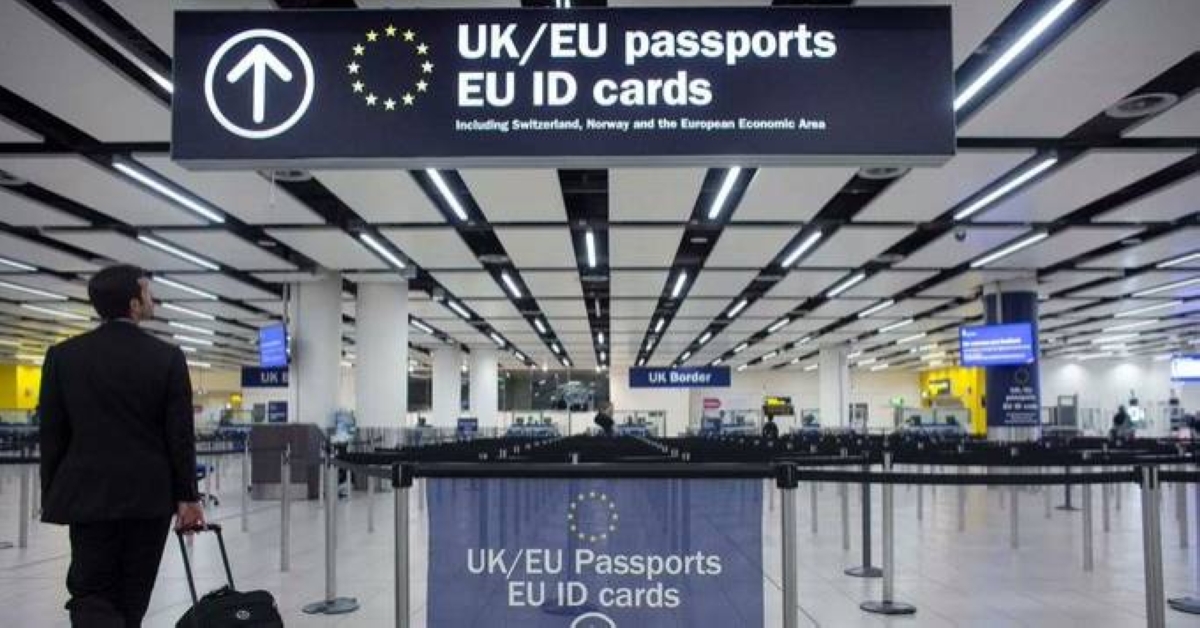
The European Union announced the activation of the entry-exit system next Sunday, reviving the effects of “Brexit” on British second-home owners in Europe. This threatens thousands of Britons owning holiday homes in EU countries with fines, expulsion, or bans on returning for years if they exceed the maximum allowed stay.
Britons, as non-EU citizens after “Brexit,” are limited to a maximum of 90 days within any 180-day period. This includes second-home owners who spend extended periods in countries like France, Spain, and Italy.
British travelers will be subject to new border checks including fingerprint scanning and questions about return tickets, health insurance, and sufficient funds, potentially causing long queues at airports and travel disruptions.
The entry-exit system is part of broader EU border measures to enhance security and combat illegal immigration, but it places thousands of Britons in a difficult position. It is estimated that there are over half a million British second-home owners in Europe, with concentrations in France (around 86,000 Britons) and Spain.
British owners of these homes are no longer eligible for permanent residence unless they obtain long-term visas or prove residence before 2021 under the Withdrawal Agreement, prompting some to sell their properties or reduce visits.
In France, where left-wing politicians economically favor second-home owners, courts rejected abolishing the 90-day rule despite proposals for temporary relief such as six-month visas once a year. In Spain, the leftist government threatens to double taxes on homebuyers who are non-residents outside the EU, complicating matters further.
“Brexit,” which ended freedom of movement for Britons in the EU since 2021, has led to bureaucratic complications for expatriates, including loss of unlimited residence rights and imposition of the 90/180-day rule for short visits.
Yacht and caravan owners and students also suffer, with concerns about the entry-exit system’s impact on local economies in popular British tourist areas such as the Greek islands or Spain’s Costa del Sol, where they contribute economically.
The British government expressed that negotiations to extend the 90-day limit were unsuccessful, considering it not part of post-Brexit agreements. This angered expatriates who demand changes to keep their properties without selling. Meanwhile, similar restrictions are imposed in the UK on European citizens, with increased taxes on second homes to address the housing crisis. The European approach is seen as partial “revenge” for Brexit.




Recommended for you
Talib Al-Rifai Chronicles Kuwaiti Art Heritage in "Doukhi.. Tasaseem Al-Saba"
Exhibition City Completes About 80% of Preparations for the Damascus International Fair Launch
Al-Jaghbeer: The Industrial Sector Leads Economic Growth
Unified Admission Applications Start Tuesday with 640 Students to be Accepted in Medicine
Egypt Post: We Have Over 10 Million Customers in Savings Accounts and Offer Daily, Monthly, and Annual Returns
His Highness Sheikh Isa bin Salman bin Hamad Al Khalifa Receives the United States Ambassador to the Kingdom of Bahrain