









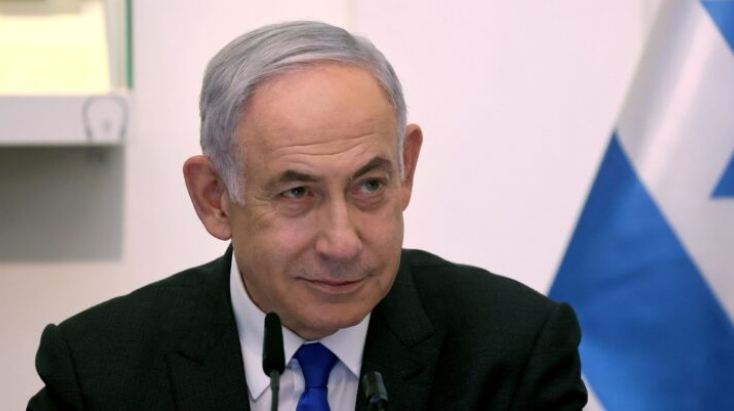
The issue of the ceasefire in Gaza has sparked an Israeli division regarding the possibility of dropping charges against Israeli Prime Minister Benjamin Netanyahu, which were issued by the International Criminal Court (ICC) in November 2024.
At that time, the court issued arrest warrants for Netanyahu and his former Defense Minister Yoav Galant, accusing them of crimes against humanity and war crimes from October 8, 2023, to at least May 20, 2024, the day the prosecution filed the arrest warrant requests.
The court considered that the “alleged conduct” of Netanyahu and Galant falls within its jurisdiction, referring to a previous decision that the court’s jurisdiction extends to Gaza and the West Bank, including East Jerusalem.
In a report, the Hebrew newspaper Yedioth Ahronoth stated on Saturday that Israeli officials are optimistic that the end of the war might positively affect the case pending in The Hague.
A senior Israeli official familiar with the details told the newspaper’s website that “these cases are unjustified and were raised for external reasons,” noting that “there is ambiguity surrounding the considerations and circumstances of issuing the arrest warrants.”
He described the issuance of the arrest warrants as “a stain on the entire institution’s reputation,” adding, “The whole story is a disgrace; therefore, in my opinion, they will look for an opportunity to reverse this approach.”
Meanwhile, British-Israeli lawyer Nicholas Kaufman, who worked as a defense attorney at the ICC, said that reports of U.S. President Donald Trump’s intention to impose sanctions on the entire court would be a “major reward” for Netanyahu.
Last month, Reuters reported that the United States is considering imposing sanctions on the ICC in response to investigations into war crimes committed by Israel.
In early February, Trump signed an executive order to impose sanctions on the ICC and declared a “national emergency to deal with the threat posed by the court’s efforts.” He criticized the court’s issuance of arrest warrants.
Trump considered the court to have engaged in “illegal and baseless actions,” targeting the United States and its close ally Israel, and “claimed—without basis—jurisdiction over individuals from the U.S. and some of its allies, including Israel.”
The lawyer believed Trump would now follow a “carrot and stick” approach and use “sanctions” as leverage to ensure Netanyahu fulfills his commitments in the hostage deal.
However, he stressed that the only way to cancel the arrest warrants against Netanyahu and Galant is through a “judicial decision.”
The Jerusalem Post suggested that cases filed against Israel at the ICC and the International Court of Justice will likely not end even if the war ends and Israeli hostages are released in the coming days.
In a report published last Thursday, the newspaper ruled out canceling the arrest warrants against Netanyahu and Galant “as a reward for ending the war.”
It noted that “all indications suggest that the ICC enjoys full support from its mostly European contributors and is preparing for a long-term battle against Israel, regardless of political and financial consequences.”
It pointed out that the best-case scenario in this context is convincing the ICC not to issue further arrest warrants, which could include soldiers from the Israeli occupation army.
Meanwhile, ICC spokesperson Fadi Al-Abdallah emphasized that the arrest warrants “remain valid and effective unless the court judges themselves decide to withdraw them for a compelling legal reason.”
In an interview with Al Jazeera Mubasher last Wednesday, he said there are appeals filed by Israel, denying a specific date for a decision on those appeals, especially since investigations are ongoing and confidential.
He stated that Israel requested the withdrawal of those warrants, with matters under consideration by the appeals chamber, noting that “the pre-trial judges rejected the request, so the warrants remain valid for now.”
He explained that “the court’s jurisdiction regarding the conflict is linked to Palestine’s accession to the Rome Statute,” saying that “Palestine granted the court jurisdiction over crimes committed on its territory or by its nationals even on other countries’ territories.”
He noted that 125 countries are legally obligated to cooperate with the court, including executing arrest warrants for suspects, stressing that “Netanyahu leaving power does not mean the arrest warrant is void.”
When asked how the Gaza agreement would affect the judges’ view of the arrest warrants, he replied: “Judges apply the law, and it depends on the applicable legal rules and the evidence before the judges. All political considerations cannot be introduced into the legal review of a specific matter, and we must isolate and protect the legal case from any politicization to ensure true justice and respect for the rights of all; suspects and victims.”
In a related context, he pointed out that the charges against Netanyahu are mainly based on “using starvation as a weapon,” falling within war crimes and crimes against humanity, not genocide.
He mentioned that “genocide requires different legal elements and several criminal acts including killing, transferring children from one group to another, and proving the intent to destroy a group due to religious, racial, ethnic, or other differences.”


Recommended for you
Al-Jaghbeer: The Industrial Sector Leads Economic Growth
Talib Al-Rifai Chronicles Kuwaiti Art Heritage in "Doukhi.. Tasaseem Al-Saba"
Exhibition City Completes About 80% of Preparations for the Damascus International Fair Launch
Unified Admission Applications Start Tuesday with 640 Students to be Accepted in Medicine
Egypt Post: We Have Over 10 Million Customers in Savings Accounts and Offer Daily, Monthly, and Annual Returns
His Highness Sheikh Isa bin Salman bin Hamad Al Khalifa Receives the United States Ambassador to the Kingdom of Bahrain