








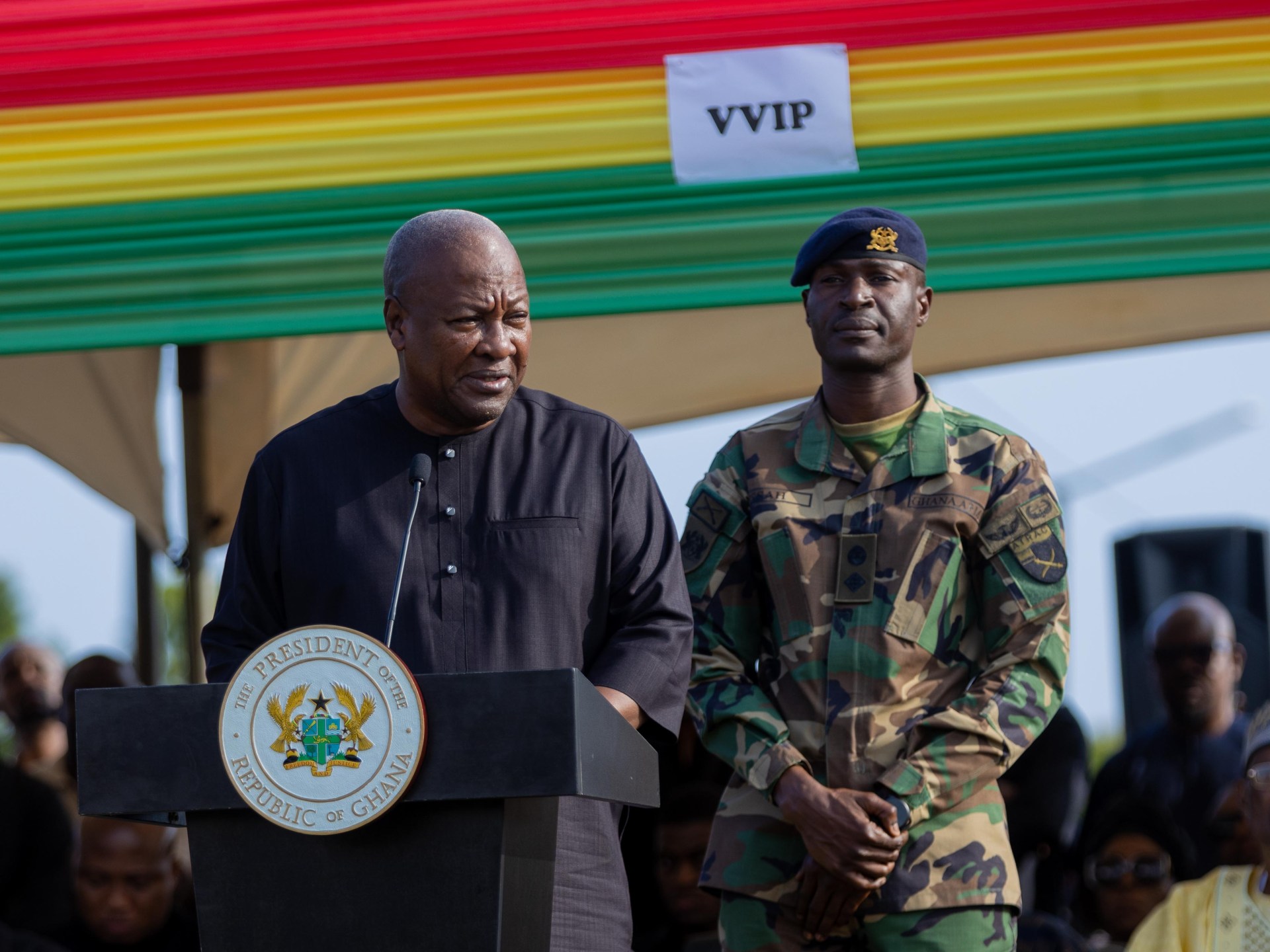
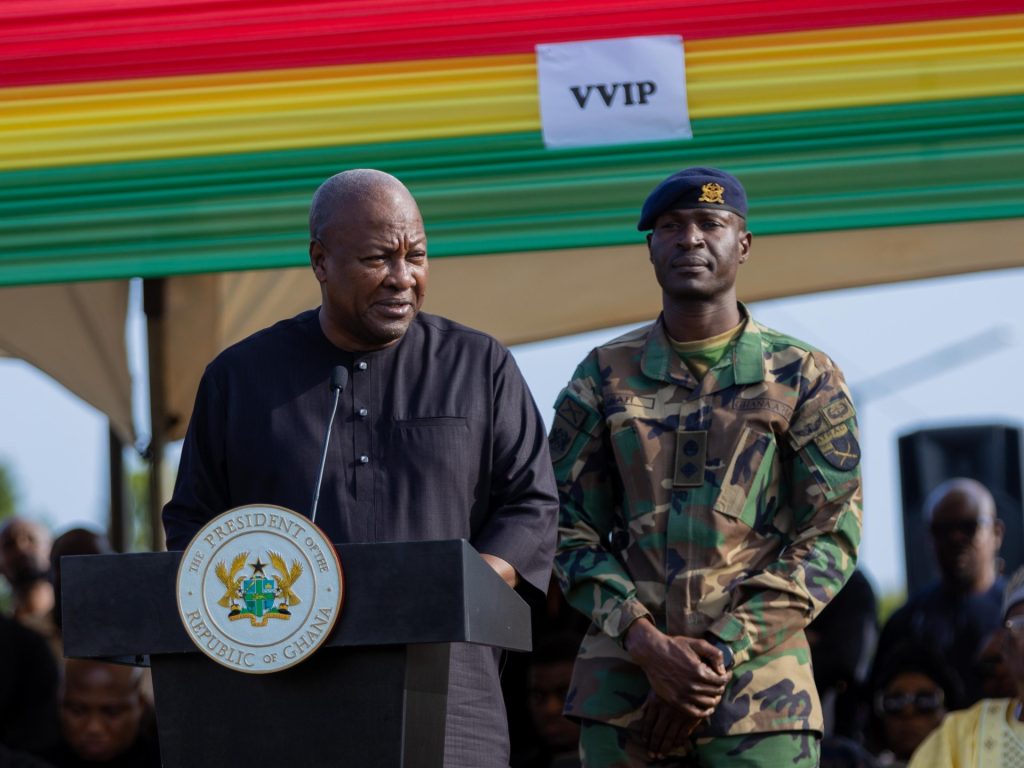
Attention in Ghana turns to the city of Akwatia – located in the heart of the diamond belt – where a crucial by-election will be held tomorrow, September 2nd. This election serves as an early test of President John Mahama’s policies and a decisive measure of the main opposition party, the New Patriotic Party’s ability to maintain its remaining parliamentary influence.
This election comes just seven months after Mahama returned to power following his victory over the New Patriotic Party in the December 2024 elections, according to a report by Africa Report.
Akwatia, about 105 kilometers from the capital Accra, is historically known as the “Diamond City,” but the decline of the diamond sector has pushed residents to rely on agriculture and artisanal gold mining.
This economic shift accurately reflects the political mood swings in the region, which has oscillated between the New Patriotic Party and the National Democratic Congress since 1992.
Although the city lies within the New Patriotic Party’s stronghold, it has not shown consistent loyalty to any side.
In the 2024 elections, the late MP Ernest Komi of the New Patriotic Party won by a narrow margin of just over two thousand votes, making this seat a battleground between the country’s two main political rivals.
Dr. Jonathan Asante Ochiri, a political science professor at the University of Cape Coast, told Africa Report that “people tend to vote where power lies, and Akwatia residents are likely to vote for the National Democratic Congress this time, given the improved economic situation and falling living costs.”
The elections are held amid signs of relative economic recovery, with inflation dropping from over 45% during former President Nana Akufo-Addo’s tenure to about 12%, and food prices beginning to stabilize, according to the government, which sees this as evidence of the success of its economic rescue plan.
In this context, Johnson Asiedu Nketiah, leader of the National Democratic Congress, stated that “Akwatia residents will vote for continuity and progress,” affirming that the party will not interfere with police work and trusts institutions to protect the electoral process.
Conversely, the New Patriotic Party views this election as a battle to defend democracy, warning of “sabotage plots” attributed to its opponents.
Richard Ahiagbah, communications director of the party, said they have intelligence indicating that the National Democratic Congress is training “thugs” disguised as security personnel to influence voting outcomes.
Akwatia is no stranger to political tensions; the 2008 elections saw violence that required security forces’ intervention.
Recently, violent incidents occurred in by-elections in other Accra neighborhoods such as Ablekuma North, Ayawaso West, and Okaikwei North, raising concerns ahead of polling day.
To prevent escalation, National Police Commander Christian Tetteh Yohuno announced the deployment of 5,000 security personnel in the city.
The National Peace Council also called for restraint, with Sheikh Armiyao Shaib stating, “Elections are not wars, and Akwatia must not become a battlefield.”
The death of MP Komi left the New Patriotic Party with only 87 seats in the 275-member parliament, compared to 137 for the National Democratic Congress, with the remaining seats held by independents.
Therefore, losing Akwatia would deepen the New Patriotic Party’s dilemma and weaken its ability to oppose government bills.
Political researcher Joshua Gibenti Zatu of the University of Ghana confirms that “the battle in Akwatia is symbolic and strategic; the New Patriotic Party may rely on voter sympathy, but losing would clearly indicate a shift in public mood in favor of the National Democratic Congress.”
For Mahama’s government, winning the seat would reinforce the narrative of economic recovery and provide a strong political boost at the start of its term.
A loss, however, would show lingering doubts in areas traditionally not loyal to the ruling party.
With more than 52,000 registered voters spread across 119 polling stations, the Akwatia election will be closely watched not only politically but also economically, in a city once the jewel of Ghana’s diamond industry before becoming a symbol of unemployment and economic contraction.


Recommended for you
Talib Al-Rifai Chronicles Kuwaiti Art Heritage in "Doukhi.. Tasaseem Al-Saba"
Al-Jaghbeer: The Industrial Sector Leads Economic Growth
Exhibition City Completes About 80% of Preparations for the Damascus International Fair Launch
Unified Admission Applications Start Tuesday with 640 Students to be Accepted in Medicine
Egypt Post: We Have Over 10 Million Customers in Savings Accounts and Offer Daily, Monthly, and Annual Returns
His Highness Sheikh Isa bin Salman bin Hamad Al Khalifa Receives the United States Ambassador to the Kingdom of Bahrain