









The sacred lake was an ancient secret to determine the flood timing and annual water levels.
With the daily rise in Nile water levels and the opening of the High Dam gates, “Youm7” highlights the achievements of ancient Egyptian kings in recording Nile water levels throughout history. In the Karnak Temples, the largest place of worship in history covering 247 feddans, there is a series of important inscriptions documenting Nile water levels across various dynasties, involving about 17 kings from different dynasties.
The Karnak Temple Complex
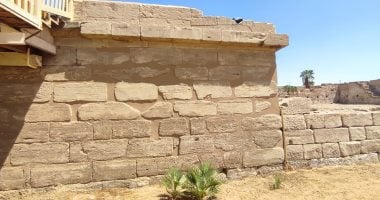
The Karnak temple complex is a historical witness. On the western front of the Karnak temple harbor and beneath the wooden bridge leading inside the temple, there are important inscriptions recording Nile water levels during multiple dynasties, starting from the 22nd dynasty to the 26th dynasty, according to Dr. Mostafa Al-Saghir, General Director of Karnak Temples. Around 17 kings recorded their names and Nile water levels during their reigns.
Nile Water Levels
The list of ancient kings who recorded Nile water levels includes: Sheshonq I, Shoshenq I, Takelot I, Shoshenq II, Sheshonq II, Takelot II, Sheshonq III, Pimay, Sheshonq IV from the 22nd dynasty; Padi-Bast, Shoshenq III, Takelot III, Amenirdis from the 23rd dynasty; Shabaka, Shabataka, Taharqa from the 25th dynasty; and Psamtik I from the 26th dynasty.
Between 2003 and 2010, the Egyptian mission uncovered the largest stone dam and quay in ancient Egyptian history in front of Karnak Temples, over 360 meters long, about 2 meters wide, and 6 meters deep to hold back floodwaters. Part of this stone quay appears in photos at Karnak. Also built inside Karnak is the “Sacred Lake,” measuring 80 meters long and 40 meters wide, located near the Nile. This lake has never dried since its creation during the reign of Pharaoh Thutmose III (1481-1425 BC) and remains a mystery of Pharaonic civilization, used to monitor fluctuations in Nile water levels.
Priests Bathing in the Sacred Lake
Priests used to bathe entirely in the sacred lake before performing any religious ceremonies or national celebrations attended by the gods, according to Pharaonic history. The lake is fed by a canal connecting it to the Nile, built by King Thutmose III. The miracle of this lake is that its water level remains constant despite changes in the Nile’s water level for over 3000 years, never drying up, proving the genius of the ancient Egyptian engineer.
Monitoring the Water System in Luxor
Major General Abdullah Ashour, Secretary-General of Luxor Governorate, held a meeting to follow up on the water system in Luxor, under the directives of Engineer Abdel-Muttalib Amara, Governor of Luxor. Engineers Magdy Fawzy Bandy and Abdelsalam Mohamed Khalil reviewed the current Nile water levels, confirming stability within the usual annual limits.
The Secretary-General noted that in cases of maximum water discharge, some islands and riverbank lands, which are state property but illegally occupied, may be flooded. Legal measures have been taken against these violations, with field committees notifying residents to evacuate flood-prone lands and ongoing coordination with the governorate’s operations room to monitor emergencies.




Recommended for you
Al-Jaghbeer: The Industrial Sector Leads Economic Growth
Alternative to UNIFIL Forces
Egypt Post: We Have Over 10 Million Customers in Savings Accounts and Offer Daily, Monthly, and Annual Returns
Talib Al-Rifai Chronicles Kuwaiti Art Heritage in "Doukhi.. Tasaseem Al-Saba"
Exhibition City Completes About 80% of Preparations for the Damascus International Fair Launch
Trump Advisor: Disarming Hamas is Central.. Palestinian Authority to Take Over Gaza After Required Reforms