








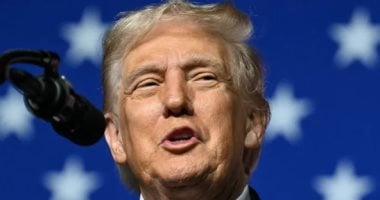
The confrontation between US President Donald Trump and Democratic leaders and the judiciary intensifies over the deployment of the National Guard in states to curb crime and pursue illegal immigrants. Trump recently threatened to invoke the Insurrection Act, allowing the deployment of US forces domestically without state governors’ approval to achieve his objectives.
Warnings and criticisms have risen about the damage this confrontation could cause to the National Guard’s readiness, training, morale, and traditional role during crises and emergencies, as well as Trump’s overreach of presidential authority.
The Washington Post warned that Trump’s use of the National Guard might have lasting impacts on cities and forces, potentially affecting their preparedness and morale. Since last June, the Trump administration has sent or pledged to send forces to over six US cities, all led by Democrats, including Los Angeles, Washington D.C., and Memphis.
The administration argues that military force is necessary to combat crime and support federal agents enforcing Trump’s aggressive campaign to deport suspected illegal immigrants.
This week, Trump escalated efforts by deploying the National Guard to Chicago, Illinois, and Portland, Oregon, despite legal challenges and objections from state and local leaders.
Democrats accuse Trump and his aides of falsely portraying their cities as lawless war zones to justify military deployment for “partisan” purposes designed also to suppress political opposition. Illinois Governor J.B. Pritzker called it a “Trump invasion.”
Some Republican governors, like Tennessee’s Bill Lee, welcomed Trump’s efforts, endorsing claims that forces are needed to bolster overwhelmed law enforcement, even as crime rates have declined from pandemic highs. Last week, nearly 150 Tennessee National Guard members arrived in Memphis.
Historians and National Guard experts told The Washington Post that Trump’s maneuvers are unprecedented and could harm the Guard’s readiness, training, and morale, a force typically deployed for disaster response and emergencies. They also expressed concern about the impact on the Guard’s reputation, especially in communities distrustful of law enforcement, where arming immigration and local police officials has fueled fear.
Retired Illinois National Guard Brigadier General and former Democratic Congressman William Enyart said the Guard has proven reliable for helping the nation and communities, but misuse in an untrained role will only cause harm.
Opponents’ concerns grew after Trump suggested at a military leadership gathering prioritizing domestic threats over foreign enemies and focusing on US cities to wage an “internal war.” Trump said, “We should use some of these dangerous cities as training grounds for our army—the National Guard, not the army.” Chicago Mayor Brandon Johnson called Trump’s remarks “reckless” and “dangerous.”
Associated Press views Trump’s use of the National Guard domestically as exceeding traditional authority, envisioning a strong military role in immigration and crime issues in US cities. His attempts to deploy California National Guard members to Oregon and Texas Guard to Illinois reflect an overreach of presidential power. Legal challenges by Democrat-led states will likely address constitutional and federal law issues, potentially leading to court clashes over Trump’s excessive use of the Guard.
Typically, state governors control their National Guard unless units are federally deployed, as in California despite the governor’s objections. Governors decide on Guard deployment or interstate assistance during natural disasters. Trump personally commanded the National Guard in Washington D.C.
Trump claimed local authorities failed to protect communities, citing several Democrat-led cities as examples, describing Portland as a “riot-ridden city,” a “war zone burning,” and “living in hell.”
However, the nearly 150-year-old Posse Comitatus Act limits the army’s role in local law enforcement, reflecting the deep American belief that law enforcement should remain civilian-controlled.
Trump threatened to use the Insurrection Act if courts continue to block his National Guard deployments across US cities. If enacted, he would be the first president in over 60 years to use the 1807 law allowing US forces to suppress domestic unrest without state approval, according to Axios.
Trump told White House reporters, “So far, it hasn’t been necessary, but we have the Insurrection Act for a reason.” He added, “If people are being killed and courts or governors or mayors stop us, I will definitely do it,” referring to activating the law.
Earlier this year, Trump nearly activated the law when sending about 700 Marines to Los Angeles to handle protests against Customs and Immigration raids amid California officials’ opposition.
Trump’s recent remarks came after a federal judge in Oregon temporarily blocked his second attempt to deploy the National Guard, after he announced sending forces from California to Portland.


Recommended for you
Talib Al-Rifai Chronicles Kuwaiti Art Heritage in "Doukhi.. Tasaseem Al-Saba"
Exhibition City Completes About 80% of Preparations for the Damascus International Fair Launch
Unified Admission Applications Start Tuesday with 640 Students to be Accepted in Medicine
Al-Jaghbeer: The Industrial Sector Leads Economic Growth
Egypt Post: We Have Over 10 Million Customers in Savings Accounts and Offer Daily, Monthly, and Annual Returns
His Highness Sheikh Isa bin Salman bin Hamad Al Khalifa Receives the United States Ambassador to the Kingdom of Bahrain