






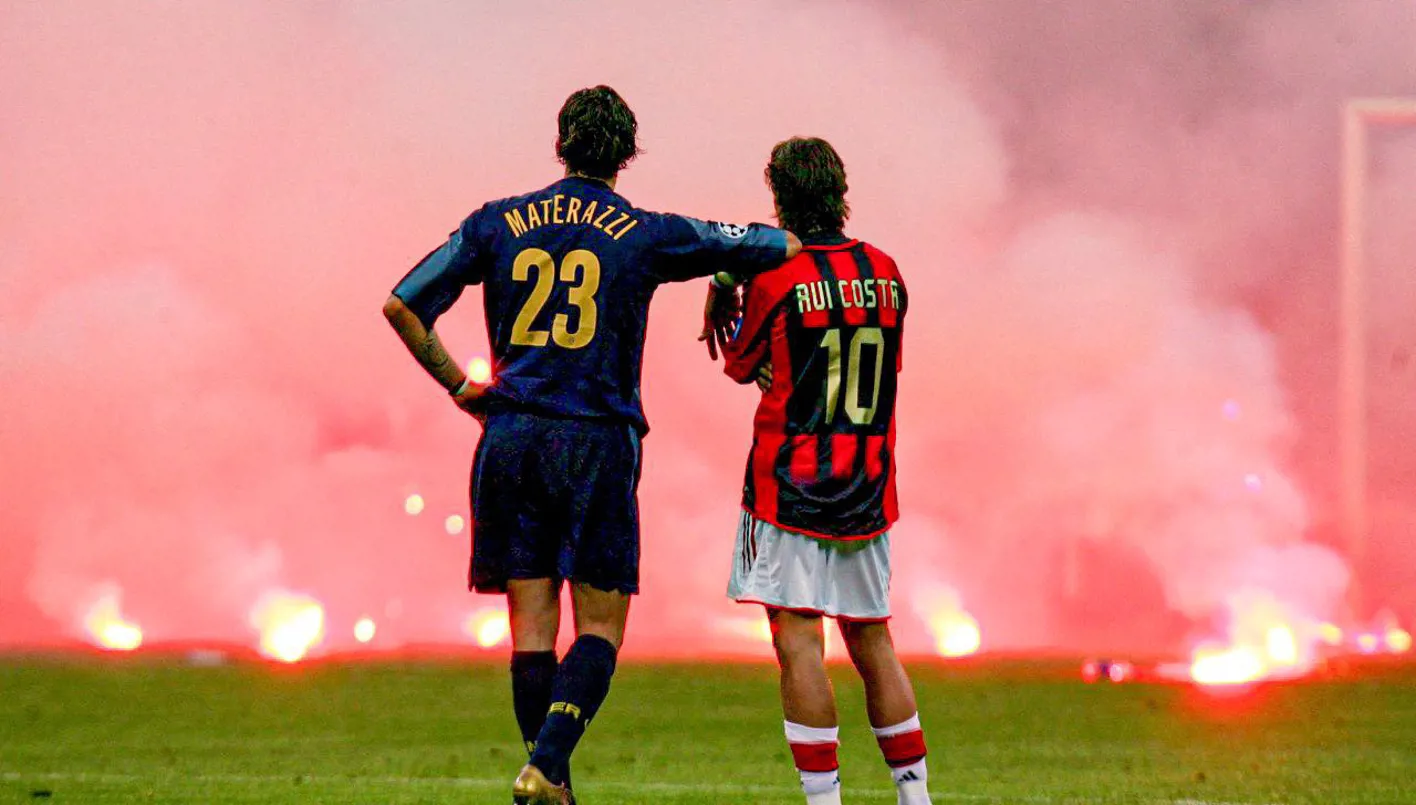
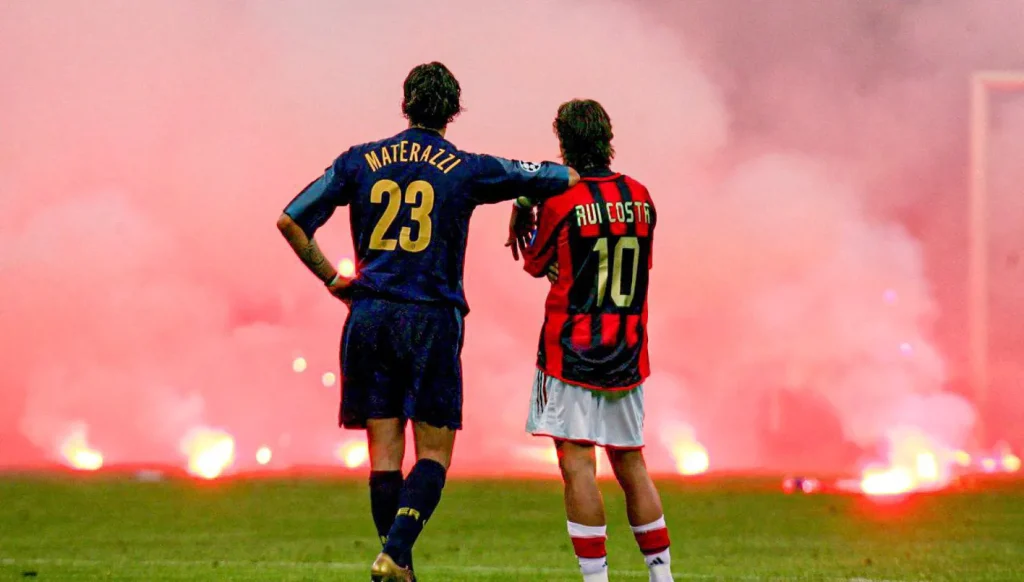
The beginning of the end for the historic San Siro stadium. (Agencies)
As the clock neared 4 a.m., the “Palazzo Marino” hall in Milan lit up for a historic moment. The city council’s vote to sell San Siro stadium to the city’s two giants, AC Milan and Inter Milan, seemed like a declaration of the beginning of the end for one of Italy’s most iconic stadiums. The moment carried a mix of tears and pride within its walls, between bidding farewell to the past and preparing to envision a new future.
San Siro is not just a stadium; it is the home of generations’ dreams. Its walls witnessed the ten European championships won by the giants, the epic Serie A battles during the “catenaccio” era, and nights illuminated by fireworks and tears alike. From Franco Baresi to Paolo Maldini, from Javier Zanetti to Diego Milito, from Arrigo Sacchi with his tactical revolution to José Mourinho and his historic treble, this stadium remained the beating heart of European football.
However, as Paolo Maldini said in 2020: “Playing at San Siro is an exceptional experience, but it has become outdated and does not meet the ambitions of Milan and Inter.”
Reality struck harshly when UEFA stripped the stadium of hosting the 2027 Champions League final, citing that it no longer meets standards. UEFA President Aleksander Čeferin clearly stated: “Your infrastructure is very poor. The government and municipalities must act immediately.”
While the Santiago Bernabéu stadium renovation generates an annual income of 362 million euros for Real Madrid, San Siro remained unable to achieve even a quarter of that figure. Football’s economy can no longer sustain a stadium living on glory alone. With a sale decision worth 197 million euros, a project to build a new stadium with a capacity of 71,500 spectators will commence, jointly funded by Milan and Inter, with a total cost of 1.2 billion euros.
The new project resembles an integrated sports and commercial city: modern steep stands to ensure perfect visibility, green spaces, commercial facilities, and a memory museum. Part of the historic second tier will be integrated into the new design as a lasting memento amid modernity.
Inter’s president, Beppe Marotta, summarized the situation saying: “San Siro is a historic symbol, but we must move forward. Just as Wembley was demolished and rebuilt, we must do the same.”
Gerry Cardinale, Milan’s owner, confirmed that “the new stadium is not just a building but an investment to ensure Milan remains at the heart of global football. The competition will remain on the pitch, but cooperation outside is the key to success.”
Nevertheless, opposition voices remain, with fan associations and activists considering the demolition of San Siro a “crime against heritage.” Some have called for converting it into an event center or a large museum instead of erasing it. However, the municipality preferred the realistic economic option, considering that maintaining the dilapidated stadium is no longer feasible.
The truth is that San Siro’s legacy will not be completely erased. Its iconic image will disappear, but its spirit will remain present. The name “Giuseppe Meazza” will remain associated with the place, and the accompanying museum will tell the stories of the glories witnessed. Concrete remains and columns will stand in the squares as symbolic relics, bearing witness to a century of glory. Just as the old Wembley disappeared but its spirit remained alive in London, San Siro will leave as a “body” but remain an inspiring “spirit.”
Milan is preparing for the birth of a new stadium by 2032, but it is also preparing for a slow and painful farewell to its football icon. When the last fan enters through the red spiral tunnels and sits on its noisy stands, they will realize this is the moment of the end. An end that carries within it a beginning, like a sun setting to rise again. And with all that, memories of San Siro will remain part of Milan’s and Italian football’s identity forever.



Recommended for you
Talib Al-Rifai Chronicles Kuwaiti Art Heritage in "Doukhi.. Tasaseem Al-Saba"
Exhibition City Completes About 80% of Preparations for the Damascus International Fair Launch
Al-Jaghbeer: The Industrial Sector Leads Economic Growth
Unified Admission Applications Start Tuesday with 640 Students to be Accepted in Medicine
Egypt Post: We Have Over 10 Million Customers in Savings Accounts and Offer Daily, Monthly, and Annual Returns
His Highness Sheikh Isa bin Salman bin Hamad Al Khalifa Receives the United States Ambassador to the Kingdom of Bahrain