





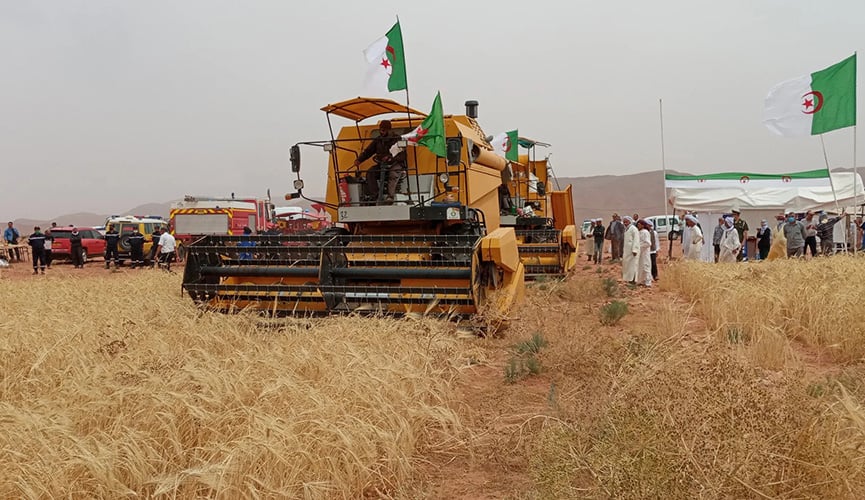
The National Professional Council of the Grain Sector is preparing to submit a set of recommendations during the National Agriculture Symposium scheduled for the end of October. These recommendations focus on developing the sector through digitization and expanding the use of smart farming mechanisms and modern mechanization.
One of the key expected recommendations is to adopt a precise “inch by inch” census of farmers’ lands and crops via a digital platform that includes farmers’ names, crop types, production volumes, and agricultural areas. This aims to accurately monitor everything on the ground, correct errors, and enhance integration between logistical, technical, and production support.
The recommendations also include providing drought- and salinity-resistant seeds, expanding the use of drones for field monitoring and cost reduction, campaigns to expand insurance coverage to protect crops, and increasing storage capacities to ensure food security and self-sufficiency.
In this context, the council president, Abdelghani Ben Ali, revealed that the current agricultural season is expected to witness a remarkable leap in the use of modern technologies and digitization. This reflects the new vision brought by the new Minister of Agriculture and Rural Development, Mahdi Yacine Walid, who made technology and innovation a key axis for developing the grain sector and ensuring food security for Algerians.
Ben Ali explained that the past season was characterized by major care from grain offices in providing logistical capabilities, nearby and strategic warehouses, alongside the integration of new “Made in Algeria” machines that expanded and facilitated harvesting. He confirmed that the results were “very satisfactory,” especially in eastern regions such as Constantine, Guelma, Souk Ahras, and Oum El Bouaghi, which achieved significant durum wheat production, while barley production was “fair” in western regions, high plateaus, southeast, and central south.
However, the president pointed out difficulties faced by other areas affected by drought in April, hot winds in the west and central south, and a cold wave that hit the central plateaus. This caused some lands not to be fully harvested, and the harvest season in the south extended by twenty additional days until July 10 instead of mid-June, forcing machines to remain there and delaying the start of the season in the north.
Regarding barley, Ben Ali said farmers usually keep part of it for livestock feeding, which makes the reported numbers lower than actual production. He noted that the areas cultivated with grains have expanded unprecedentedly, increasing from 20,000 hectares in the south to 150,000 hectares currently, with a goal to reach 300,000 hectares this season. This requires greater support with logistical means and digital technologies to keep pace with the expansion of new investments.
He added that the upcoming plowing and sowing phase will be conducted with an advanced vision relying on scientific and digital technologies, alongside the beginning of autumn rains that will facilitate the process. He stressed the need to provide useful seeds that tolerate drought and soil salinity, especially in western areas, such as barley and triticale seeds.
Ben Ali also raised several issues during meetings between professionals and the new minister, including reconsidering the production map to ensure water availability for agricultural irrigation, strengthening mechanization, and relying on digitization to obtain accurate figures that allow error correction and higher production.
He pointed out that farmers are also required to resort to insurance to protect their crops and ensure compensation in case of natural disasters, considering that “agricultural livelihood insurance” is an unavoidable necessity. He also called for expanding support to cover the entire agricultural production, not just fertilizers, which would motivate farmers to work more with greater state contribution.
In the same context, Ben Ali emphasized the importance of introducing modern mechanization such as drones for strategic crops, especially in lands difficult for tractors to reach, confirming that this technology will help reduce costs and ensure precise digital monitoring of farmers’ areas, crop types, and production volumes, achieving integration and enhancing sector productivity.
The council president recalled that the new prime minister “works in the field,” and the minister Walid is “a young man skilled in modern technologies,” reflecting a new direction to develop the sector relying on scientists, institutes, and expanding the use of smart farming, where farmers now monitor soil moisture via computer and phone.
He added that the prime minister’s instructions were clear about the need to increase productivity to achieve food security, in harmony with the president’s directives, noting that storage capacity will reach 90 million quintals by 2029, requiring doubled efforts to reach this goal.
He also mentioned that a national agriculture symposium will be held at the end of October to receive reports and recommendations, aiming to identify and remove obstacles locally and centrally, while enhancing the openness of national agriculture to companies.
Ben Ali concluded by saying: “The state has provided a lot, and today it is mandatory to rely on technological and digital work, guide farmers to buy the best machines, follow up with them technically to increase yield, and support them financially so they do not lose. Only this way can we guarantee the food security of Algerians.”


Recommended for you
Talib Al-Rifai Chronicles Kuwaiti Art Heritage in "Doukhi.. Tasaseem Al-Saba"
Exhibition City Completes About 80% of Preparations for the Damascus International Fair Launch
Al-Jaghbeer: The Industrial Sector Leads Economic Growth
Unified Admission Applications Start Tuesday with 640 Students to be Accepted in Medicine
Egypt Post: We Have Over 10 Million Customers in Savings Accounts and Offer Daily, Monthly, and Annual Returns
His Highness Sheikh Isa bin Salman bin Hamad Al Khalifa Receives the United States Ambassador to the Kingdom of Bahrain