









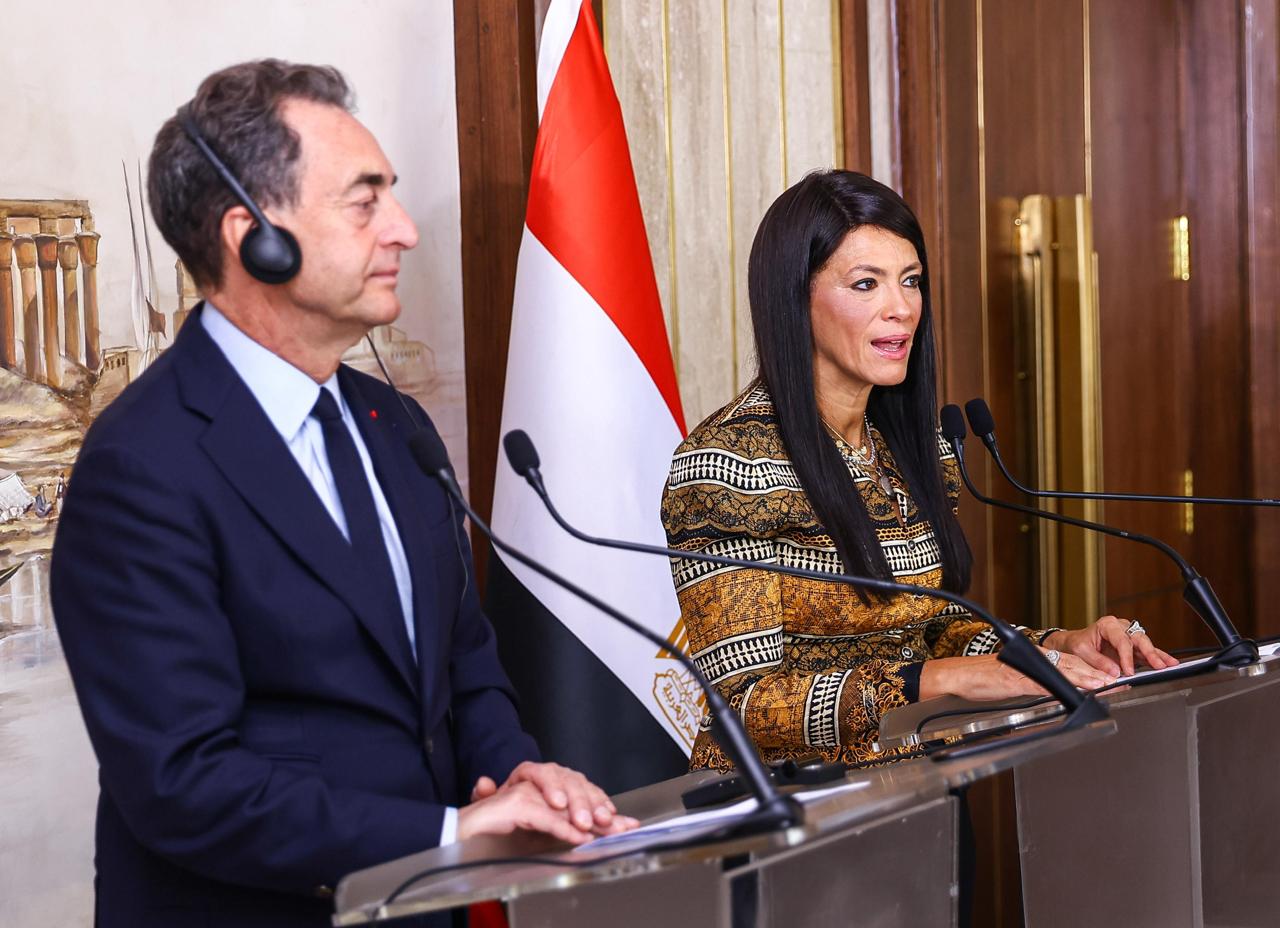
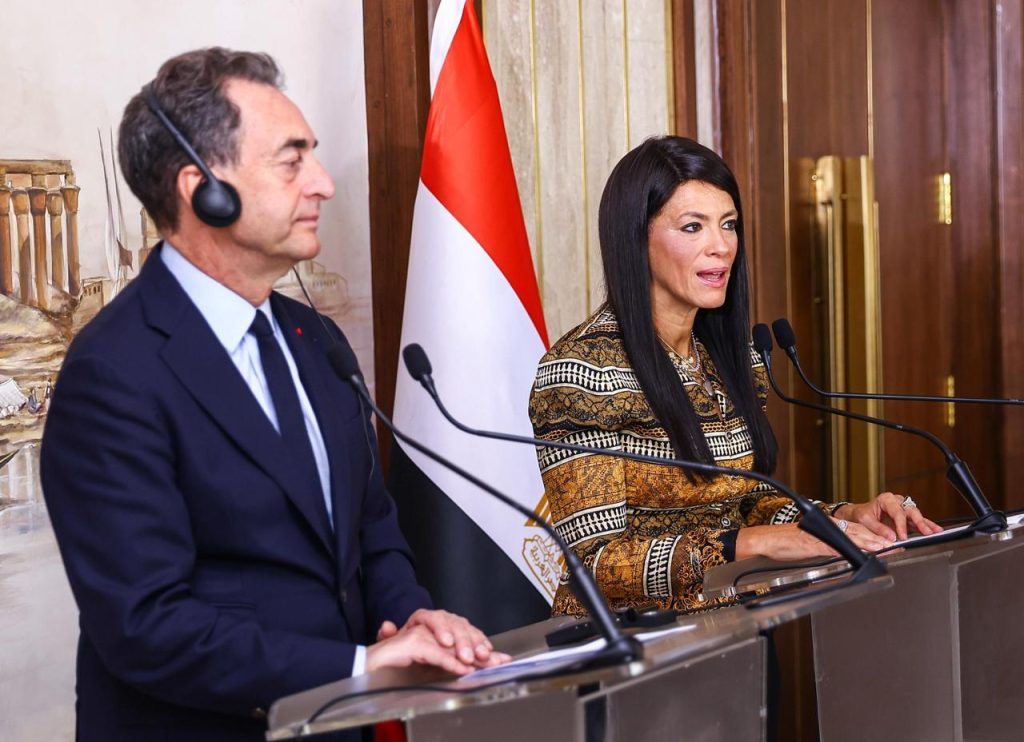
Dr. Rania El-Mashat, Egypt’s Minister of Planning, Economic Development and International Cooperation, confirmed ongoing coordination and joint work with the French ambassador to implement the strategic partnership axes between the two countries.
This came during a joint press conference held at the ministry’s headquarters in the New Administrative Capital to announce the renewal of the technical and financial cooperation agreement worth 4 billion euros between Egypt and France until 2030.
The minister explained the depth of the extended partnership between the two countries, including developmental cooperation as one of the pillars within a broader umbrella that includes investment, trade, and industrial localization. She pointed out that Egypt always seeks to create an attractive investment climate and enhance private sector participation as a fundamental pillar to achieve economic growth and job creation, in line with the recently launched “National Economic Development Narrative: Policies Supporting Growth and Employment.”
El-Mashat added that industrial localization is one of the most important axes of the Egyptian-French partnership, consistent with the third chapter of the “National Economic Development Narrative,” through which the state seeks to encourage manufacturing, local products, and increase added value. In this regard, the ministry works on exploiting the comparative advantages of each development partner to meet national priorities.
She also pointed out that renewable energy is a main axis of cooperation between Egypt and France in light of the government’s efforts to increase renewable energy levels. In this regard, the “Noufi” program, considered a model of national platforms, is one of the Egyptian-French partnership axes in sustainable infrastructure, in addition to the partnership in implementing the metro project that transports nearly 4 million citizens daily.
She referred to the historic visit by President Emmanuel Macron to Egypt last April, describing it as an important visit with different political, economic, and cultural dimensions. She noted the signing of a memorandum of understanding with the French Minister of Economy, which was translated into financial commitments, including concessional financing and grants worth 4 billion euros, of which 3.2 billion euros come from the French government and 800 million euros from the French Development Agency. These funds are allocated to priority development projects in Egypt related to human development in health, education, and technical education, sustainable infrastructure projects including the transition to a green economy through new and renewable energy projects, projects related to the national platform for the “Noufi” program, and private sector financing.
She confirmed that the launch of the “National Economic Development Narrative” affirms the government’s determination to shift towards a new economic model that focuses more on the most productive sectors, those with greater access to export markets, benefiting from the advanced infrastructure that forms a supportive base for manufacturing and investment, and redefining the state’s role in the economy to enhance the competitiveness of the Egyptian economy and stimulate private sector participation.
She explained that the narrative includes clear targets until 2030, but the most important aspect is not the raw numbers but the growth components, as the state seeks to shake up the real economy and increase the share of these sectors in growth. This is reflected in last fiscal year’s indicators, which reached 4.4% growth with strong contributions from non-oil manufacturing industries, agriculture, communications and information technology, and tourism.
She confirmed that through the integrated national strategy for development financing, launched by the ministry last year, efforts are underway to enhance economic diplomacy to drive financing for development, ensuring consistency and linkage with development plans and strategies at the national and sectoral levels, maximizing the benefit from various funding sources whether from the public treasury or concessional financing flows, serving the state’s various plans, strategies, and programs. She added that financing for development is a common denominator among different strategies, and development financing opens the door to attracting private sector investments.


Recommended for you
Talib Al-Rifai Chronicles Kuwaiti Art Heritage in "Doukhi.. Tasaseem Al-Saba"
Exhibition City Completes About 80% of Preparations for the Damascus International Fair Launch
Al-Jaghbeer: The Industrial Sector Leads Economic Growth
Unified Admission Applications Start Tuesday with 640 Students to be Accepted in Medicine
Egypt Post: We Have Over 10 Million Customers in Savings Accounts and Offer Daily, Monthly, and Annual Returns
His Highness Sheikh Isa bin Salman bin Hamad Al Khalifa Receives the United States Ambassador to the Kingdom of Bahrain