









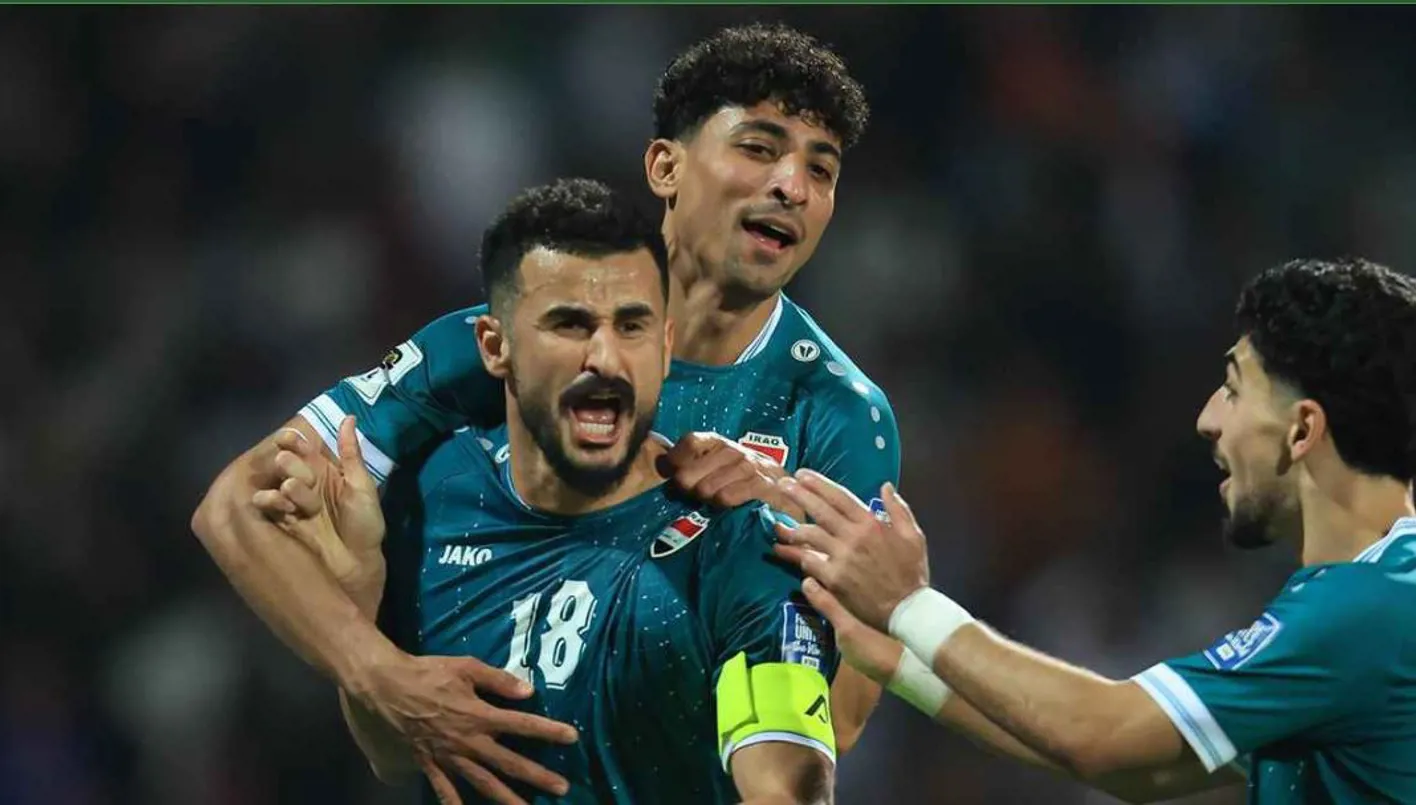
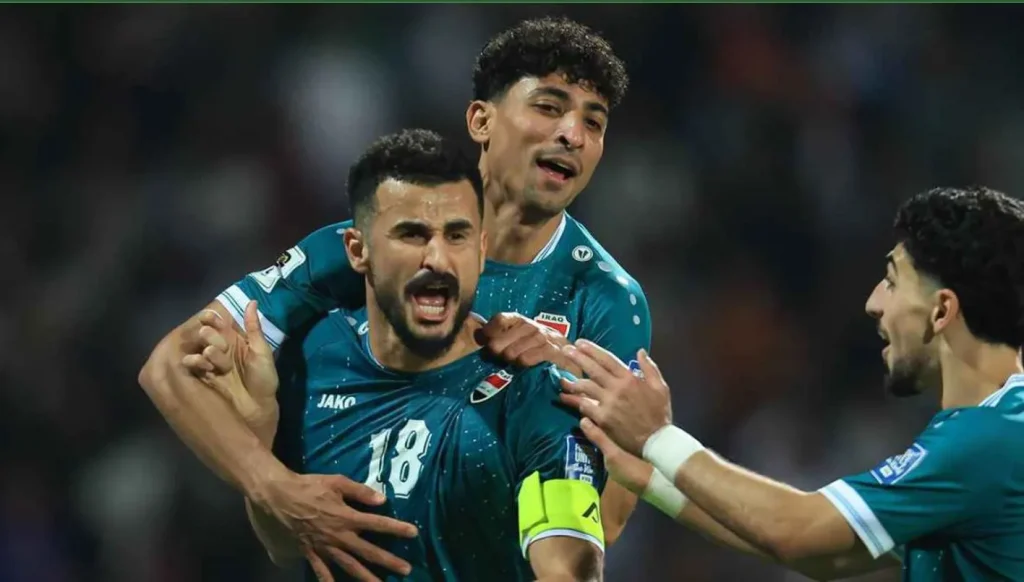
Australian coach Graham Arnold of the Iraqi national football team relies on his attack against Indonesia on Saturday in the first match of the Lions of Mesopotamia in the fourth round of the Asian qualifiers for the 2026 World Cup, thanks to the presence of Ayman Hussein, Mohanad Ali, and Ali Jassim, hoping to gain an advantage before the anticipated match against Saudi Arabia.
Iraq will play against Indonesia at the Jewel Stadium in Jeddah, with a meeting against Saudi Arabia scheduled for Tuesday in the final third round.
Arnold also called up striker Ammar Mohsen from Swedish club Brage and Air Force Club striker Mohammed Jawad to surprise Indonesia and achieve a better result than Saudi Arabia’s 3-2 victory over them in the playoff opener on Wednesday.
Since Arnold’s arrival five months ago, he has fully relied on Ayman Hussein as a pure striker in matches against Jordan, Hong Kong, and Thailand, before the savior Mohanad Ali appeared in the King’s Cup matches in Thailand, clinching the title last month thanks to his skill in scoring.
Akram Ahmed Salman, former coach of the Iraqi national team, told AFP that “the current Indonesian team is different from the one that played in the previous qualifying stage due to the naturalization of many players, and despite the 2-3 loss to Saudi Arabia, Indonesia is a good team that fights on the field and had many chances in Wednesday’s match.”
Salman, who led Iraq in six different periods, explained that “Iraq’s problem was the preparation for this critical stage of the qualifiers, and relying only on the King’s Cup in Thailand was insufficient compared to the preparations of Indonesia and Saudi Arabia.”
He added, “Arnold needed more time, a training camp, and friendly matches to assess the players’ readiness and how well they adapted to his style and coaching philosophy.”
The match against Indonesia will be Arnold’s fifth with Iraq; he previously lost 0-2 to South Korea and won 1-0 against Jordan in rounds nine and ten of the third qualifying round, before leading Iraq to two King’s Cup victories over Hong Kong 2-1 and Thailand 1-0.
Former Iraqi player Saad Qais told AFP, “What is required from Iraq after Saudi Arabia’s 3-2 win over Indonesia is to keep a clean sheet, focus heavily, and avoid mistakes.”
He added, “The most important thing is to win by a two-goal margin because winning by two goals gives us the advantage, allowing us to play for either a win or a draw against Saudi Arabia.”
To relieve Iraqi players from various pressures, the local federation banned media presence in the Lions of Mesopotamia’s camp in Jeddah, giving them better focus ahead of the important match against Indonesia, which is a crucial gateway before the anticipated decisive match for World Cup qualification against Saudi Arabia.
Qais, who represented Iraq for about eight years (1987-1995), explained, “We must avoid unjustified yellow cards, not contest referee decisions, maintain positive possession, and make the Indonesian players exert physical effort since they played against Saudi Arabia and exhausted their physical reserves after playing about 110 minutes.”
He added, “Iraq’s technical situation is better than what we saw previously under Spanish coach Jesus Casas in terms of stability and having a great coach who added a lot to the team, as well as the psychological state that was missing and which Arnold focused on better.”
Iraq aims to reach the finals for the second time in its history after the 1986 Mexico edition, where they were eliminated early in the group stage.
Qais explained, “I can say the motivation today is different from the matches against South Korea and Jordan, which are in the past, and even the Thailand tournament was a testing ground for most players, possibly benefiting from playing against teams close to Indonesia’s level.”
He continued, “Today the motivation is greater and nobler for the Lions of Mesopotamia; the next 180 minutes are the most important, as they are all that separate us from the dream of reaching the World Cup, and we must not squander them.”
He concluded, “Technical, mental, and physical stability are important success factors, and I see that Iraq has many options in terms of squad quality and player types, and most importantly, the correct deployment on the field.”




Recommended for you
Talib Al-Rifai Chronicles Kuwaiti Art Heritage in "Doukhi.. Tasaseem Al-Saba"
Exhibition City Completes About 80% of Preparations for the Damascus International Fair Launch
Al-Jaghbeer: The Industrial Sector Leads Economic Growth
Unified Admission Applications Start Tuesday with 640 Students to be Accepted in Medicine
Egypt Post: We Have Over 10 Million Customers in Savings Accounts and Offer Daily, Monthly, and Annual Returns
His Highness Sheikh Isa bin Salman bin Hamad Al Khalifa Receives the United States Ambassador to the Kingdom of Bahrain