







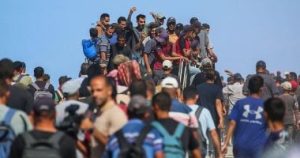

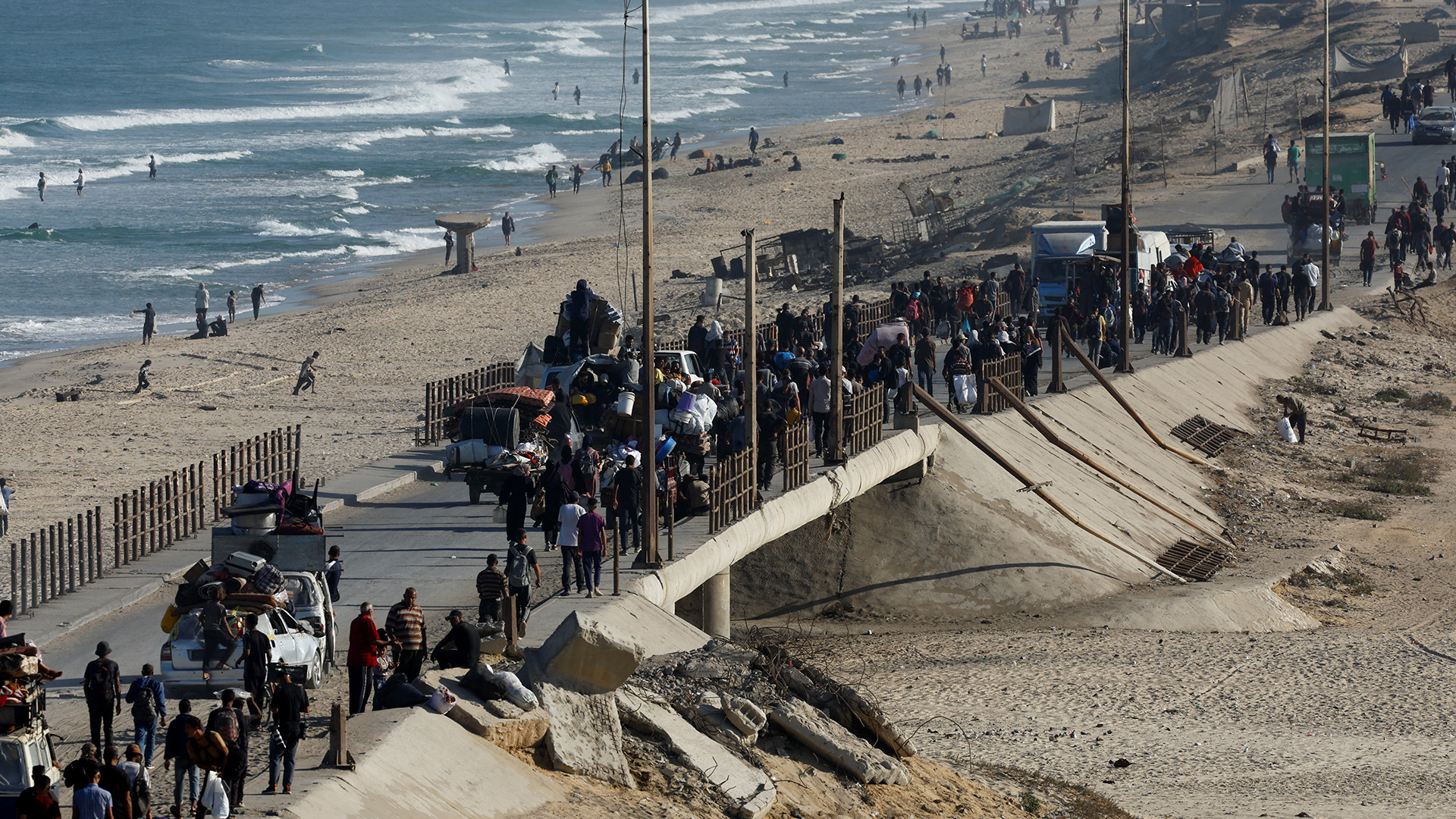
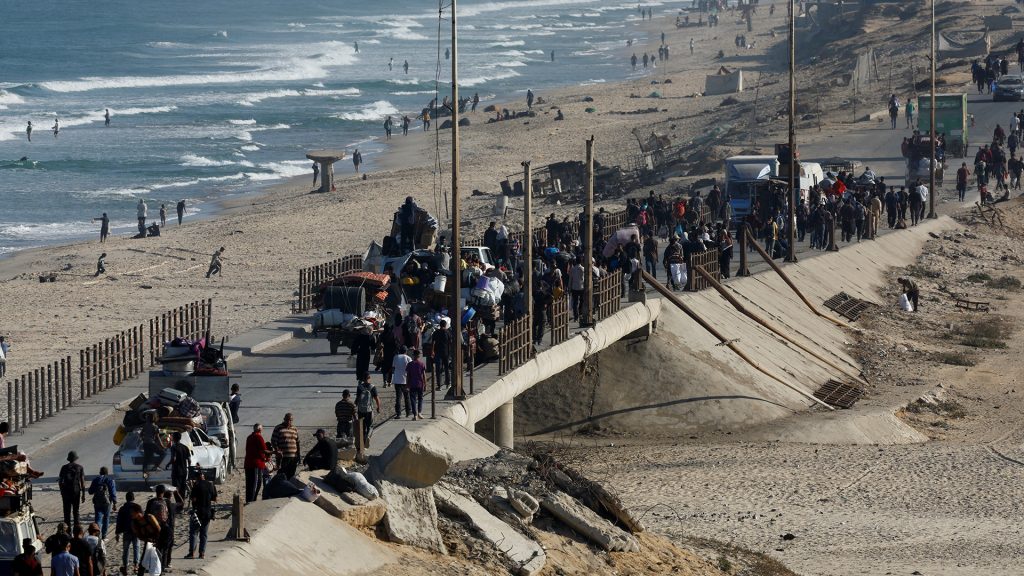
Global newspapers and websites reported scenes of tens of thousands of Palestinians returning to northern Gaza Strip after the ceasefire agreement came into effect, in a scene marked by a mixture of joy and pain, as people returned to their destroyed cities carrying only their few remaining possessions and exhausted hopes.
The British newspaper The Independent described the long marches of returnees as a journey through rubble and memories, noting that despite the widespread destruction caused by the war, the faces of the returnees showed joy mixed with astonishment at the extent of the devastation.
The newspaper quoted some of them saying they returned to “the streets they always loved living in,” and that what pleased them most was the cessation of bombing sounds after two years of displacement and fear.
In the south, the paper described painful scenes in Khan Younis, where many residents found their homes completely destroyed. Fatima Radwan testified that they found only remnants of clothes and utensils among the rubble, while Hani Omran confirmed they arrived at “an unidentifiable place because destruction was everywhere.”
The Times wrote that thousands of Palestinians are heading north to their homes despite the extensive destruction, amid the resilience of the ceasefire and the withdrawal of Israeli forces.
The newspaper added that about 200,000 people returned to the northern Gaza Strip in one day, according to a spokesperson for Gaza’s civil defense, and that scenes of return along the devastated coast formed humanitarian tableaux summarizing the long journey of patience.
The Swiss newspaper Le Temps focused on the contradiction between feelings of joy at the end of the war and the reality of destruction awaiting the returnees, noting that many live in a state of “bitter joy,” as they reclaim homes without walls and memories erased under the rubble.
It pointed out that relief teams have begun setting up tents in the streets in preparation for a difficult humanitarian phase with the approaching winter, amid warnings of a shelter crisis and urgent needs for hundreds of thousands.
In a related context, Foreign Affairs magazine stated that the success of the Gaza agreement requires political courage and continuous pressure to achieve lasting peace.
It noted that the United States has long failed to use its influence to stop the war, warning that Israel’s continued reliance on military force complicates peace prospects and exposes Washington to increasing strategic risks in the region.
The Israeli newspaper Jerusalem Post published an article by former General Gadi Shamni praising what he called “the courage of US President Donald Trump,” considering him one of the few capable of reshaping complex geopolitical balances.
The writer argued that Trump is not just an ally of Israel but its “savior,” as he understands that the continuation of the war threatens the future of both Palestinians and Israelis alike.
Conversely, The New York Times covered feelings of frustration inside Israel over the delay in concluding a hostage agreement, considering that many Israelis see Prime Minister Benjamin Netanyahu as a cause for prolonging the war to appease his far-right partners.
It pointed out that hostage families feel betrayed and need long periods to recover, while Israelis wonder why the agreement is delayed despite the possibility of concluding it months ago.
Under another headline, The Wall Street Journal revealed that about 200 US soldiers from Central Command will arrive in Israel to establish a coordination center to monitor the ceasefire and organize the flow of humanitarian aid to Gaza.
The newspaper clarified that the US force will not enter the Strip but forms a nucleus for discussions about creating a broader international force to secure Gaza, despite challenges related to disarming Hamas.
Inside Israel, Yedioth Ahronoth criticized the country’s public diplomacy performance, considering that Israel has lost its ability to address the world in a clear and balanced language.
The article’s author said that the failure of October 7 was not only military but also “communicative and moral,” as Hamas managed to impose its narrative, while Israel appeared to the international public as a force lacking empathy, which cost it much of its legitimacy.
The Washington Post wrote that Netanyahu found himself forced to adapt to a new political reality imposed by American pressure, noting that President Trump appeared more keen on establishing peace.
The newspaper mentioned that extremists in his government such as Itamar Ben Gvir and Bezalel Smotrich have begun to lose influence, while Israel’s external and internal isolation increases amid growing criticism from the exhausted security establishment over the ongoing military campaign.
Meanwhile, Haaretz called on Netanyahu to resign, describing the 2023 war as the worst since the 1973 war, noting that the prime minister “dragged Israel into its longest war in history” and turned it into an internationally ostracized state, while inside Israel he is seen as a figure who lost credibility and political legitimacy.



Recommended for you
Talib Al-Rifai Chronicles Kuwaiti Art Heritage in "Doukhi.. Tasaseem Al-Saba"
Exhibition City Completes About 80% of Preparations for the Damascus International Fair Launch
Unified Admission Applications Start Tuesday with 640 Students to be Accepted in Medicine
Al-Jaghbeer: The Industrial Sector Leads Economic Growth
Egypt Post: We Have Over 10 Million Customers in Savings Accounts and Offer Daily, Monthly, and Annual Returns
His Highness Sheikh Isa bin Salman bin Hamad Al Khalifa Receives the United States Ambassador to the Kingdom of Bahrain