







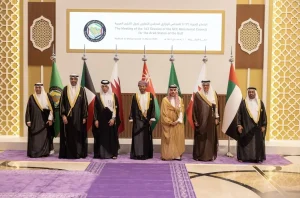


In the history of Islamic political thought, power was often linked to tribal allegiance and the Quraysh condition, but jurists like Dhirar ibn Amr al-Ghatafani rejected this connection, emphasizing legitimacy based on competence and consultation instead of tribalism. This article reviews Dhirar’s vision that dismantles the relationship between tribalism and authority in Islamic political jurisprudence, advocating for political legitimacy grounded in competence, consultation, and consensus rather than tribal or ethnic affiliation. It calls for reconsidering this vision to build a modern Islamic political jurisprudence that responds to the challenges of the modern civil state and supports democratic transition.

Talib Al-Rifai Chronicles Kuwaiti Art Heritage in "Doukhi.. Tasaseem Al-Saba"
8 Aug, 2025
- 2 mins read



Recommended for you
Talib Al-Rifai Chronicles Kuwaiti Art Heritage in "Doukhi.. Tasaseem Al-Saba"
Exhibition City Completes About 80% of Preparations for the Damascus International Fair Launch
Al-Jaghbeer: The Industrial Sector Leads Economic Growth
Unified Admission Applications Start Tuesday with 640 Students to be Accepted in Medicine
Egypt Post: We Have Over 10 Million Customers in Savings Accounts and Offer Daily, Monthly, and Annual Returns
His Highness Sheikh Isa bin Salman bin Hamad Al Khalifa Receives the United States Ambassador to the Kingdom of Bahrain