






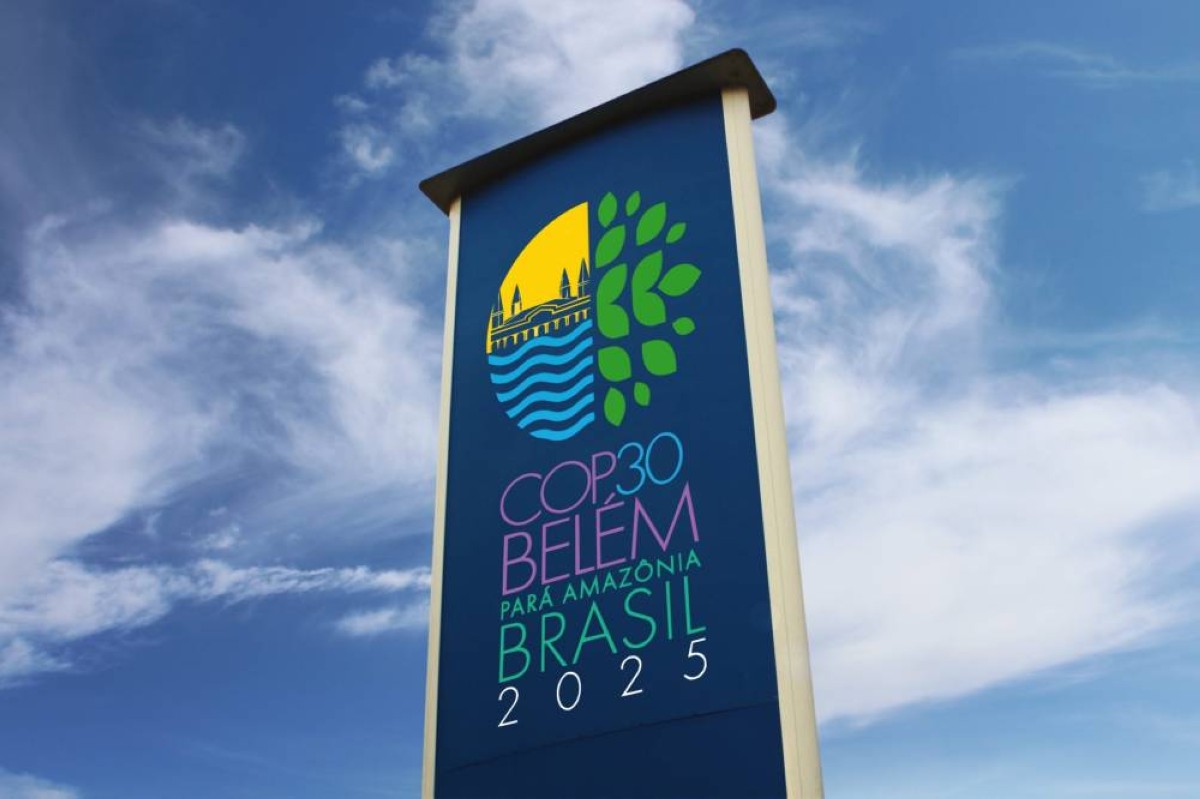

With the COP30 climate summit in Brazil less than two months away, several delegates have expressed frustration over the steep rise in accommodation prices in the limited spaces of the Amazonian city of Belém, which will host the conference events.
A few days ago, Panamanian climate official Juan Carlos Monterrey Gómez wrote: “The issue is not just hotel rooms, but whether we are taking this international process seriously.”
Nevertheless, Brazilian officials assert that the summit could mark a turning point in global climate action and demonstrate the resilience of multilateral cooperation amid current extraordinary pressures; will they succeed?
I spent the past two weeks in São Paulo and Brasília investigating the two main initiatives Brazil aims to promote during COP30. Later, we will detail Brazil’s ambitious plan to establish a $125 billion global fund to preserve forests.
But first, let’s look at Brazil’s other agenda for this year’s conference, particularly regarding pushing for international cooperation on carbon pricing mechanisms. The plan faces some obstacles but also reflects growing global momentum around carbon pricing, which will have significant implications for global trade, industry, and possibly the climate.
Even if the Brazilian hosts do not make carbon pricing a priority at COP30, it will certainly be a matter of great importance. Starting early next year, the European Union will begin implementing the Carbon Border Adjustment Mechanism (CBAM), which has drawn sharp criticism from developing countries.
The EU has set rules requiring companies in many high-carbon-emission sectors to purchase carbon certificates under the Emissions Trading System (ETS). Now, as certificate prices rise and free allowances are gradually phased out, the EU wants to avoid putting its industries at a competitive disadvantage. Therefore, under CBAM, the EU will impose an equivalent carbon price on imports.
Importantly, fees under CBAM will be adjusted to deduct any carbon price already paid by companies in their home countries, providing an incentive for other countries to announce their own carbon pricing systems. This raises a question: why not collect your own carbon revenues instead of having European countries collect them on your behalf at the border?
The impending implementation of CBAM has sparked a surge in carbon pricing activity. Brazil passed a law late last year to launch its own emissions trading system, which will be fully operational by 2030. China is moving to strengthen its existing emissions trading system, including recently announcing emission caps for companies in various sectors. Other countries, including the UAE and Thailand, are making progress in announcing emissions trading systems.
Catherine Wolfram, an economic expert at MIT and former US Treasury official, said: “I’m not sure Europeans fully realize how powerful CBAM is as an incentive for other countries to adopt carbon pricing.” She added, “This has sparked a genuine global dialogue,” though much of it is fraught with tension, as many countries, including Brazil, China, and India, complain that CBAM unfairly penalizes developing countries still taking early steps in their energy transition.
Brazil wants to leverage its presidency of COP30 to push for a different international carbon pricing framework, one based on a multilateral agreement rather than the EU being the sole de facto standard setter.
Rafael Dubo, an official at Brazil’s Ministry of Finance who plays a leading role in proposing this plan, commented: “Establishing an integrated global carbon market depends on an agreement among 200 countries within the COP process, which is not politically difficult.” Brazil hopes to convince the EU and China to join a new “alliance,” agreeing on a core set of rules governing interactions between global carbon pricing systems. With these two major economies on board, Brazil expects a “pull effect” attracting other parties to the equation.
The Brazilian proposal heavily relies on work by a group of economic experts, led by Wolfram from MIT. Dubo noted that the proposed global framework allows greater flexibility regarding emission reductions in developing countries, which will affect border carbon fees on their exports. Least developed countries could be fully exempt from these fees. Revenues from border fees could be partially used for climate finance in lower-income countries.
Dubo indicated that both the EU and China have shown receptiveness to the idea, though neither has made a firm commitment. The EU, in particular, has clear concerns that any easing of CBAM rules could risk putting its domestic industries at a competitive disadvantage compared to dirtier foreign competitors.
Heike Vielhauer, head of carbon analysts at Vivid Economics, highlighted that efforts toward globally coordinated carbon pricing have existed since the 1997 Kyoto Protocol but have not yielded major successes.
Still, with the EU facing criticism from developing countries over CBAM and other environmental regulations, and struggling to advance its international climate finance pledges, engaging with Brazil’s proposal might appear as a smart geopolitical move.
Dirk Forrister, president of the International Emissions Trading Association, a business group, believes the initiative reflects a more assertive approach by developing economies for a greater role in international climate action.
For China, this is another opportunity to present itself as a climate leader, unlike the US government under Donald Trump, which withdrew from the Paris Agreement for the second time. Given China’s dominant position in many green energy economy sectors, it has interests in supporting initiatives that accelerate the global transition pace, according to Dubo. However, a clear risk to this initiative is potential opposition from the Trump administration, which has already pressured the EU to ease CBAM rules and exerts broader economic pressure against Brazil.




Recommended for you
Talib Al-Rifai Chronicles Kuwaiti Art Heritage in "Doukhi.. Tasaseem Al-Saba"
Exhibition City Completes About 80% of Preparations for the Damascus International Fair Launch
Al-Jaghbeer: The Industrial Sector Leads Economic Growth
Unified Admission Applications Start Tuesday with 640 Students to be Accepted in Medicine
Egypt Post: We Have Over 10 Million Customers in Savings Accounts and Offer Daily, Monthly, and Annual Returns
His Highness Sheikh Isa bin Salman bin Hamad Al Khalifa Receives the United States Ambassador to the Kingdom of Bahrain