









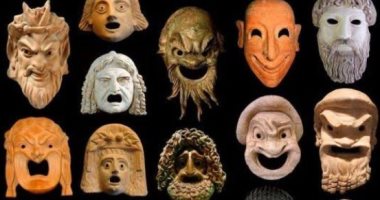
Des archéologues en Russie ont découvert un masque de satyre qui constitue la première preuve concluante du théâtre grec dans l’ancienne ville de Phanagorie. Ce masque en argile, datant du IIe siècle av. J.-C., a été rapporté par le site “greekreporter”.
La pièce mesure environ 30 centimètres de long et montre le côté gauche du visage d’un satyre, avec des pommettes saillantes, de grandes oreilles et une barbe épaisse. Des traces de peinture pâle subsistent, notamment un œil bleu et une barbe et une moustache rougeâtres.
Les chercheurs ont déclaré que la taille, les détails stylistiques et les trous pour la sangle confirment qu’il s’agissait d’un véritable accessoire théâtral et non d’un objet votif.
Dans le théâtre grec, les masques étaient indispensables, permettant aux acteurs de changer de rôle et d’exprimer leurs émotions devant le public. Les couleurs et les traits exagérés du visage distinguaient les personnages; par exemple, une barbe rouge flamboyante indiquait souvent un tempérament vif.
Le masque de satyre correspond à l’iconographie des compagnons de Dionysos, généralement représentés avec des cheveux hirsutes et des moustaches en forme de fer à cheval. Sa découverte témoigne d’une vie théâtrale et rituelle vibrante à Phanagorie, où les représentations faisaient partie des festivals de Dionysos.
À Athènes, en Grèce, où le théâtre a été fondé pour la première fois au VIe siècle av. J.-C., les masques sont devenus une caractéristique distinctive des tragédies et comédies jouées au théâtre de Dionysos.
Le masque de Phanagorie montre que même les colonies éloignées ont adopté ces traditions, les adaptant à leurs contextes locaux tout en maintenant leur lien avec le cœur culturel de la Grèce.
Jusqu’à présent, aucune preuve matérielle de théâtres dans la région de la mer Noire septentrionale n’avait été trouvée, sauf par des récits écrits. L’écrivain grec Polyaenus a décrit comment le général Memnon envoya un chanteur au détroit du Bosphore au IVe siècle av. J.-C., et l’afflux de foules aux théâtres pour l’entendre témoignait de leur nombre et de leur puissance militaire.
Le Dr Vladimir Kuznetsov, chef de l’expédition de Phanagorie, a déclaré que cette découverte apporte enfin une confirmation matérielle.
Pour les archéologues, le masque ne prouve pas seulement l’existence d’un théâtre à Phanagorie, mais illustre également la profonde transmission et la durabilité des institutions culturelles grecques — nées à Athènes et dans d’autres cités-États — à travers la Méditerranée et la mer Noire.



Recommended for you
طالب الرفاعى يؤرخ لتراث الفن الكويتى فى "دوخى.. تقاسيم الصَبا"
الجغبير: القطاع الصناعي يقود النمو الاقتصادي
مدينة المعارض تنجز نحو 80% من استعداداتها لانطلاق معرض دمشق الدولي
تقديم طلبات القبول الموحد الثلاثاء و640 طالبا سيتم قبولهم في الطب
البريد المصري: لدينا أكثر من 10 ملايين عميل في حساب التوفير.. ونوفر عوائد يومية وشهرية وسنوية
سمو الشيخ عيسى بن سلمان بن حمد آل خليفة يستقبل سفير الولايات المتحدة الأمريكية لدى مملكة البحرين