







Von der Leyen confirmed that “these incidents are calculated to remain shrouded in ambiguity allowing for denial. They are not random harassment but a coherent and escalating campaign.”
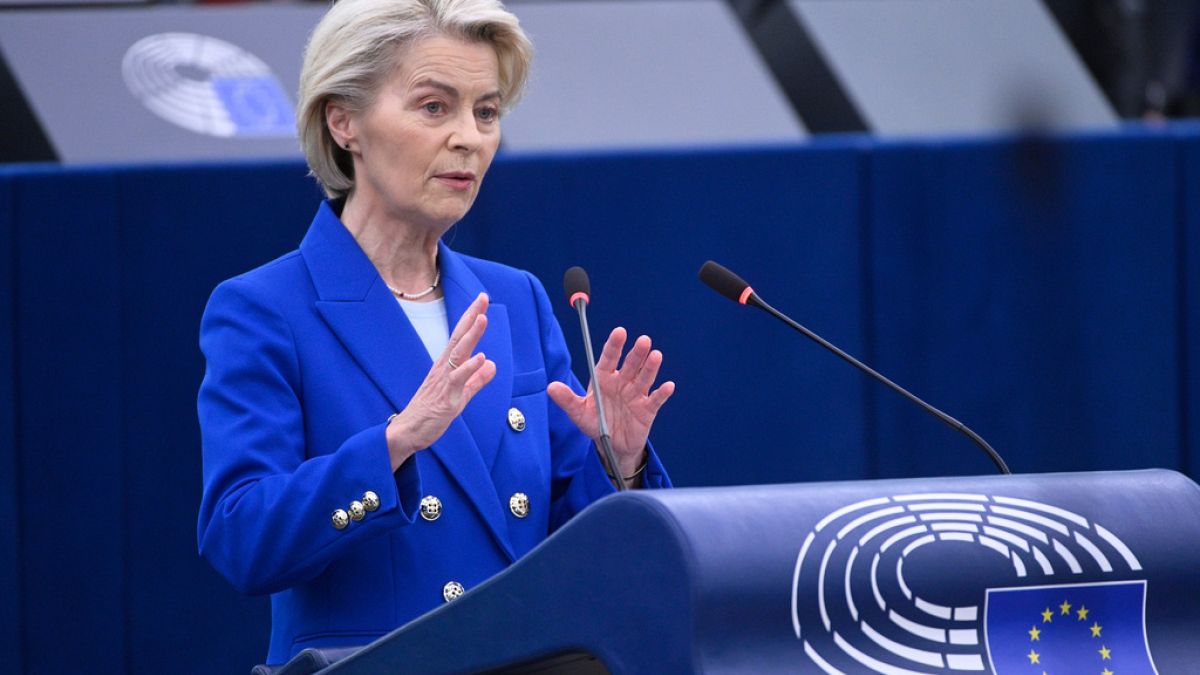
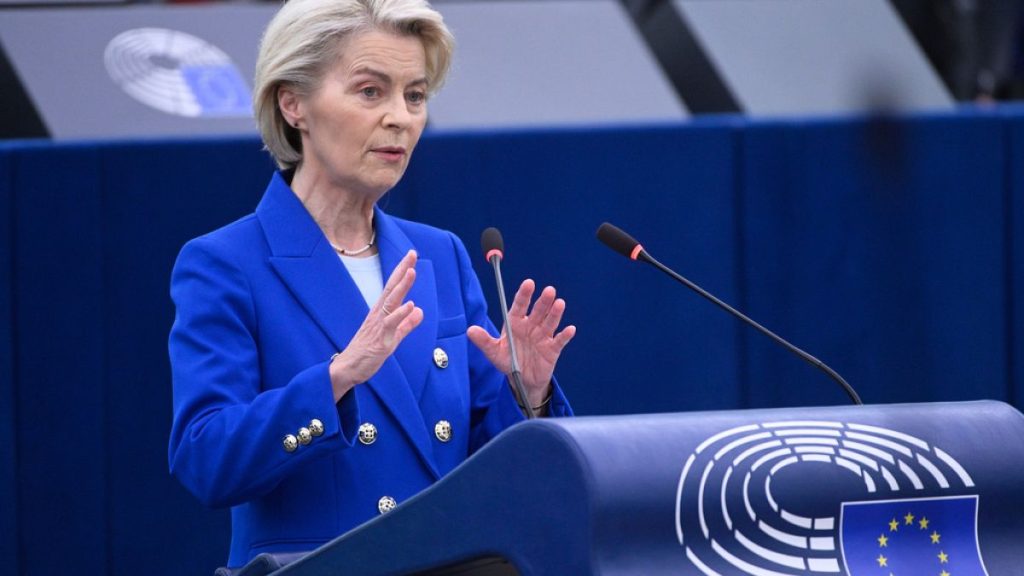
European Commission President Ursula von der Leyen said on Wednesday that Europe must develop its traditional defense methods to face what she described as a “hybrid war” waged by Russia.
Von der Leyen made the remarks during a speech to the European Parliament in Strasbourg, referring to drone incursions into the airspace of several European countries: “Something dangerous and unprecedented is happening in our skies… These are not random harassments but a coordinated and increasing campaign aimed at destabilizing our citizens, testing our resilience, dividing our union, and weakening our support for Ukraine.” She added, “It is time to call things by their name: this is a hybrid war.”
“Hybrid war” is defined as a conflict in which the adversary uses multiple combat methods simultaneously across different fields. American military researcher Frank Hoffman is one of the leading figures who developed this concept, publishing a 2007 paper predicting that future conflicts would combine conventional and irregular tactics with decentralized planning and execution.
The hybrid war encompasses several domains simultaneously: political, military, electronic, and media, in addition to using irregular groups, engaging in “legal wars,” manipulating systems, or interfering in elections in targeted countries.
Last month, Poland, Estonia, and Romania experienced airspace breaches, while unidentified drones were spotted in Denmark, Germany, and Belgium.
In response, Copenhagen last week imposed a temporary ban on drone flights, while NATO launched a program called “Eastern Sentry” to address gaps in the air defenses of its member states.
Von der Leyen also proposed creating a “drone wall” to protect Europe from Russia, an initiative that sparked wide debate over its feasibility and potential high costs.
Regarding Europe’s response to the airspace violations, von der Leyen said: “One or two incidents might be accidental, but when three, five, or ten incidents occur, it means we are facing a deliberate and directed campaign against Europe, and Europe must respond.”
Although the Commission President did not explicitly state that the drones were Russian, unlike EU foreign policy chief Kaja Kallas and several other European officials who did, she accused Moscow of seeking to “sow division” in Europe.
The German politician added: “Confronting the hybrid war waged by Russia is not limited to traditional defense but requires a new mindset from all of us. We can either retreat and watch Russian threats escalate or face them with unity, deterrence, and resolve.”
Von der Leyen stressed that protecting Europe’s eastern borders is insufficient, noting that countering hybrid warfare also includes developing drone software, securing pipeline spare parts, forming rapid response teams for cyberattacks, alongside public awareness campaigns.
The European Union is scheduled to hold a summit in Brussels later this month to establish a “roadmap” aimed at preparing the bloc to face Russian threats in the coming years.

Recommended for you
Talib Al-Rifai Chronicles Kuwaiti Art Heritage in "Doukhi.. Tasaseem Al-Saba"
Exhibition City Completes About 80% of Preparations for the Damascus International Fair Launch
Al-Jaghbeer: The Industrial Sector Leads Economic Growth
Unified Admission Applications Start Tuesday with 640 Students to be Accepted in Medicine
Egypt Post: We Have Over 10 Million Customers in Savings Accounts and Offer Daily, Monthly, and Annual Returns
His Highness Sheikh Isa bin Salman bin Hamad Al Khalifa Receives the United States Ambassador to the Kingdom of Bahrain