








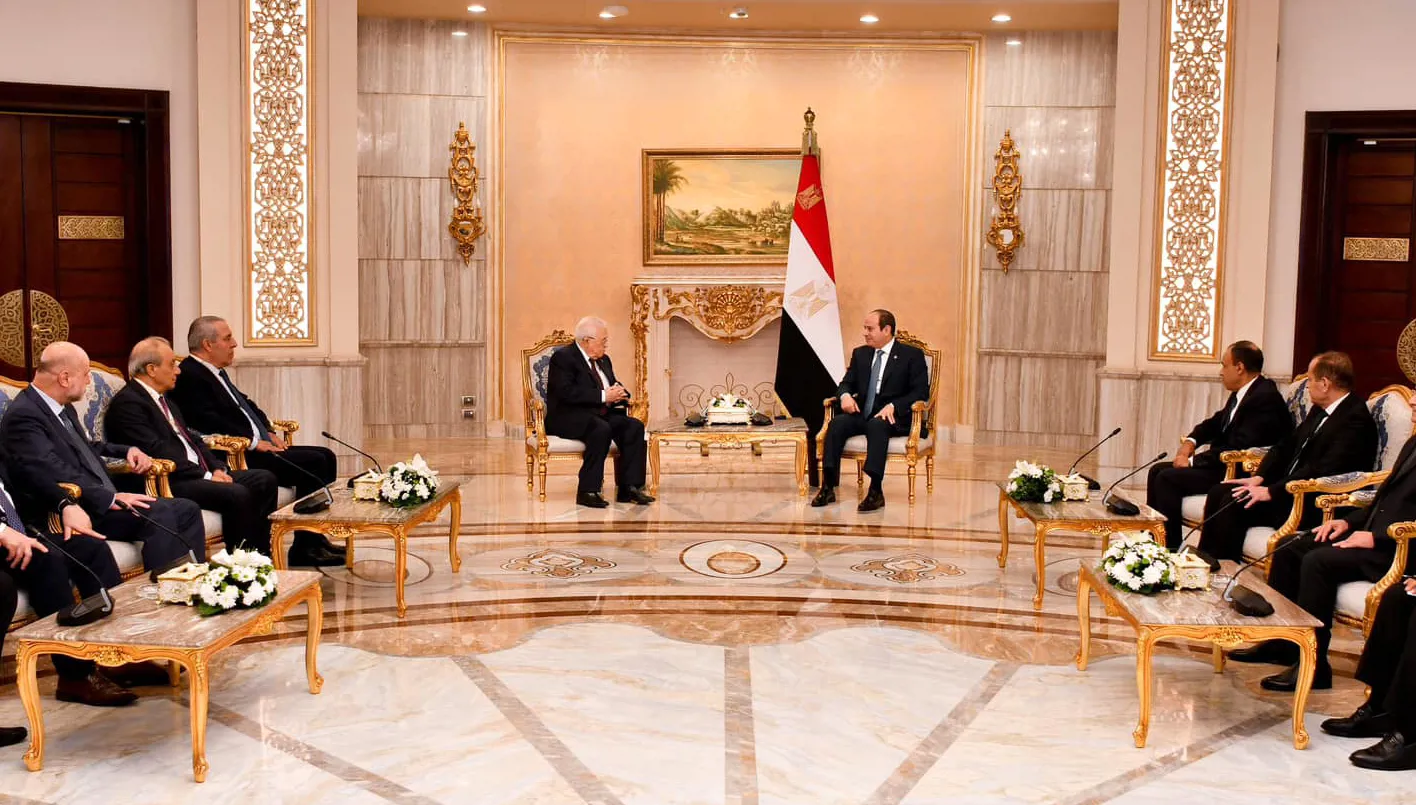
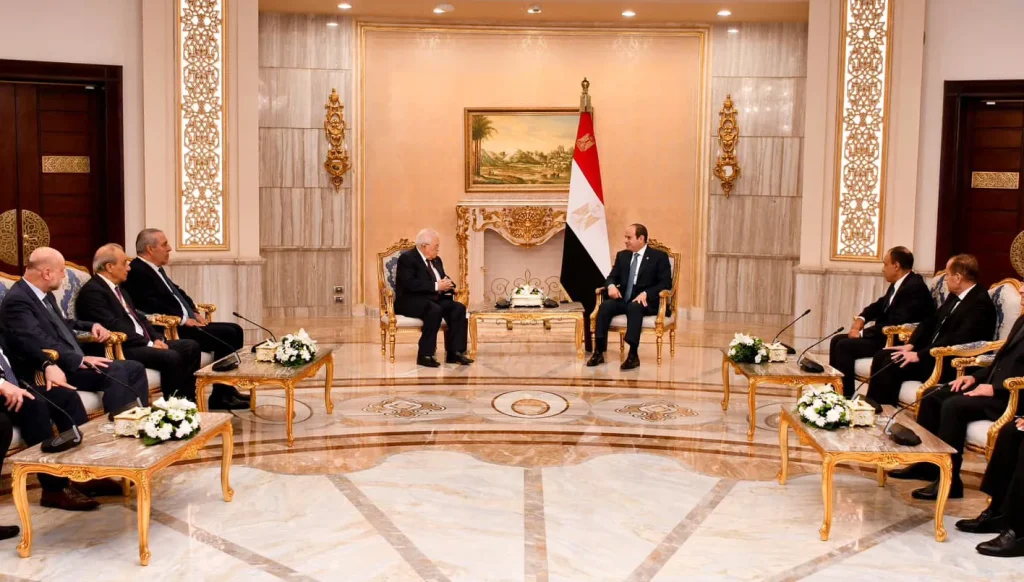
Egypt has begun coordinating with Palestinian factions to hold a national meeting that includes all factions, aiming to unify the Palestinian front. This step comes after an agreement was signed in the city of Sharm El-Sheikh on Thursday to implement the first phase of US President Donald Trump’s plan to stop the war in the Gaza Strip.
The Hamas movement stated in a Friday statement that it is working in coordination with the Egyptian side to hold an urgent Palestinian national meeting aimed at unifying the national position in light of the ceasefire.
Egyptian analysts believe that Israel has long exploited the Palestinian division as a pretext to refuse negotiations with the Palestinians and thus obstruct the two-state solution.
Al-Nahar learned that Cairo was pushing for this step before the indirect peace talks between Hamas and Israel in Sharm El-Sheikh, held from Monday to the previous Thursday, which resulted in a ceasefire agreement.
An Important Step
Former Egyptian Assistant Foreign Minister Ambassador Gamal Bayoumi told Al-Nahar, “The step of holding a Palestinian-Palestinian dialogue is important and comes amid great pressure on the movement to submit to democracy and consensus, and perhaps signing the ceasefire agreement is a sign of hope.”
The diplomat, who also served as advisor to the Secretary-General of the Arab League, added: “This agreement may open the door for a Palestinian national dialogue that saves the Gaza Strip from being managed by an international authority or perhaps a British mandate (similar to trusteeship), a situation I do not think anyone will accept—not Egypt, Saudi Arabia, nor any other Arab country.”
Despite the agreement coming into effect a few days ago, many fear its fragility. Bayoumi points out that “the current conditions are turbulent and extremely complex, requiring dialogue among Palestinians to unify their ranks.”
Plan and Framework
Political analyst and Palestinian researcher in international affairs Dr. Tamara Haddad sees Egypt’s work to organize a Palestinian national meeting as an important step at a sensitive time.
Haddad told Al-Nahar, “The timing comes after Hamas signed the ceasefire agreement based on Trump’s plan, making the plan appear as a negotiation framework to manage the Gaza Strip, specifically the day after the ceasefire. There is now an important variable: either the Gaza Strip is managed under international trusteeship, or a Palestinian dialogue takes place to assume its management.”
Haddad believes that “Egypt fully understands the necessity for the Gaza Strip to be managed by Palestinians after ending the division and internal separation.” She points out that “this is part of Cairo’s continued role as a mediator and key partner in maintaining regional security and Egyptian national security, leading to the stability of the Gaza Strip, pushing the Palestinian Authority towards building a state, paving the way for Gaza’s reconstruction, and keeping its administration purely Palestinian.”
Haddad notes that “ultimately, the success of the dialogue depends on the political will and intention of the Palestinian factions, especially Fatah and Hamas, and both sides making concessions to establish a national government that ends the division.”
She concludes: “Either the dialogue succeeds and marks the beginning of unity and state-building, or it becomes a step towards the end and liquidation of the Palestinian cause.”


Recommended for you
Al-Jaghbeer: The Industrial Sector Leads Economic Growth
Egypt Post: We Have Over 10 Million Customers in Savings Accounts and Offer Daily, Monthly, and Annual Returns
Alternative to UNIFIL Forces
Talib Al-Rifai Chronicles Kuwaiti Art Heritage in "Doukhi.. Tasaseem Al-Saba"
Exhibition City Completes About 80% of Preparations for the Damascus International Fair Launch
Trump Advisor: Disarming Hamas is Central.. Palestinian Authority to Take Over Gaza After Required Reforms