








Abu Dhabi: “Al Khaleej”
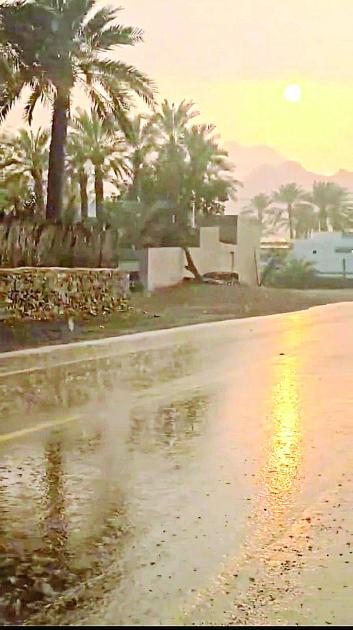
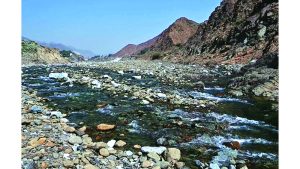
Yesterday, Saturday, rainfall ranging from light to heavy was recorded in the eastern regions of the country, including Masafi, Aasima, and Shawka, with expectations for it to continue for three days.
The National Center of Meteorology forecasted that today’s weather, Sunday, will be clear to partly cloudy, with a chance of some cumulonimbus clouds forming in the north and east, extending to some interior, southern areas and islands accompanied by rainfall. Winds will be southeast to northeast and northwest, light to moderate in speed, sometimes active to strong especially with clouds, causing dust and sand to reduce horizontal visibility, with speeds ranging from 15 to 30 km/h, reaching up to 55 km/h. The sea will be light to moderate waves, occasionally rough with clouds in the Arabian Gulf and the Sea of Oman.
Tomorrow, Monday, the weather will be clear to partly cloudy, with a chance of cumulonimbus clouds forming in the north and east, extending to some interior, southern areas and islands, accompanied by rainfall. Winds will be southeast turning to northwest, light to moderate in speed, sometimes active to strong especially with clouds, causing dust and sand to reduce horizontal visibility, with speeds from 15 to 30 km/h, reaching up to 55 km/h. The sea will be light to moderate waves, occasionally rough with clouds in the Arabian Gulf and the Sea of Oman.
On Tuesday, the weather will be clear to partly cloudy, with a chance of cumulonimbus clouds forming in the east and south accompanied by rainfall. It will be humid at night and Wednesday morning over some coastal and interior areas with a possibility of fog or light fog formation. Winds will be southeast turning to northwest, light to moderate in speed, sometimes active with clouds causing dust, with speeds from 15 to 30 km/h reaching up to 40 km/h. The sea will be light to moderate waves in the Arabian Gulf and light waves in the Sea of Oman.
On another note, the Emirates Astronomical Society mentioned that the “Al-Wasmi” season, one of the famous Arab seasons, begins on October 16 and lasts until December 6, totaling 52 days according to the people of Al-Anwa, represented by four stars “Al-Awa, Al-Samak, Al-Ghafar, Al-Zabbana”; some consider it 60 days. Ibrahim Al-Jarwan, President of the Emirates Astronomical Society and member of the Arab Union for Space and Astronomy Sciences, told WAM that Al-Wasmi is the second autumn season after Al-Safri, which begins with the rise of Suhail. During Al-Wasmi, the weather tends to be moderate during the day and the night coldness starts to creep in from dawn. By the end of Al-Wasmi, winter begins, the cold deepens, and the nights become colder, with coldness penetrating the daytime as well.
He added that the Al-Wasmi period is good for plant growth and agriculture due to moderate temperatures, ranging at mid-season highs between 30 and 34 degrees Celsius and lows between 15 and 18 degrees Celsius. Al-Wasmi rains are more beneficial for the land as evaporation rates decrease, positively affecting groundwater reserves.


Recommended for you
Talib Al-Rifai Chronicles Kuwaiti Art Heritage in "Doukhi.. Tasaseem Al-Saba"
Exhibition City Completes About 80% of Preparations for the Damascus International Fair Launch
Al-Jaghbeer: The Industrial Sector Leads Economic Growth
Unified Admission Applications Start Tuesday with 640 Students to be Accepted in Medicine
Egypt Post: We Have Over 10 Million Customers in Savings Accounts and Offer Daily, Monthly, and Annual Returns
His Highness Sheikh Isa bin Salman bin Hamad Al Khalifa Receives the United States Ambassador to the Kingdom of Bahrain