









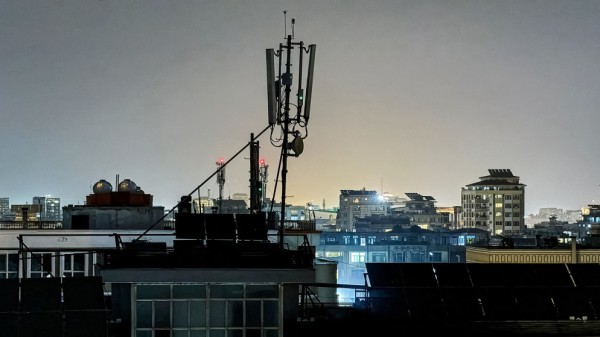
Afghanistan experienced a second day without communication and internet services on Tuesday after the Taliban authorities cut the fiber optic network.
The Taliban began cutting communications and internet in some provinces earlier this month to prevent “immorality.”
On Monday night into Tuesday, mobile phone signals and internet service gradually weakened until the overall national connectivity dropped to less than 1% of normal levels, making it a total blackout, according to NetBlocks, an internet monitoring and cybersecurity organization.
This is the first time communications have been cut in the country since the Taliban returned to power in 2021 and imposed their laws.
Najibullah, 42, a shop owner in Kabul, said, “We are blind without phones and internet.”
He added, “Our business depends on phones. Orders are delivered via phones. It’s like a holiday; everyone is at home. The market is completely frozen.”
Minutes before the internet and communications were cut, a government source told AFP that the blackout would continue “until further notice.”
The source, who requested anonymity, said the service “will be cut gradually tonight, with between eight and nine thousand communication poles to be disconnected.”
He confirmed, “There is no other means or system of communication… the banking sector, customs, and everything across the country will be affected.”
NetBlocks said a “total communication blackout has started nationwide,” noting the incident “corresponds to a deliberate service shutdown.”
AFP lost mobile phone contact with its Kabul office around 5:45 p.m. (13:15 GMT).
“Cut off from my family”
A 40-year-old Afghan living in Oman told AFP via text message, requesting anonymity, “Due to the cut in communication and internet services, I am completely cut off from my family in Kabul.”
He added, “I don’t know what’s happening, I’m really worried.”
Phone services are often transmitted over the internet using the same fiber lines, especially in countries lacking strong communication infrastructure.
In recent weeks, internet connections have been very slow or intermittent.
On September 16, the spokesperson for Balkh province (north), Attaullah Zaid, announced a complete ban on fiber optic internet and a “network shutdown” by order of the Taliban’s supreme leader Hibatullah Akhundzada.
He wrote on social media, “This measure was taken to combat immorality, and alternative options will be provided across the country to meet communication needs.”
AFP reporters at the time reported similar restrictions in the northern provinces of Badakhshan and Takhar, as well as in Kandahar, Helmand, Nangarhar, and Uruzgan in the south.
In 2024, Kabul announced that the fiber optic network deployed by previous authorities at the start of the third millennium, stretching 9,350 kilometers, represents a “priority… to bring the country closer to the rest of the world” and “eradicate poverty.”




Recommended for you
Talib Al-Rifai Chronicles Kuwaiti Art Heritage in "Doukhi.. Tasaseem Al-Saba"
Exhibition City Completes About 80% of Preparations for the Damascus International Fair Launch
Al-Jaghbeer: The Industrial Sector Leads Economic Growth
Unified Admission Applications Start Tuesday with 640 Students to be Accepted in Medicine
Egypt Post: We Have Over 10 Million Customers in Savings Accounts and Offer Daily, Monthly, and Annual Returns
His Highness Sheikh Isa bin Salman bin Hamad Al Khalifa Receives the United States Ambassador to the Kingdom of Bahrain