







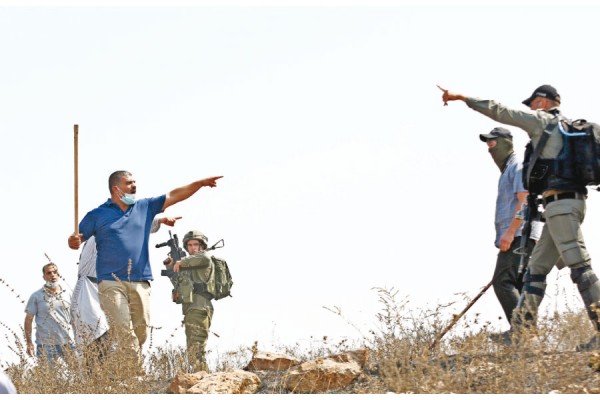
On the seventh and final day of the Jewish “Sukkot” holiday, extremist settlers stormed the Al-Aqsa Mosque through the Moroccan Gate, under heavy protection by Israeli police and special armed forces. Meanwhile, Israeli forces raided Dheisheh refugee camp south of Bethlehem in the occupied West Bank, as well as Nablus and areas around Hebron governorate, carrying out arrests and mistreatment of citizens.
The Islamic Waqf Department reported that dozens of settlers entered Al-Aqsa in groups under strict Israeli police guard, conducted provocative tours in its courtyards, and performed Talmudic rituals.
Israeli forces tightened restrictions on Jerusalemites entering the mosque, preventing some from entry amid heightened security measures to secure the settlers’ incursions.
These mass settler incursions into Al-Aqsa came in response to calls by the so-called “Temple Groups” to carry out widespread raids throughout the Sukkot days.
Yesterday, the extremist “Temple Groups” recorded an unprecedented record number of incursions into Al-Aqsa on the seventh day of Sukkot. Jerusalem sources confirmed that 2,205 settlers stormed the mosque during daylight hours, raising the total number of intruders since the start of the Torah holiday to 6,256 settlers, marking a dangerous escalation described by observers as the largest in the history of incursions.
These groups exploit Jewish holidays and occasions to conduct wide-scale incursions amid tightened security and restrictions on Palestinians and worshippers’ movement in the Old City of occupied Jerusalem.
They seek to gather large numbers of settlers to impose Talmudic rituals inside Al-Aqsa courtyards, representing a dangerous step to entrench new Judaization facts in the holy sanctuary.
These incursions are part of the occupation’s efforts to erase the Islamic and historical identity of Jerusalem and threaten the Islamic sovereignty over Al-Aqsa, while Jerusalemites continue to call on residents of Jerusalem and the interior to mobilize and maintain presence in Al-Aqsa courtyards to thwart the plans of the occupation and settlers, emphasizing that the mosque is a red line that cannot be crossed.
Settler attacks on Palestinian lands in the West Bank have escalated, with settlers yesterday attacking several areas involving violence, vandalism, and olive tree cutting, reflecting ongoing terrorist attacks during the annual olive harvest season.
Local sources reported that settlers targeted the Al-Marj area and assaulted olive trees, while similar attacks occurred in West Bank governorates in recent days, including assaults on farmers, property vandalism, tree destruction, and preventing farmers from accessing their lands.
At dawn, settlers attacked several Palestinian homes in the village of Umm Safa northwest of Ramallah, causing material damage including solar panels, windows, and water tanks. Residents tried to confront the attack, forcing settlers to flee, but they later returned to attack other homes.
Sources stated that Umm Safa suffers almost daily attacks from settler gangs active in nearby settlements and outposts.
Settlers also prevented school students in the Al-Shakara Bedouin community east of Duma town south of Nablus from going to their schools.
In Nablus, settlers stormed Joseph’s Tomb under the protection of Israeli army forces, performing Talmudic rituals amid provocative dances and songs.
The Al-Bader Organization for the Defense of Bedouin Rights confirmed that this attack is part of repeated assaults targeting Bedouin and rural communities, depriving children of their right to education and exposing them to increasing risks.
Reports from Al-Bader indicate that the number of violations committed by Israeli forces and settlers against Bedouin communities and villages in the West Bank reached 320 cases during September 2025.
The Wall and Settlement Resistance Commission reported that settlers have carried out more than 7,150 attacks across the West Bank since the start of the Israeli aggression on October 7, 2023, resulting in the martyrdom of 33 Palestinians and the displacement of 33 Bedouin communities comprising over 450 Palestinian families, a clear indicator of the ongoing policy of the occupation and settlers targeting Palestinian land and population.



Recommended for you
Al-Jaghbeer: The Industrial Sector Leads Economic Growth
Egypt Post: We Have Over 10 Million Customers in Savings Accounts and Offer Daily, Monthly, and Annual Returns
Alternative to UNIFIL Forces
Talib Al-Rifai Chronicles Kuwaiti Art Heritage in "Doukhi.. Tasaseem Al-Saba"
Exhibition City Completes About 80% of Preparations for the Damascus International Fair Launch
Trump Advisor: Disarming Hamas is Central.. Palestinian Authority to Take Over Gaza After Required Reforms