






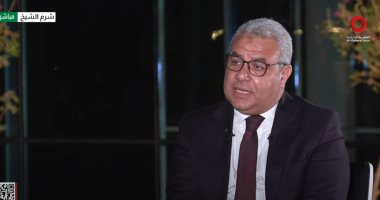
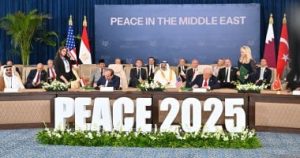
Journalist and media figure Samir Omar, head of the news channels sector at the United Media Services Company, stated that reaching a ceasefire and holding the peace summit in Sharm El-Sheikh would not have been possible without efforts made over two years. He emphasized that this day will not lead to a renewed negotiation path unless pressure continues on Israel to fulfill its promises and proceed with everyone on the political settlement track.
In an interview with Ahmed Abu Zeid on “Cairo News” channel, Omar discussed the Trump plan’s clauses and the absence of direct peace between Palestinians and Israelis along the June 4, 1967 borders, or Palestinians obtaining their rights, or even halting settlement expansion in the West Bank. He said: “Certainly, anyone reading Trump’s paper will not reach this city, but those who read the Arab, Islamic, and international positions preceding Trump’s stance will see the founding of the two-state solution conference led by Saudi Arabia and France, and when President Sisi and foreign ministers of Islamic countries attending the meeting with Trump spoke.”
He added that all spoke very clearly about this vision, noting that there will be no lasting stability and calm except by implementing these visions. He explained that this is not new; the United Nations and Security Council decided hours after the 1967 aggression that occupying others’ lands by force is unacceptable and withdrawal to the June 4 lines is necessary, but the Israeli side refuses this.
He continued: “To be clear, this will not be achieved only by American will, but also by Palestinian national consensus, restoring unity between Gaza and the West Bank, Arab consensus supporting these legitimate Palestinian rights, support from Islamic countries and influential regional and international countries. Anyone who thinks the American side alone is the main player will reach a wrong conclusion.”
He added that the United States is the world’s superpower, but there are influential forces and the power of justice, meaning the Palestinians’ right to have their independent state, to stop their killing and displacement, and to allow basic humanitarian needs to reach them.
He concluded: “We do not want excessive optimism nor pessimism, because this path—meaning the Sharm El-Sheikh summit path—if it leads to reopening the settlement track again, there will be calm and stability, but if the ball is returned, there will be no calm or stability.”
Recommended for you
Al-Jaghbeer: The Industrial Sector Leads Economic Growth
Alternative to UNIFIL Forces
Egypt Post: We Have Over 10 Million Customers in Savings Accounts and Offer Daily, Monthly, and Annual Returns
Talib Al-Rifai Chronicles Kuwaiti Art Heritage in "Doukhi.. Tasaseem Al-Saba"
Exhibition City Completes About 80% of Preparations for the Damascus International Fair Launch
Trump Advisor: Disarming Hamas is Central.. Palestinian Authority to Take Over Gaza After Required Reforms