






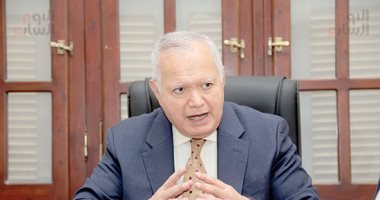
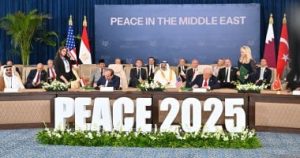
Ambassador Mohamed El-Araby, member of the Senate and former Foreign Minister, praised President Abdel Fattah El-Sisi’s speech at the Peace Summit in Sharm El-Sheikh, describing it as an exceptional leadership address that reinforces Egypt’s strategic vision as a driving force for just peace in the region.
El-Araby stated that the Peace Summit was not merely a political meeting but a declaration of a higher moral responsibility. President El-Sisi’s remarks that “the Gaza agreement will close a painful chapter in human history” and that “the Sharm El-Sheikh Peace Summit is a historic turning point” raise the level of challenge. The president places the crisis in its global humanitarian context, emphasizing that what is happening is a catastrophe not limited to the region, transforming the agreement from a mere settlement to the end of a long chapter of human suffering, requiring decisive action from leaders.
He added that Egypt reaffirms its position as the unwavering pillar of peace amid storms, and President El-Sisi’s affirmation that “peace will remain Egypt’s strategic choice” is a message of reassurance and stability. Egypt’s role does not change with governments or regional circumstances, granting Egypt unique credibility as a permanent host for substantive peace dialogues, ensuring any peace Egypt initiates will be solidly based.
El-Araby explained that President El-Sisi’s speech combines a call for peace with the necessity of achieving justice, linking peace to “just peace” and affirming “the Palestinian people’s right to self-determination” as the core of Egypt’s steadfast position. The president understands that peace based on injustice is not peace but a temporary truce. These statements set the right to self-determination as a non-negotiable condition for any permanent settlement, proving Egypt’s comprehensive vision that rejects fragile peace.
He noted that involving peoples in the peace process gives it sustainability, quoting President El-Sisi’s statement that “peace is not made by governments alone but built by peoples,” reflecting a deep awareness that official agreements need popular support to endure. This expression sends a message to both sides to prepare the cultural and social climate for coexistence and calls on the Israeli people to “extend your hands for just peace,” a call that transcends leaders to address societal conscience.
El-Araby confirmed that President El-Sisi’s invitation to U.S. President Donald Trump to join world leaders calling for peace and presenting him with the Nile Necklace is a profound diplomatic maneuver, not just protocol, but a declared appreciation of the pivotal American role in the truce’s success and a strategic incentive to continue American influence in supporting comprehensive peace. It also cements Egypt’s position as a key player that does not merely mediate but honors those who support its efforts toward the goal of “a Middle East where all peoples enjoy peace.”
He pointed out that President El-Sisi’s speech at the Peace Summit is a declaration of an indomitable Egyptian will towards stability, combining moral strength, strategic steadfastness, and diplomatic intelligence, confirming that Egypt is the balancing scale without which no real peace process can stand.
He referred to President Trump’s speech at the Sharm El-Sheikh Peace Summit reflecting a sense of achievement and satisfaction with his administration’s role in achieving the Gaza agreement and halting the war, highlighting strong personal relations with Egyptian leadership. Trump’s statement “We worked hard to reach this day” underscores the significant American effort to reach the agreement, lending legitimacy and weight to Washington’s role as a mediator and main supporter of the peace process. His acknowledgment implicitly signals the great challenges faced during negotiations.
El-Araby affirmed that Trump’s thanks to President El-Sisi for awarding him the Nile Necklace and expressing gratitude for his efforts in achieving peace strengthens the Egyptian-American partnership on regional stability issues. Accepting the Nile Necklace confirms the high value of this honor given to those who have contributed to serving humanity, reinforcing American recognition of Egypt’s pivotal and esteemed leadership in crisis management and diplomatic breakthroughs. The gratitude for President El-Sisi’s efforts highlights that Egypt was the driving force that made this day possible.
He concluded that President Trump’s speech can be considered a consolidation of the joint achievement, acknowledging the efforts made, announcing great success in achieving peace, and officially recognizing Egypt’s decisive role, reflecting the strategic importance of the Washington-Cairo relationship at this historic stage.
Recommended for you
Al-Jaghbeer: The Industrial Sector Leads Economic Growth
Egypt Post: We Have Over 10 Million Customers in Savings Accounts and Offer Daily, Monthly, and Annual Returns
Alternative to UNIFIL Forces
Talib Al-Rifai Chronicles Kuwaiti Art Heritage in "Doukhi.. Tasaseem Al-Saba"
Exhibition City Completes About 80% of Preparations for the Damascus International Fair Launch
Unified Admission Applications Start Tuesday with 640 Students to be Accepted in Medicine