








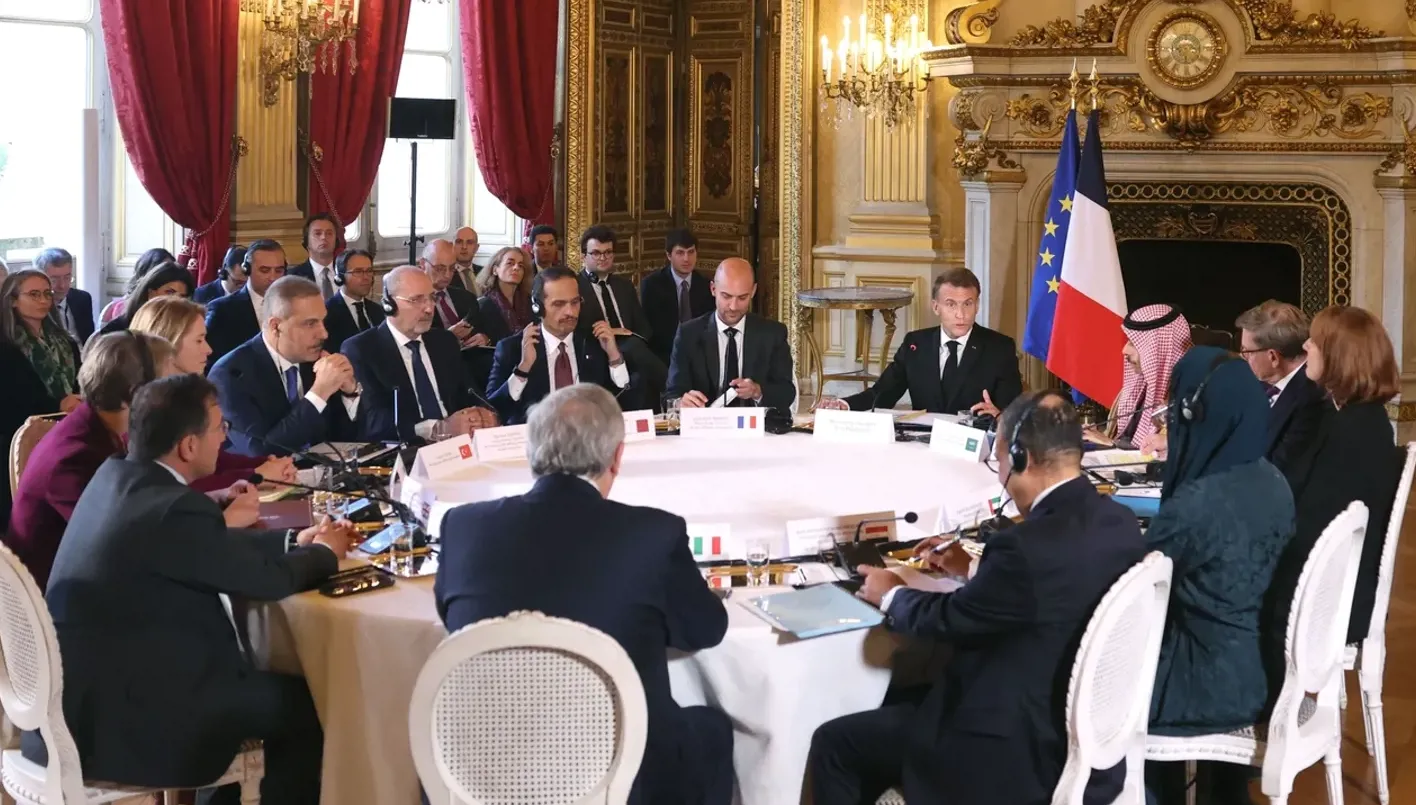
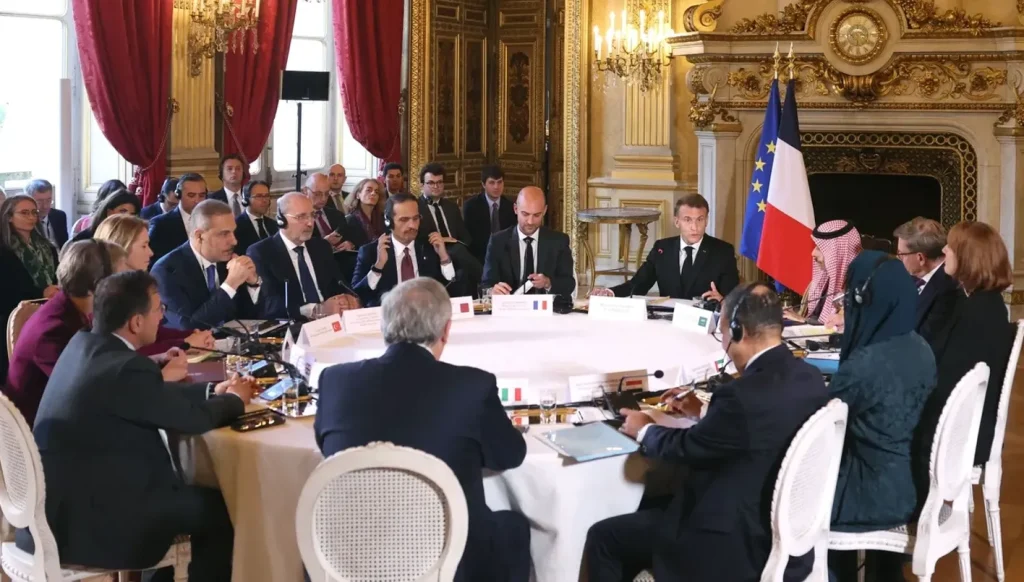
The ministerial meeting in Paris to discuss the ceasefire in Gaza and what follows (AFP)
Thirty-five years were wasted searching for “peace,” starting with the “peace process” launched at the Madrid Conference in 1991 under a US-Russian consensus, then cemented by the Oslo Accords in 1993 under US sponsorship. However, it got lost in Israeli negotiation labyrinths, then in the Israeli crackdown on the Second Intifada in 2000, followed by the chaos of the September 11 attacks and the US response with the “war on terror.” The peace process was completely sidelined amid the Iraq invasion and its international and regional repercussions, to the extent that Israel considered the “Palestinian issue” no longer relevant, focusing instead on the Iranian presence on its borders with Syria and Lebanon, as well as Gaza, while the international community was drawn to uprisings and internal wars in several Arab countries.
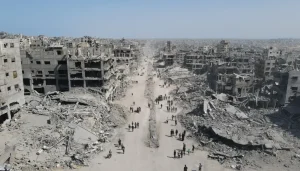
Suddenly, Hamas and Gaza factions launched the “October 7, 2023” attack, to which Israel responded with a war lasting two years and one day. On this day, an agreement to end the war was reached. But before that, the Palestinian cause had reasserted itself on the world streets and international diplomacy, with a “tsunami” of recognitions of the “State of Palestine” pressuring the US administration and increasing its isolation with Israel. Washington realized it was no longer viable to cover up the disasters in Gaza. Thus, the “Trump plan” to end the war was born.
Now, voices rise Arab, Islamic, and Western alike, demanding that the ceasefire agreement and the exchange of hostages and prisoners be taken as a foundation to build a “just, comprehensive, and lasting peace.” The day after the agreement, a ministerial (European-Arab) meeting was held in Paris to discuss the “day after in Gaza,” considering the “Trump plan” along with the ceasefire as a “historic opportunity” that should be activated for “sustainable peace.” The French president said the meeting’s goal was a “parallel” and “complementary” effort to the American plan. The US Secretary of State was invited but canceled his participation, and Israel was not invited.
Washington sensed that Europeans sought to push the “Trump plan” in an unplanned direction, especially as the Paris discussions centered on the “two-state solution” with attention to the West Bank situation, where the promised “state” project is threatened by settlement expansion, settler violence, and increasing Israeli rejection of the Palestinian Authority. The countries represented in Paris favor legitimizing the “Trump plan” and any Arab and international contributions through the Security Council, but Washington showed a clear intention to reject the United Nations.
The war’s path of extermination, starvation, and occupation expansion prepared the ground for population displacement behind the Western coup against Israel. It is clear that the praises for the US president who personally announced the war’s end did not hide international concerns about keeping the conflict file in a closed US-Israeli circle, as it was for three sterile decades marked by much US overlooking of Israeli ambitions and alignment with extremist plans in its governments, until Iran entered the scene and helped prepare the “Al-Aqsa flood” which Israel seized and managed afterward in its own way, still aspiring to exploit it in two directions: ending the Palestinian cause and using its military superiority to impose the “Greater Israel” project.
It is unclear whether Trump has the will (or desire and ability) to “reform” Israel’s military, political, and ethical behavior, which necessarily must pass—if conceivable—through “reforming” the US approach to the Middle East. Practically, reforming only the Palestinian Authority is not enough.
The “Sharm El-Sheikh Agreement” was reached in two days after months of failed negotiations. Trump issued many threats to Hamas that were unnecessary because the movement, after Arab-Islamic coverage for disarming it and dismantling its rule, was ready to accept anything to end the war. At the same time, Trump pressured Israel, including reprimanding Netanyahu who tried to deceive him as he did with his predecessor Joe Biden. But he will realize sooner or later that ending the war in Gaza is still in progress and does not yet constitute a peace project for the region.


Recommended for you
Al-Jaghbeer: The Industrial Sector Leads Economic Growth
Alternative to UNIFIL Forces
Egypt Post: We Have Over 10 Million Customers in Savings Accounts and Offer Daily, Monthly, and Annual Returns
Talib Al-Rifai Chronicles Kuwaiti Art Heritage in "Doukhi.. Tasaseem Al-Saba"
Exhibition City Completes About 80% of Preparations for the Damascus International Fair Launch
Trump Advisor: Disarming Hamas is Central.. Palestinian Authority to Take Over Gaza After Required Reforms