









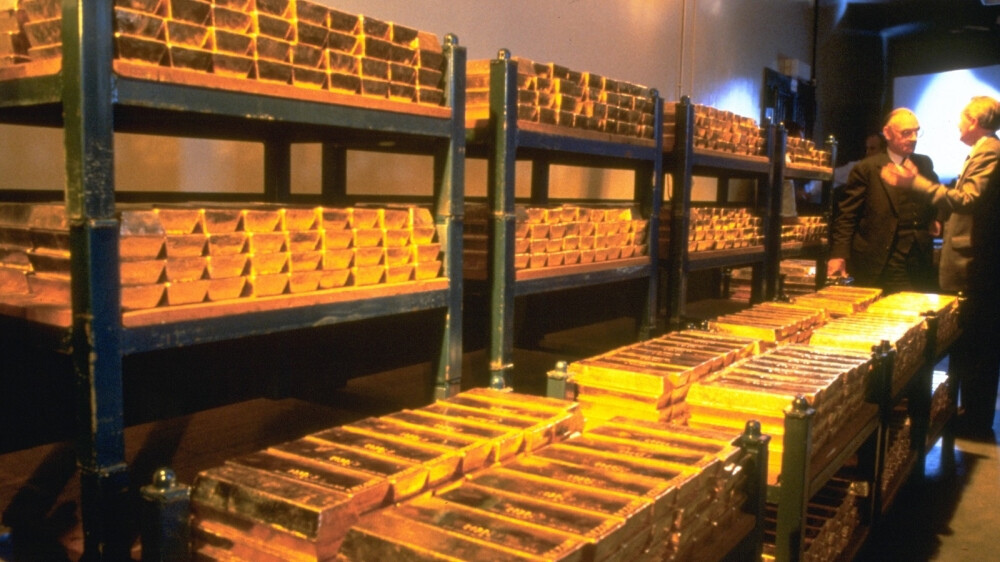
In the vaults of the Central Bank of Lebanon lies a silent treasure for over half a century – Lebanese gold, a forgotten wealth capable of turning the economic scales if managed wisely.
Lebanon purchased its gold in the 1970s when the ounce price was only $35, and it is still recorded at this price in official accounts, while today its price exceeds $4,000. Lebanon owns about 289 tons of gold, equivalent to 9.2 million ounces. Its value at purchase was about $325 million, while its real value today reaches around $37 billion. This means there is a staggering difference exceeding $36 billion not reflected in the state’s books.
Revaluation does not mean selling or disposing of the gold, but updating its accounting value to reflect reality. With this step, Lebanon can show its true financial strength and regain part of the lost trust, especially before the International Monetary Fund and donor institutions.
Revaluation carries many benefits. First, it improves Lebanon’s financial image when the world realizes it owns gold worth $37 billion. Second, it raises its credit rating because reliable assets facilitate obtaining financing on better terms. Third, it boosts public confidence, as knowing about the huge reserve raises morale and supports the national currency. Finally, it gives Lebanon a strong negotiating card without the need to sell its gold.
However, risks are present. Gold prices constantly fluctuate, which may cause accounting losses if its global value declines. Also, announcing a huge increase in its value may tempt some political parties to demand its sale, which is a great danger because gold represents the country’s last guarantee. Therefore, any step must be taken with legal transparency and strict oversight to prevent this treasure from becoming a new door to waste or chaos.
Experiences of other countries show the importance of caution. The United States, despite owning the largest gold reserve in the world, still records it in its books at a symbolic price not exceeding $42 per ounce to maintain the stability of its accounts. In contrast, Germany and Switzerland chose partial revaluation of their gold assets to strengthen their budgets without selling any part of the reserve.
Lebanon, in turn, can act wisely by conducting an internal evaluation under international supervision to determine the actual value of the reserve, issuing a transparent annual report on Lebanese gold, establishing an independent national fund to protect it from any reckless political decision, and adopting its symbolic value in economic discourse as a sign of confidence, sovereignty, and stability.
“Gold is not a commodity, but a certificate of trust between the state and its people.”
Revaluing gold is not a gamble but a step towards economic transparency, and a message that this country has real wealth capable of restoring trust if managed with mature wisdom and away from whims. Gold is not just a precious metal but a symbol of national sovereignty and could be the key to Lebanon’s next renaissance if placed in safe hands.
Recommended for you
Al-Jaghbeer: The Industrial Sector Leads Economic Growth
Egypt Post: We Have Over 10 Million Customers in Savings Accounts and Offer Daily, Monthly, and Annual Returns
Alternative to UNIFIL Forces
Talib Al-Rifai Chronicles Kuwaiti Art Heritage in "Doukhi.. Tasaseem Al-Saba"
Exhibition City Completes About 80% of Preparations for the Damascus International Fair Launch
Unified Admission Applications Start Tuesday with 640 Students to be Accepted in Medicine