









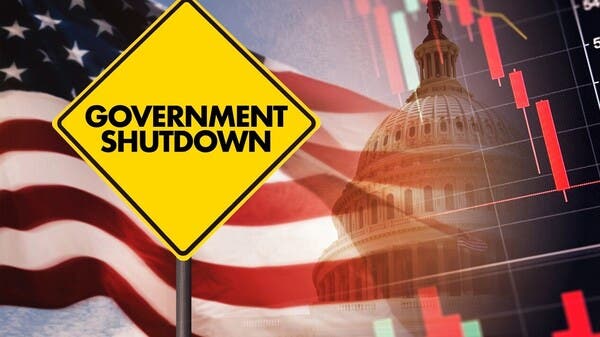
The ongoing debate between the Democratic and Republican parties in the United States over the current government shutdown largely avoids the tough financial issues overshadowing the country’s future, including rising public debt and the long-term fiscal sustainability of Social Security and healthcare.
The 15th partial federal government shutdown since 1981 began due to Democrats’ spending demands, which a nonpartisan organization called the “Committee for a Responsible Federal Budget” says will cost about $1.5 trillion over the next decade, increasing the national debt of approximately $38 trillion.
Maya MacGuineas, president of the Committee for a Responsible Federal Budget, which advocates for deficit reduction, said, “We have huge real problems in this country, and we are stuck in a constant messaging war between the two parties, instead of genuine attempts to bridge these divisions and do something about our financial problems,” according to Reuters.
The Senate repeatedly voted on two competing funding packages: one was a bill passed by the Republican-controlled House and supported by Trump that would reopen federal agencies with the latest funding levels until November 21, but Democrats prefer their own bill, which would mainly increase spending on healthcare.
There was little discussion on how to reduce the roughly $2 trillion federal deficit.
Over the past 44 years, most government shutdowns have been linked to financial issues such as spending, deficits, and the need for a balanced budget, but since Trump’s first term in 2017, the government has experienced three shutdowns due to social issues including immigration and healthcare.
The current standoff centers on $1.7 trillion allocated for agency operations, which is about a quarter of annual federal spending.
Meanwhile, independent analysts warn that the United States is in a deteriorating financial position, with debt growing faster than the economy, interest payments on debt crowding out program spending, and financial fragility threatening social service trust funds for the elderly.
Debt Accumulation
US public debt has risen from $5.67 trillion to $37.88 trillion over the past 25 years, continuing to increase regardless of which party controls the White House or Congress.
Interest payments on the debt alone now exceed $1 trillion annually, more than what the US government spends on defense, and funding for Social Security and Medicare is expected to decline in 2033, potentially leading to comprehensive cuts to beneficiary entitlements.
Republican leaders, including House Speaker Mike Johnson, have warned about the impact of higher spending on debt during the heated government shutdown debate.
However, most Republican rhetoric has focused on Democrats’ “hardline” priorities rather than fiscal resilience, while Democrats have entirely ignored the financial issue and blamed Republicans for increasing the deficit through tax cuts and spending laws during Trump’s administration.
According to estimates from the Congressional Budget Office, Trump’s bill is expected to add $4.1 trillion to the deficit over ten years, with expectations that the cost could be offset by about $4 trillion in new revenue from Trump’s tariff fees.




Recommended for you
Al-Jaghbeer: The Industrial Sector Leads Economic Growth
Alternative to UNIFIL Forces
Egypt Post: We Have Over 10 Million Customers in Savings Accounts and Offer Daily, Monthly, and Annual Returns
Talib Al-Rifai Chronicles Kuwaiti Art Heritage in "Doukhi.. Tasaseem Al-Saba"
Exhibition City Completes About 80% of Preparations for the Damascus International Fair Launch
Trump Advisor: Disarming Hamas is Central.. Palestinian Authority to Take Over Gaza After Required Reforms