







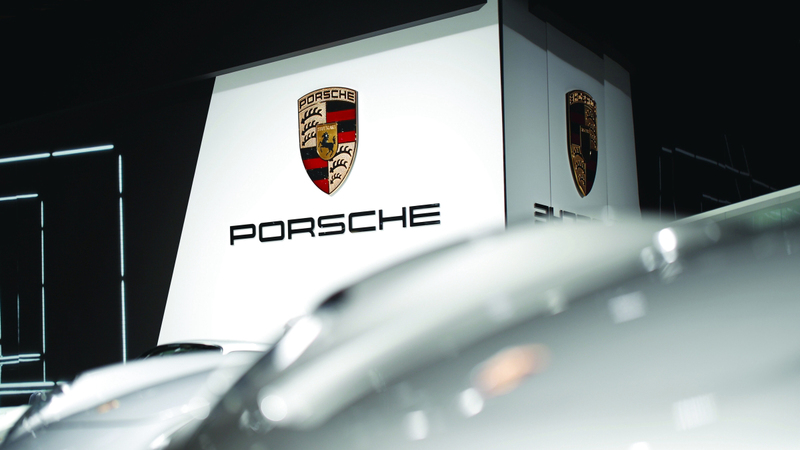
The management of the German sports car company Porsche and the workers’ council have held initial talks about tightening the company’s austerity policy.
A company spokesperson explained that both sides had already taken immediate measures at the beginning of the year to reduce labor costs during the current year, adding that talks were then announced to establish a future package of measures.
The company added: “The goal of this package is to make Porsche more efficient in the medium and long term,” noting that the talks will focus on preparing different approaches with the clear objective of enabling Porsche to face future developments. According to information from the German Press Agency (dpa), the talks may also include discussions about further employee layoffs and the job security agreement, which is valid until the end of July 2030.
The workers’ council wants to extend this agreement, while management is believed to be considering ending it.
There is no official information about the content or schedule of the talks, with the Porsche spokesperson stating: “We will conduct the talks respectfully, intensively, and confidentially, and will announce the results in due course.”
According to previous statements, the job security agreement applies to about 23,000 employees at the main factory in Zuffenhausen and the development center in Weissach, as well as several smaller branches. If this agreement ends, the company will be able to resume layoffs related to operational conditions at these sites, except for the Porsche factory in Leipzig, which is subject to separate negotiations.
Job security agreements usually last several years and exclude layoffs for operational reasons, a common practice for decades in the German automotive industry.
Porsche last extended this agreement in 2020. Last spring, the company announced plans to cut 1,900 jobs in the Stuttgart area by 2029 in a socially responsible manner and also announced it would not extend temporary contracts.
It is worth noting that Porsche, majority-owned by the Volkswagen Group, has been facing a difficult situation for a long time.
The company’s CEO, Oliver Blume, primarily attributed this to what he called the “framework conditions crisis,” pointing out that the luxury goods market in China suddenly collapsed in a short period, in addition to the situation in the United States and the slow transition to electric mobility technology.
Porsche’s sales during the first nine months of this year reached 212,500 vehicles, a decline of nearly 6% compared to the same period last year.
Last month, Porsche announced that the total costs of restructuring the company would amount to 3.1 billion euros. Several new members were appointed to the board this year, and there is speculation about the possible departure of CEO Oliver Blume.




Recommended for you
Al-Jaghbeer: The Industrial Sector Leads Economic Growth
Egypt Post: We Have Over 10 Million Customers in Savings Accounts and Offer Daily, Monthly, and Annual Returns
Alternative to UNIFIL Forces
Talib Al-Rifai Chronicles Kuwaiti Art Heritage in "Doukhi.. Tasaseem Al-Saba"
Exhibition City Completes About 80% of Preparations for the Damascus International Fair Launch
Unified Admission Applications Start Tuesday with 640 Students to be Accepted in Medicine