









Jordan is rapidly advancing towards achieving its energy security and increasing reliance on its national resources through strategic projects aimed at diversifying energy sources and reducing dependence on imports, within a comprehensive royal vision that places sustainability at the core of economic modernization.
The development project of the Risha gas field stands out as one of the most important national projects in this path, representing a fundamental pillar within the second executive program of the Economic Modernization Vision (2026-2029) and the Energy Strategy (2025-2035), contributing to building an integrated energy economy capable of attracting investment and enhancing sustainable growth.
Government efforts in this field are manifested through supporting local projects in gas and renewable energy sectors, enacting legislation that encourages investment in the sector, alongside implementing strategic agreements to increase local natural gas production and gradually achieve self-sufficiency, leading to an energy-independent Jordan more capable of facing global challenges.
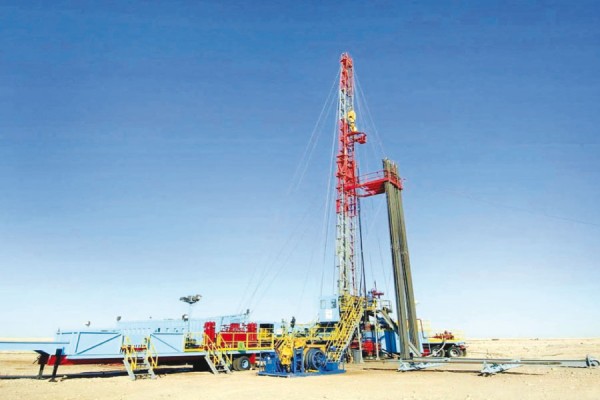
These efforts culminated recently in the signing of a strategic agreement between the National Petroleum Company and the Kuwaiti Drilling Company to implement a project to drill 80 new wells in the Risha gas field at a total cost of $174 million, under a turnkey system over a four-year period.
The project is self-financed by the National Petroleum Company through gas sales revenues, alongside government support worth 87 million Jordanian dinars, as part of the company’s strategic plan aimed at increasing production levels and raising the contribution of local gas in the national energy mix, ultimately achieving self-sufficiency in natural gas by replacing imported gas with domestic gas, thus enhancing energy supply security.
Through the project, the company seeks to encourage the establishment of petrochemical, processing, and mining industries that rely on natural gas as a primary energy source, adding value to the national economy.
To diversify natural gas uses, the National Petroleum Company recently signed several gas sale and purchase agreements with companies that compress and liquefy gas produced from the Risha field and transport it via specialized tankers to various regions of the kingdom, helping expand the base of national gas buyers and stimulating local industries dependent on it.
In this context, Dr. Saleh Al-Kharabsheh, Minister of Energy and Mineral Resources, previously stated that the comprehensive energy sector strategy aims to diversify natural gas sources and avoid reliance on a single source by securing four gas sources: Egyptian gas via pipelines, gas from the Mediterranean Sea, locally produced gas from the Risha field, and imported liquefied gas via Aqaba port.
He said the National Petroleum Company is implementing a development plan for the Risha field aligned with government directions to achieve self-sufficiency in locally produced gas and reduce reliance on imports.
He added that the local natural gas extracted from the Risha field is one of the most prominent national energy resources, emphasizing the ministry’s keenness to expand natural gas uses in the kingdom and create an attractive investment environment for this vital sector, in line with the Economic Modernization Vision and energy diversification plans. Al-Kharabsheh highlighted the importance of ministry projects to expand the uses of natural gas produced from the Risha field to reduce energy costs across various sectors and achieve a growth rate of up to 5.6%.
Mohammad Al-Khasawneh, General Manager of the National Petroleum Company, confirmed that the company aims to reach self-sufficiency in natural gas by increasing production capacity to more than 400 million cubic feet per day by the end of 2029.
He said that to achieve this, it is necessary to increase the number of drilling rigs used and the number of wells drilled annually by several times the current level. He added that by the end of 2025, they will have drilled 10 wells, a record level, and that drilling was tested by a contractor on a turnkey basis with excellent success in terms of cost and speed, raising production capacity to 80 million cubic feet per day, exceeding expectations. Al-Khasawneh continued that in the next four years, more wells will need to be drilled in addition to those contracted to achieve the goals approved in the company’s future plans through additional contracts.
He pointed out that the turnkey system achieves better performance and lower costs, especially for large projects, noting the existence of essential projects coinciding with drilling works aimed at building an integrated infrastructure to deliver natural gas to all consumption points, expected to be ready by early 2029 at the latest.
Energy expert Hashem Aqel confirmed that signing the agreement to drill 80 wells is a strategic step to enhance Jordan’s energy security, describing it as historic. He said this agreement is part of an ambitious plan to raise local gas production to 418 million cubic feet per day by 2030, enhancing Jordan’s position in achieving self-sufficiency and reducing reliance on imported energy. He added that this agreement, to be implemented over four years under a “turnkey” system, is one of the pillars of Jordan’s strategy to diversify energy sources. He added that the agreement enhances energy security by increasing local production, which will feed power plants and provide compressed gas for industries such as petrochemicals and mining, opening horizons for new job opportunities and sustainable economic development.
Aqel emphasized that natural gas is a less polluting option than oil and coal, supporting Jordan’s commitment to reduce carbon emissions and transition to cleaner energy sources. This step complements national efforts to expand reliance on renewable energy, as Jordan aims for solar and wind energy to constitute 50% of the electricity mix by 2030.
He confirmed that the agreement to drill 80 wells is a qualitative step towards achieving energy independence and affirms Jordan’s commitment to developing its local resources to face global challenges. With continued investments in gas and renewable energy, Jordan is charting a clear path towards a sustainable energy future that combines economic security and environmental preservation.
Mohammad Al-Ta’ani, Secretary-General of the Arab Renewable Energy Authority, confirmed that energy source diversification or the energy mix is a strategic step towards national energy security and a fundamental pillar of energy security in Jordan, requiring innovative management capable of balancing supply and demand and enhancing integration between traditional and renewable energy sources.



Recommended for you
Al-Jaghbeer: The Industrial Sector Leads Economic Growth
Alternative to UNIFIL Forces
Egypt Post: We Have Over 10 Million Customers in Savings Accounts and Offer Daily, Monthly, and Annual Returns
Talib Al-Rifai Chronicles Kuwaiti Art Heritage in "Doukhi.. Tasaseem Al-Saba"
Exhibition City Completes About 80% of Preparations for the Damascus International Fair Launch
Trump Advisor: Disarming Hamas is Central.. Palestinian Authority to Take Over Gaza After Required Reforms