






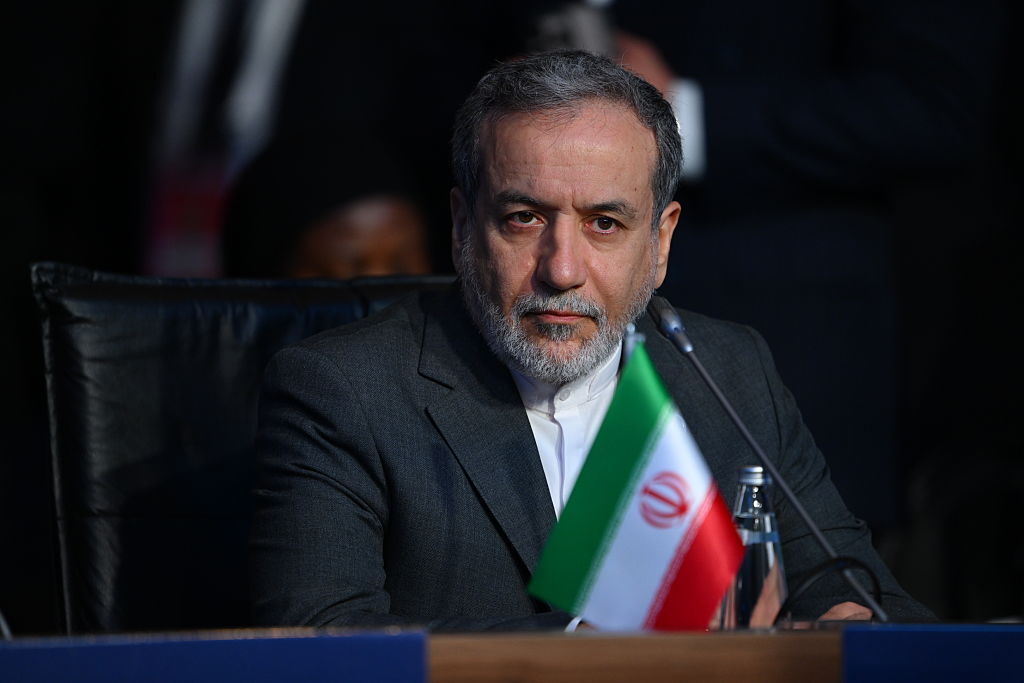
In a televised interview addressing the developments in Gaza, the ceasefire process, and the latest updates on Iran’s talks with the United States and the European Troika, Araghchi stated that “Iran has supported and continues to support every initiative aimed at stopping the massacres and killings against the Palestinian people in Gaza,” adding: “We are always on the side of the resistance and support the Palestinian people and resistance factions, because the decision of the resistance is the decision of the Palestinian people themselves, and no one has the right to patronize them.”
Araghchi confirmed that “trust in the Zionist regime is completely absent, and caution must be exercised regarding its methods and deception in any agreement,” warning that “this entity does not adhere to any commitments.”
Commenting on US President Donald Trump’s statements that Iran supports a ceasefire and wants to move towards peace, Araghchi said: “What Trump says concerns him; we only supported aspects aimed at stopping crimes against the Palestinian people,” emphasizing that “no messages or direct or indirect contacts have been exchanged with Washington.”
He added: “In the past, the United States tried to combine different files in negotiations, but we strictly clarified that our dialogue with the West is limited to the nuclear file, and we never discuss resistance or regional issues with the Americans or any other party.”
Araghchi described the so-called “Abraham Accords” as “a betrayal aimed at legitimizing normalization with the occupation entity,” affirming that the Islamic Republic “categorically rejects any participation in such initiatives.”
The Iranian Foreign Minister criticized “Washington’s contradictory and continuously fluctuating positions,” noting that “many officials in the region and resistance factions doubt the intentions of the United States and its commitments related to supporting Gaza and its reconstruction,” pointing out that “the next stages of any agreement will be a real test of Washington’s sincerity.”
Regarding nuclear negotiations, Araghchi reiterated that Iran “has not engaged in any talks under the title of a comprehensive agreement,” considering that “the US unilateral withdrawal from the previous nuclear deal destroyed trust in any new dialogue.”
Responding to reports of a phone call with US envoy Steve Witkoff, Araghchi categorically denied this, explaining that “any contacts, if they exist, occur only through intermediaries.”
He added that the US side requested direct negotiations with Tehran, but Iran conditioned the presence of the three European countries (Germany, France, and Britain) and the International Atomic Energy Agency to ensure official and transparent talks, noting that Washington rejected this condition and tried to impose a “pre-agreement before starting negotiations,” which Tehran considered illogical and unacceptable.
The Iranian Foreign Minister explained that the Cairo agreement between Iran and the International Atomic Energy Agency is currently suspended due to the European Troika’s actions, affirming that “any request from the agency to visit nuclear facilities, whether they were bombed or not, will be referred to the Supreme National Security Council to make a decision according to the law.”
Araghchi stressed Iran’s readiness for direct negotiations provided there are no unreasonable preconditions, confirming that his country’s position is based on “equality, mutual respect, and national interest,” and that any behavior contrary to this framework will halt the negotiation process.
He renewed his emphasis that Tehran’s right to peaceful uranium enrichment is a “red line that cannot be compromised,” pointing out that Iran always carries the banner of dialogue but only considers fair, logical, and balanced proposals, adding that “returning to negotiations requires fair conditions and mutual respect, and Iran is ready to hold technical talks to clarify only its peaceful activities, provided that unjust sanctions are lifted and steps are taken to build trust from the other side.”
Regarding the European role, Araghchi said that “European countries do not have independence in political decision-making, and previous experiences have proven that dialogue with them has not led to tangible results,” affirming that “Iran has not yet received any official request to resume negotiations from any party, and the political track with the West has reached a dead end.”
Araghchi warned that “any negotiations under current conditions would be a huge loss unless built on fair foundations and equal footing,” stressing that Tehran’s policy is based on national interests and full sovereignty, and that any future negotiations must start from mutual respect, balance, and justice.
Regarding the recent twelve-day war, he said the experience showed that Iran does not retreat in the face of any external threat or attack, and that any attempt to drag the country into instability by targeting senior leaders was met with a swift and organized response. He confirmed that Iran’s rapid reaction demonstrated that the enemy is incapable of inflicting strategic damage, and that the experience was a harsh and unforgettable lesson for the adversary.
Recommended for you
Al-Jaghbeer: The Industrial Sector Leads Economic Growth
Egypt Post: We Have Over 10 Million Customers in Savings Accounts and Offer Daily, Monthly, and Annual Returns
Alternative to UNIFIL Forces
Talib Al-Rifai Chronicles Kuwaiti Art Heritage in "Doukhi.. Tasaseem Al-Saba"
Exhibition City Completes About 80% of Preparations for the Damascus International Fair Launch
Trump Advisor: Disarming Hamas is Central.. Palestinian Authority to Take Over Gaza After Required Reforms