








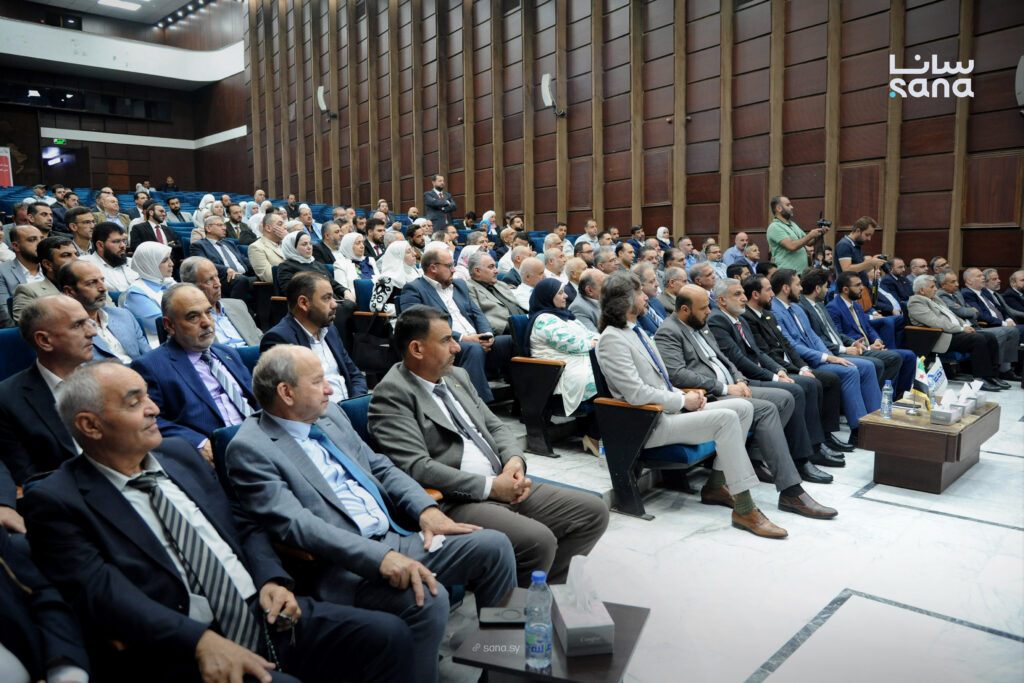
The Economists’ Syndicate held today its first general conference after liberation to discuss amending the syndicate’s internal regulations to keep pace with recent developments in the labor market and the country’s economic reality, in the presence of representatives from ministries, trade unions, and professional bodies.
Participants discussed renaming the syndicate to “Economists and Financial Professionals Syndicate” to include new financial professions recently introduced by the Ministry of Finance, namely: financial appraiser, risk management, tax advisor, financial analyst, and certified accountant. This move responds to the ministry’s direction to expand and organize financial professions under a unified syndicate umbrella, ensuring the necessary legal and organizational framework.
Deputy Minister of Finance, Saleh Al-Abd, emphasized that cooperation and coordination among various ministries, organizations, and professional syndicates constitute a fundamental complementary element in developing economic and financial work. He noted that the ministry is working on updating and developing the tax system to meet the current phase’s requirements, assisted by members from chambers of industry and the Economists’ Syndicate within specialized working committees, believing in the importance of joint institutional work in building financial policies and enhancing performance efficiency.
Manal Al-Shiyah, head of the Daraa branch of the Economists’ Syndicate, explained that the conference aims to restructure the syndicate and update its work frameworks after unifying the syndicate branches in the north, Idlib, and Damascus under one name, “Economists’ Syndicate,” noting that the formation of boards of directors in all branches was based on competence and experience.
Al-Shiyah stressed the syndicate’s important role as a lever for the national economy, as it includes qualified cadres of certified accountants, financial analysts, and economic feasibility experts who can be relied upon to support both public and private sectors, providing studies and consultations that contribute to achieving development and enhancing the competitiveness of the Syrian economy.
Dean of the Faculty of Economics at Damascus University, Ali Kanaan, highlighted the importance of cooperation between universities, academic bodies, and professional syndicates, especially in legal and economic aspects, as this cooperation plays a role in shaping visions and directions that support government decision-making and serve the national interest.
He pointed out that the conference is one of the most prominent economic events in the country, as it represents an institution concerned with economic affairs across various productive and service sectors and includes academic and practical expertise contributing to providing vital studies and proposals.
The conference also witnessed honoring several economists, in addition to those who passed the certified accountants exam for the 2024 session conducted by the Ministry of Finance.


Recommended for you
Al-Jaghbeer: The Industrial Sector Leads Economic Growth
Alternative to UNIFIL Forces
Egypt Post: We Have Over 10 Million Customers in Savings Accounts and Offer Daily, Monthly, and Annual Returns
Talib Al-Rifai Chronicles Kuwaiti Art Heritage in "Doukhi.. Tasaseem Al-Saba"
Exhibition City Completes About 80% of Preparations for the Damascus International Fair Launch
Trump Advisor: Disarming Hamas is Central.. Palestinian Authority to Take Over Gaza After Required Reforms