







Click here to share on social media
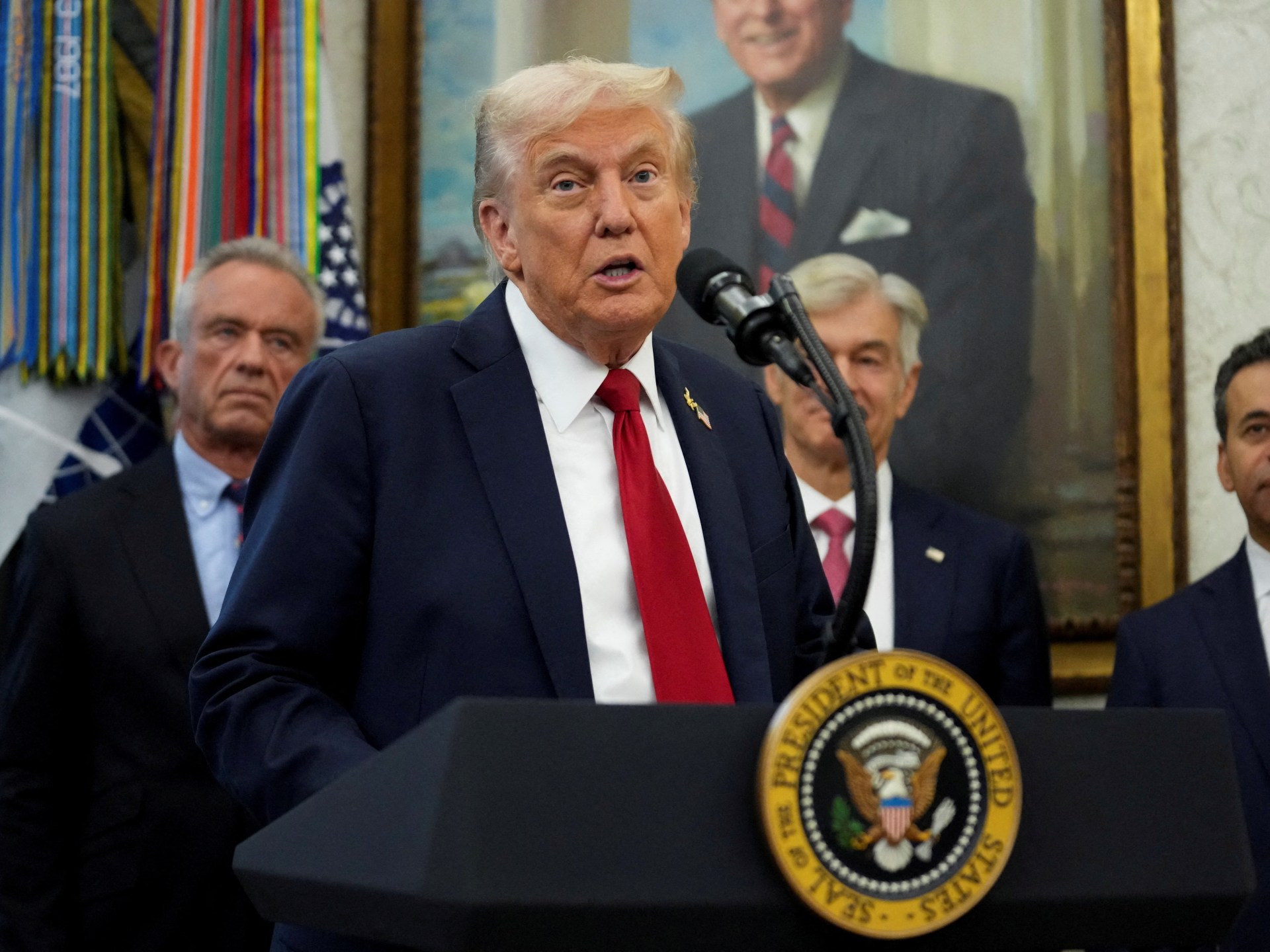
Last week, the American pharmaceutical company Pfizer reached an agreement with US President Donald Trump, which investors saw as a positive sign of the pharmaceutical industry’s ability to survive the threat of major price cuts and tariffs on imported drugs.
Political concerns have overshadowed the sector for most of the year, with stock prices declining. However, healthcare specialist Tim Oppler from Stifel Investment Bank stated that the top 30 life sciences companies (including pharmaceutical firms) gained $440 billion last week, adding: “It has become clear that Trump’s policies on tariffs and pricing are unlikely to impact pharmaceutical companies as badly as feared,” according to the Financial Times.
Trump’s Position
Since May, Trump has threatened pharmaceutical companies with tariffs on imports if they do not agree to lower prices. He has repeatedly mentioned that people can get new popular weight-loss drugs in London at a very low cost compared to the US, where branded drug prices are on average two to three times higher than in Europe.
However, without legislation to regulate drug prices, these threats are difficult to enforce. During Trump’s first term, the pharmaceutical industry overcame his pricing proposals through the courts. Nevertheless, Trump continued to pressure, threatening tariffs of up to 200% on imports during the summer, then last month stating tariffs would be 100%, but only on branded drugs. Imports from the European Union would face a 15% tariff, in line with a trade agreement made in July.
In July, Trump demanded 17 pharmaceutical companies provide binding commitments to lower drug prices by September 29, forcing companies to choose between making a deal or preparing for a long battle. Pfizer CEO Albert Bourla chose to agree, offering some drugs at lower prices and selling directly to patients. Ultimately, he won a public celebration at the White House, and Pfizer’s shares rose sharply.
Almost all major pharmaceutical companies pledged serious commitments to invest in research, development, and manufacturing in the US, including Pfizer’s $70 billion promise, and $50 billion each from Roche and AstraZeneca, and $27 billion from Eli Lilly.
Drug Companies Raise Prices Outside America
Trump recently said that drug companies investing in manufacturing would be exempt from tariffs.
Some companies raised drug prices in Europe to appease the president, who has long complained that high US prices support innovation elsewhere.
Eli Lilly increased the price of its weight-loss drug (Mounjaro) for private patients in the UK by up to 170%, while Bristol-Myers Squibb announced it would sell its new schizophrenia drug (Clozapine) in the US at the same price as in the UK. Meanwhile, the UK government proposed up to a 25% increase in what it is willing to pay for drugs for the National Health Service.
In the US, the pharmaceutical sector launched more direct-to-consumer sales services to offer cheaper drugs, drawing attention to the role of pharmacy benefit managers—intermediaries between drug companies and patients—in raising prices in the US.
For investors, the deal did not seem promising, as the company voluntarily agreed to lower prices on some drugs, which appears contrary to its pledge to maximize shareholder profits.
However, not all drugs are covered, and Pfizer will not face import tariffs for three years. The “most favored nation” price controls agreed by the company will only apply to drugs provided through the Medicaid program, the government-supported insurance for low-income individuals.
Under the most favored nation policy, prices align with the lowest levels offered in comparable countries.


Recommended for you
Al-Jaghbeer: The Industrial Sector Leads Economic Growth
Alternative to UNIFIL Forces
Talib Al-Rifai Chronicles Kuwaiti Art Heritage in "Doukhi.. Tasaseem Al-Saba"
Egypt Post: We Have Over 10 Million Customers in Savings Accounts and Offer Daily, Monthly, and Annual Returns
Exhibition City Completes About 80% of Preparations for the Damascus International Fair Launch
Trump Advisor: Disarming Hamas is Central.. Palestinian Authority to Take Over Gaza After Required Reforms