









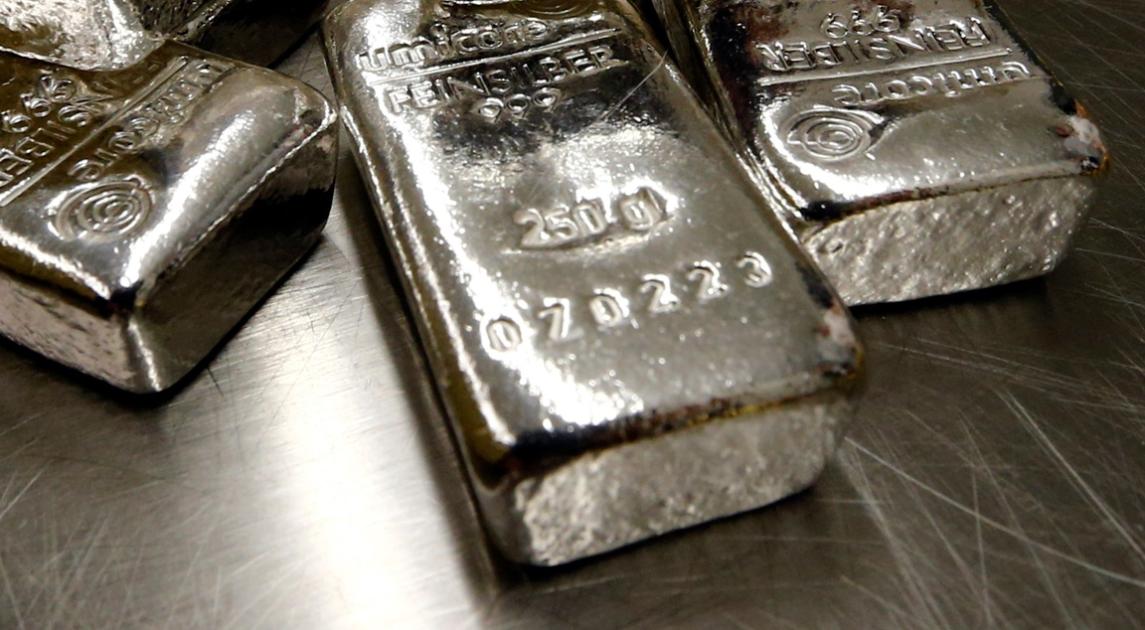
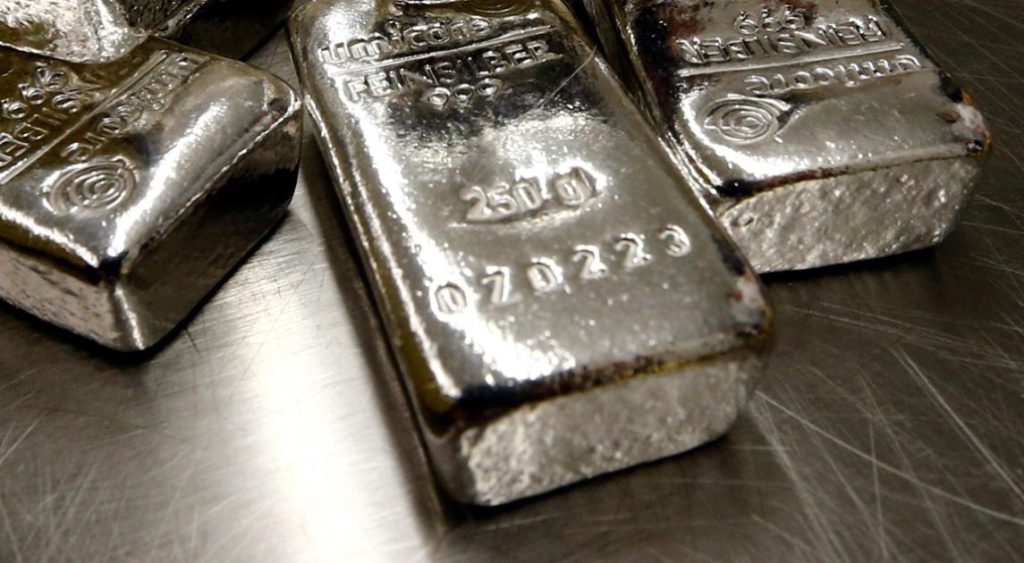
Silver prices in spot trading fell nearly 1% to $48.5 per ounce after hitting their highest level since 2011 at $49.57 on Wednesday.
According to records available since 1993, the highest daily trading price for silver in the London market was $49.8044 per ounce on April 25, 2011.
Silver prices follow gold’s frenzy, which reached a record level of $4059.05 on Wednesday before retreating on Thursday amid investor profit-taking.
Gold prices recorded a series of record highs due to economic and geopolitical uncertainty and expectations of US interest rate cuts.
Gold fell 0.4% in spot trading to $4021.99 per ounce on Thursday, and US December futures contracts dropped 0.7% to $4042.60 after surpassing $4060 on Wednesday.
Silver prices remain close to their record levels, supported by rising gold prices and increased investor demand for hard assets amid ongoing geopolitical and economic risks, as well as expectations of US interest rate cuts.
Silver, a precious and industrial metal, has risen 70% so far this year, heading toward its biggest annual gain since 2010.
Zain Fauda, an analyst at Market Pulse, a subsidiary of OANDA, said, “Given the structural supply deficit and strong favorable industrial tailwinds, I believe silver could reach $55 per ounce within roughly the next six months.”
Liquidity shortages in the London spot market, a major physical trading hub, provide additional support for silver after massive outflows this year to COMEX-owned warehouses in the US.
These deliveries were initially due to concerns about silver being affected by US tariffs on imports in April, which the metal avoided.
Concerns led to unusually wide spreads between futures prices on the CME exchange in London, a physical commodities exchange or EFP. The premium in New York made transferring gold and silver to New York profitable, according to HSBC analyst James Steele.
The inclusion of silver in September’s draft US critical metals list sparked another round of speculation about potential tariffs, pushing COMEX shares to a record high last week.
By the end of September, total silver stocks in London vaults reached 24,581 metric tons, down 0.3% from August, valued at $36.5 billion, according to the London Bullion Market Association.
Buying one ounce of gold currently requires 82 ounces of silver compared to 105 ounces in April, as silver tracks gold’s price rise.
Matthew Bigot, gold and silver manager at Metals Focus, said, “Silver underperformed gold mid-year, with the gold-to-silver ratio rising to 100, worsened by trade concerns reflecting silver’s role as an industrial metal.”
He added, “We expect silver to catch up with gold and continue rising to exceed $60 in 2026.”
While macroeconomic and financial factors fuel investment demand, strong demand forecasts from technologies like photovoltaics, electronics, and electric vehicles add price support.
Like gold, silver has also seen inflows into physically backed exchange-traded funds this year and enjoyed strong industrial consumption due to increased solar panel installations in China from January to May, according to a Morgan Stanley note.
Morgan Stanley added that with room to increase silver ETF holdings, silver has upside potential but may start lagging gold as solar demand growth is expected to slow.




Recommended for you
Al-Jaghbeer: The Industrial Sector Leads Economic Growth
Alternative to UNIFIL Forces
Egypt Post: We Have Over 10 Million Customers in Savings Accounts and Offer Daily, Monthly, and Annual Returns
Talib Al-Rifai Chronicles Kuwaiti Art Heritage in "Doukhi.. Tasaseem Al-Saba"
Exhibition City Completes About 80% of Preparations for the Damascus International Fair Launch
Trump Advisor: Disarming Hamas is Central.. Palestinian Authority to Take Over Gaza After Required Reforms