








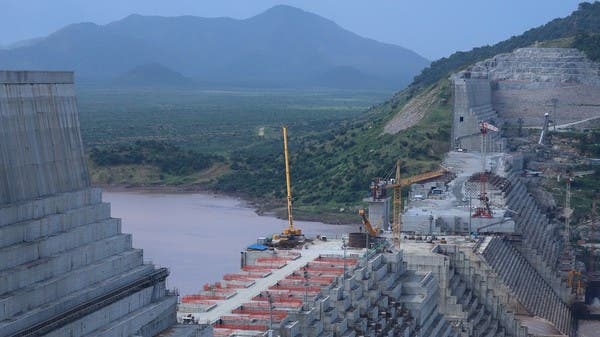
The Nile River is currently witnessing a remarkable shift in the flow balances of its major tributaries, with a noticeable decline in the Blue Nile’s discharge contrasted by an unusual surge in the White Nile. This situation raises questions about whether Ethiopia’s Renaissance Dam has indeed begun to redraw the map of the world’s longest river.
The Sudanese Ministry of Irrigation and Water Resources announced an unprecedented increase in the White Nile’s flow, warning residents along its banks of flood risks, especially in areas between Al-Jabalain and Jabal Al-Owlia south of Khartoum.
In an official statement, the General Directorate of Nile Water Affairs at the Sudanese Ministry of Irrigation said on Wednesday that the Blue Nile’s floodwaters have started to recede due to reduced discharges from Ethiopian dams, while the White Nile shows a steady increase in flow, reaching 240 million cubic meters at the Malakal station, compared to 135 million for the Blue Nile and 59 million for the Atbara River. Regarding dams within Sudan, the discharge from the Roseires Dam was 191 million cubic meters, Sennar Dam 223 million, Jabal Al-Owlia Dam 160 million, and Merowe Dam, the last of Sudan’s dams on the Nile, 635 million cubic meters.
Expert Al-Mufti: White Nile Outside Renaissance Dam’s Influence
However, Sudanese water expert Dr. Ahmed Al-Mufti denied any connection between the Renaissance Dam and the rise in the White Nile’s flow, confirming to Al Arabiya and Al Hadath that the White Nile relies entirely on rainfall in the equatorial plateau and the Great Lakes region, which lie outside the Ethiopian dam’s influence.
Sudanese water experts explained that the Renaissance Dam’s impact is limited to the Blue Nile only, while the White Nile is affected by natural factors such as heavy rainfall, reduced evaporation rates, and regulated discharges from Ugandan dams. They confirmed that the current increase is “natural and reflects abundant rainfall in the source areas.”
Sudanese Irrigation: Natural Rise Due to African Rains
Technical sources at the Sudanese Ministry of Irrigation told Al Arabiya and Al Hadath that the increase in the White Nile’s flow results from heavy rains on the equatorial plateau and Lake Victoria, leading to higher levels in the Great Lakes and increased outflows, along with water releases from Ugandan dams.
The sources confirmed that the situation remains “within the natural limits for this season,” noting that the current rise “reflects seasonal climatic dynamics rather than a structural change in the river.”
This development comes as Ethiopia continues operating the Renaissance Dam for the fifth year after completing gradual filling stages, asserting that the project is “national for power generation” and does not aim to harm downstream countries.
Meanwhile, Egypt and Sudan view the unilateral operation of the dam as a direct threat to their water shares, requiring a binding legal agreement on filling and operation rules.
Experts believe that the coincidence of heavy rains in the equatorial plateau with the decline in Blue Nile flows makes it difficult to separate climatic effects from human impacts caused by dams, especially amid unprecedented climate changes in the Nile Basin.
Shift in River Dynamics?
Despite the Ministry of Irrigation’s assurance that the situation is “under control,” observers warn that the continued disparity in flows of the two major tributaries may indicate a deeper shift in the Nile’s dynamics, necessitating long-term scientific monitoring to accurately map the future of water flows amid a new regional reality shaped by dams and climate alike.
Last Year’s Floods: Unforgettable Scenes
Last year, vast areas of the White Nile state experienced one of the most severe floods in their recent history, as river levels rose to unprecedented heights, causing entire villages to flood and displacing thousands of residents.
Eyewitnesses described the scenes as “terrifying beyond belief,” with waters sweeping through homes, roads, and farms, forcing residents to flee en masse to safer areas, leaving behind their possessions and memories.
The disaster became an early warning bell about the fragility of Sudan’s water infrastructure and the urgent need to reconsider flood management and early warning systems, especially amid sharp climatic fluctuations affecting the Nile Basin.
Observers see last year’s events not as isolated incidents but as indicators of deeper changes in the river’s behavior, where natural and human factors intersect in unprecedented ways.
Sudan suffers annually from seasonal floods caused by rising levels of the Nile and its tributaries during autumn, a phenomenon that has intensified in recent years, causing extensive human and material damage and posing a direct threat to agricultural and residential infrastructure in rural areas.
Environmental and water experts in Sudan have previously called for the construction of protective dams and improvement of early warning systems, particularly amid climatic changes that have disrupted rainfall timing and amounts in the Ethiopian plateau feeding the Blue Nile.



Recommended for you
Al-Jaghbeer: The Industrial Sector Leads Economic Growth
Alternative to UNIFIL Forces
Egypt Post: We Have Over 10 Million Customers in Savings Accounts and Offer Daily, Monthly, and Annual Returns
Talib Al-Rifai Chronicles Kuwaiti Art Heritage in "Doukhi.. Tasaseem Al-Saba"
Exhibition City Completes About 80% of Preparations for the Damascus International Fair Launch
Trump Advisor: Disarming Hamas is Central.. Palestinian Authority to Take Over Gaza After Required Reforms